Guide
What Size Generator for a Well Pump in a Power Outage?
Outage Ready Editorial · Updated November 21, 2026 · 5 min read
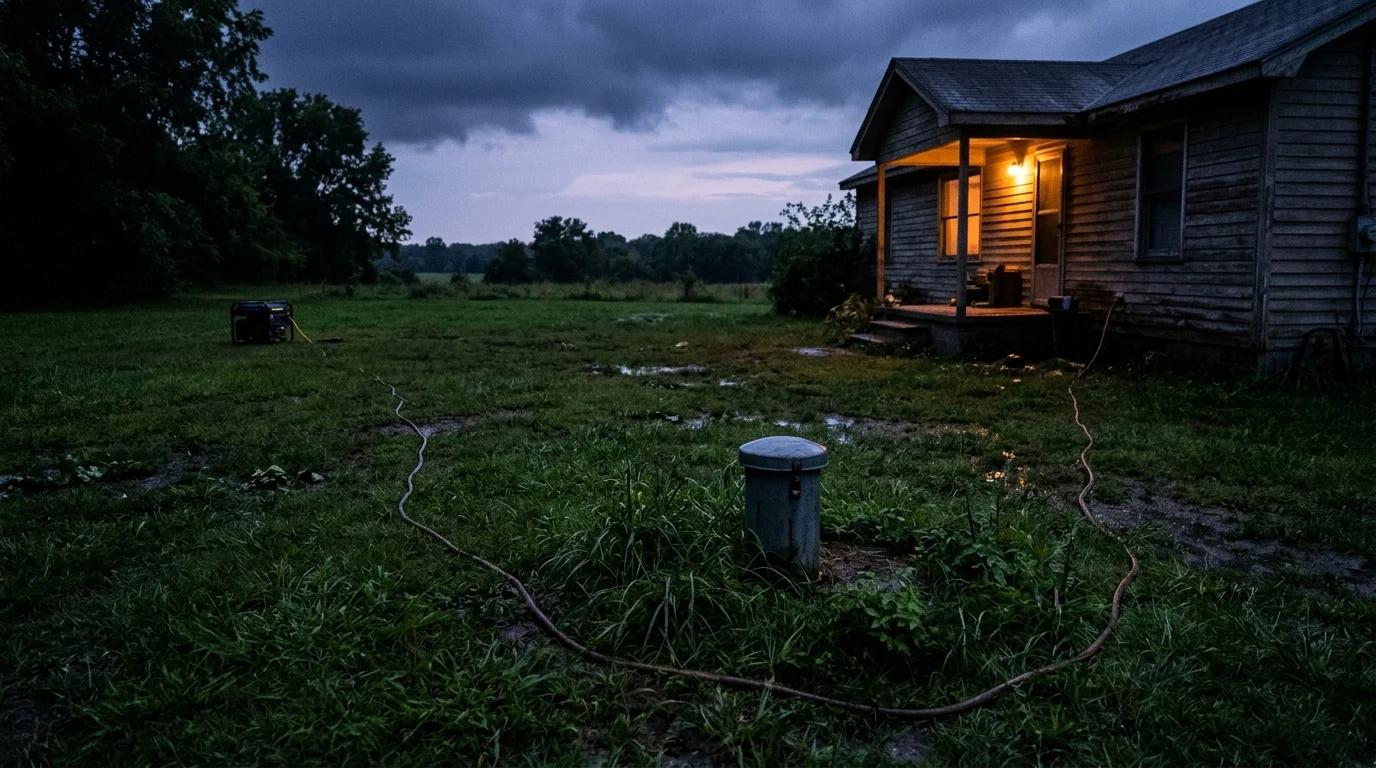
Quick answer
A 1/2 HP well pump needs at least a 2 kW generator if it is a three-wire motor and 3 kW if it is two-wire, and a 1 HP pump needs 4 or 6 kW, per Franklin Electric's table; it must have a 240 V outlet, and you add the rest of your outage load on top.
Key takeaways
- Franklin Electric lists a minimum generator of 2 kW for a 1/2 HP three-wire pump motor and 3 kW for a two-wire one; 1 HP needs 4 or 6 kW.
- Those minimums cover the pump alone, because the generator must hold voltage while the motor starts. Add the rest of your load on top.
- Most deep-well pumps run on 230 V, so the generator needs a 240 V outlet and the house needs a transfer switch or interlock.
- A battery can run a well pump only if it outputs 240 V, such as the Anker SOLIX F3800 Plus.
The short answer
A 1/2 HP well pump needs at least a 2 kW generator if it is a three-wire motor and 3 kW if it is two-wire, per Franklin Electric's sizing table. A 1 HP pump needs 4 or 6 kW. Those figures are for the pump alone and assume the generator has a 240 V outlet, because most deep-well pumps run on 230 V. Add the rest of what you need to run on top.
| Pump motor | Running watts at 230 V, full load | Minimum generator, three-wire | Minimum generator, two-wire |
|---|---|---|---|
| 1/2 HP | 670 W | 2 kW | 3 kW |
| 3/4 HP | 940 W | 3 kW | 4.5 kW |
| 1 HP | 1,210 W | 4 kW | 6 kW |
| 1.5 HP | 1,710 W | 5 kW | 7.5 kW |
Running watts and minimum generator ratings are from Franklin Electric's AIM manual for its 4-inch single-phase submersible motors. Your pump's own manual wins if it differs.
Why the generator must be so much bigger than the pump
A 1/2 HP pump uses 670 W at full load in Franklin's table, so a 2 or 3 kW minimum looks generous. It is not. A motor draws a large current for a moment as it starts, and Franklin says the generator must deliver at least 65% of the motor's nameplate voltage while it starts, or the motor lacks starting torque. A small generator sags too far.
Champion's general wattage chart shows the same gap: a 1/2 HP well pump at 750 to 1,000 running watts but 1,500 to 2,000 starting watts, and a 1 HP pump at 1,000 to 2,000 running and up to 4,000 starting. Franklin's motor-specific table is the one to size from.
Rule of thumb: size the generator to Franklin's minimum for your pump, then add the running watts of everything else that will be on when the pump kicks in.
Read your pump before you buy
Three facts decide the size. Find them on the motor nameplate, the control box or the pump installer's records.
- Horsepower. It sets the row in the table above.
- Voltage. Franklin builds 1/2 HP motors at 115 V and 230 V; larger ones in its table are 230 V. A 230 V pump needs a generator with a 240 V outlet.
- Two-wire or three-wire. Franklin says single-phase three-wire motors require a control box, so a separate control box is your clue. In Franklin's table, two-wire motors need the larger generator.
If your pump runs through a constant-pressure controller, the controller's manual has its own generator guidance. Follow that instead.
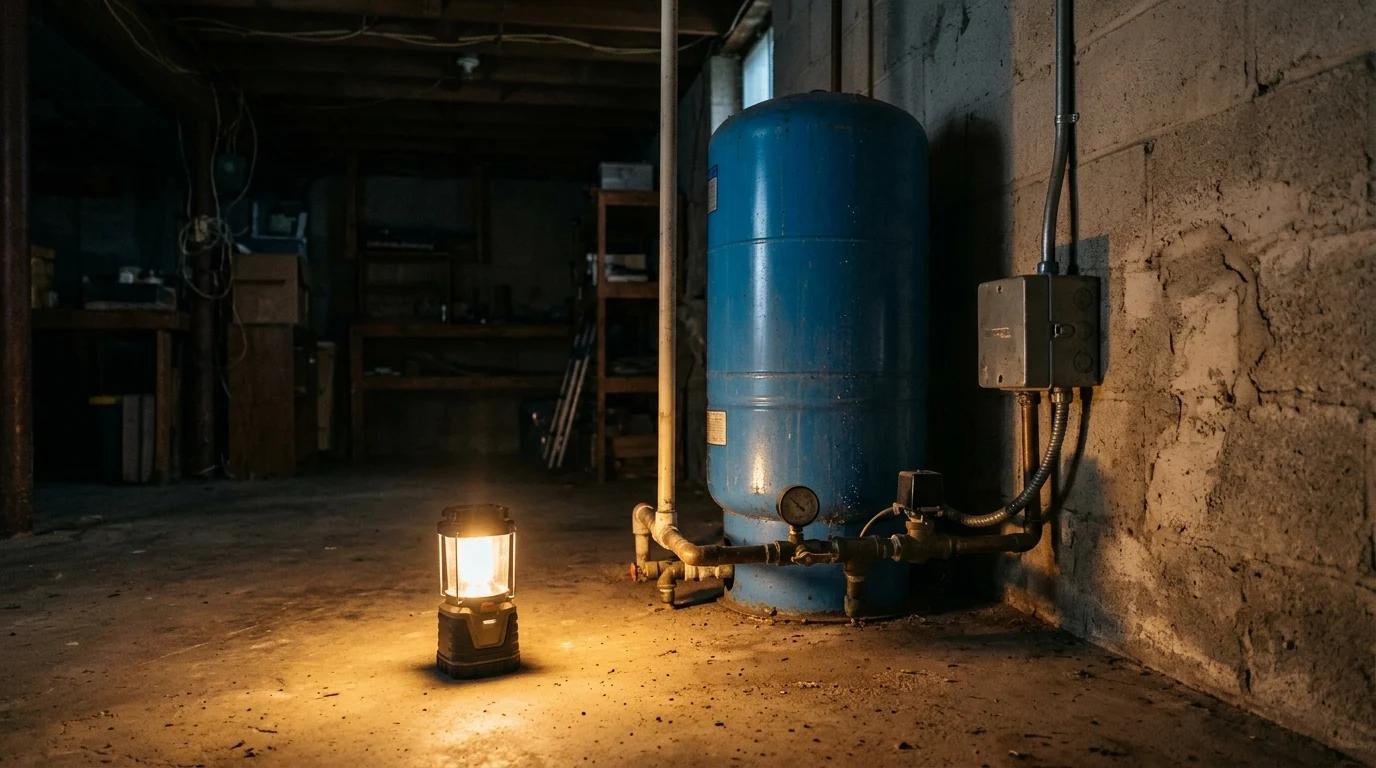
Generators that fit
All three below have a 240 V outlet and a maker-stated CO shutoff.
- Westinghouse WGen5300DFcv $579.00: 5,300 running watts on gasoline and 4,800 on propane, with an L14-30R outlet. It clears Franklin's minimum for any 1/2 or 3/4 HP pump and a 1 HP three-wire pump; with the smaller pumps, that leaves room for a fridge and lights.
- DuroMax XP13000HX the current listing price: 10,500 running watts and a 50-amp outlet, for a 1 HP two-wire or 1.5 HP pump plus most of a house.
- Champion 201169 Tri-Fuel $999.00: 6,500 W on gasoline, 6,000 on propane and 5,500 on natural gas, with an L14-30R outlet. Franklin says to follow the generator maker's derating for natural gas and altitude.
Generators with 120 V outlets only, including both quiet inverters on our list, cannot run a 230 V pump. Our inverter vs conventional guide explains why. Use the generator sizing tool to total your full list.
Running a pump on a generator
Franklin's manual adds rules that protect the motor:
- Start the generator first, then turn on the pump. Turn the pump off before you shut the generator down.
- Do not let it run out of fuel with the pump on. Franklin says the motor's thrust bearing may be damaged if the generator coasts down or runs dry with the motor running.
- Keep the generator outside, more than 20 feet from windows, doors and vents, as the CDC says, even though the pump is in the basement or well house.
Fuel for a pump that cycles
A well pump runs only when the pressure tank calls for water, so the generator spends most of the day carrying your other loads. Plan fuel by the day, not by the pump. Westinghouse states 11 hours at half load on the WGen5300DFcv's 4.7-gallon tank, and 9 hours on propane. Champion states 12 hours at half load on its 201169's 8.5-gallon tank. Keep enough stored for the outages you actually get, and remember Franklin's warning about running dry with the pump on.
Connecting it
A well pump is hardwired, so you cannot plug it into the generator. Franklin says automatic or manual transfer switches must be used any time a generator is used as standby on power lines, and to contact the power company. OSHA says only a qualified electrician should connect a generator to a building's wiring. The choice between a switch and an interlock is in transfer switch vs interlock kit, and the setup in how to connect a generator to your house.
The battery option
A battery runs a well pump only if it outputs 240 V and handles the start. Anker states 6,000 W at 120 V or 240 V from the L14-30 port of the Anker SOLIX F3800 Plus, and the EcoFlow DELTA Pro 3 is our pick for 240 V from a single unit. Most power stations are 120 V only. Our listing data shows a 10,200 W surge, but Anker's spec page does not state one, so confirm your pump's starting current with Anker before relying on it.
Energy is simple arithmetic. A 1/2 HP pump at Franklin's 670 W running for a total of one hour across a day uses about 0.7 kWh. The F3800 Plus stores 3,840 Wh, Anker states, so the pump alone is a small share; the fridge and furnace usually decide the size. Run your list through the runtime calculator and compare home backup batteries.
Worth remembering: if neither a 240 V generator nor a 240 V battery is in the plan, store water. Our water storage picks cover drinking and flushing for an outage.
Generator for your pump
- 1/2 or 3/4 HP pump, plus fridge and lights
- Westinghouse WGen5300DFcv
- 5,300 running watts and a 240 V L14-30 outlet clear Franklin's 2 to 4.5 kW minimums, with room left beside the smaller pumps.
- 1 HP two-wire or 1.5 HP pump
- DuroMax XP13000HX
- Franklin's minimums reach 6 to 7.5 kW, and the DuroMax states 10,500 running watts with a 50-amp outlet.
- Natural gas line at the house
- Champion 201169 Tri-Fuel
- 5,500 W on natural gas covers a 1 HP three-wire pump; Franklin says derate on natural gas.
- No engine wanted, 240 V needed
- Anker SOLIX F3800 Plus
- Anker states 6,000 W at 240 V from its L14-30 port.
- Generator with 120 V outlets only
- Not for a 240 V pump
- Store water instead, and run the fridge and lights from it.
Questions people ask
What size generator do I need for a 1/2 HP well pump?
Franklin Electric lists at least 2 kW for a three-wire 1/2 HP motor and 3 kW for a two-wire one, for the pump alone. Add your other loads, and buy a generator with a 240 V outlet if the pump is 230 V.
Can I plug my well pump into a generator?
Usually not. Most well pumps are hardwired at 240 V. Franklin Electric says transfer switches must be used any time a generator is used as standby or backup on power lines, so an electrician connects it through a transfer switch or interlock.
Will a power station run a well pump?
Only one with 240 V output and enough surge for the motor start. Anker states 6,000 W at 240 V for the F3800 Plus. Most power stations are 120 V only.
How do I get water from a well without power?
With no generator or battery, the pump will not run. Store drinking water before outage season, and see our water storage picks for containers sized to your household.
Is a two-wire or three-wire pump harder on a generator?
In Franklin's table, two-wire motors need the bigger generator: 3 kW against 2 kW at 1/2 HP. Franklin says single-phase three-wire motors require a control box, which helps you tell them apart.
Sources for this guide
- Franklin Electric: AIM manual for submersible motors (60 Hz)
- Champion: generator wattage chart
- Westinghouse: WGen5300DFcv specifications
- Champion: 201169 tri-fuel with CO Shield
- Anker SOLIX: F3800 Plus specifications
- CDC: carbon monoxide poisoning basics
- OSHA: using portable generators safely fact sheet
- Ready.gov: power outages
Outage Ready Editorial
We work out the arithmetic and read the maker and agency pages so you do not have to. About us.
Read next
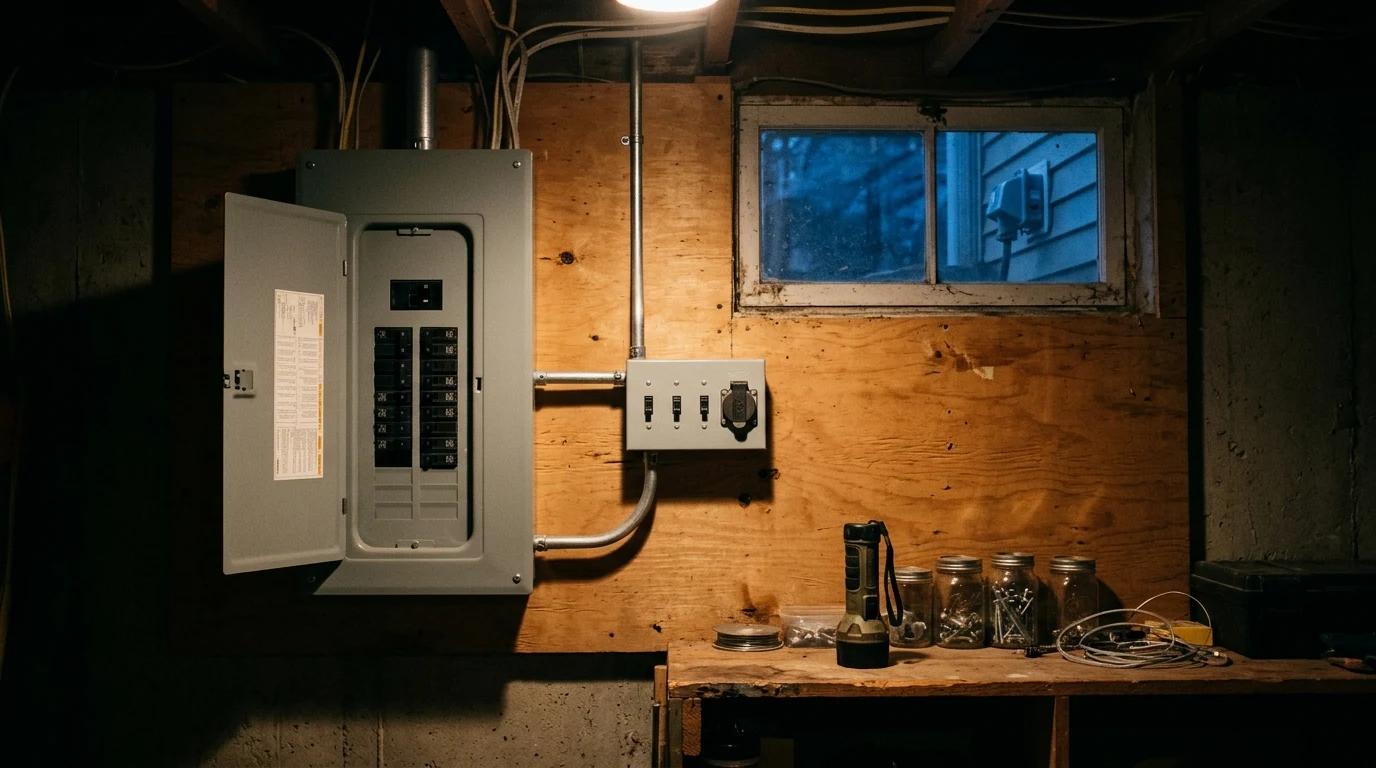
Transfer Switch vs Interlock Kit: Which to Install?
An interlock suits a panel with a listed kit and an owner who will manage breakers; a transfer switch suits preselected circuits and simple storm nights.
5 min read
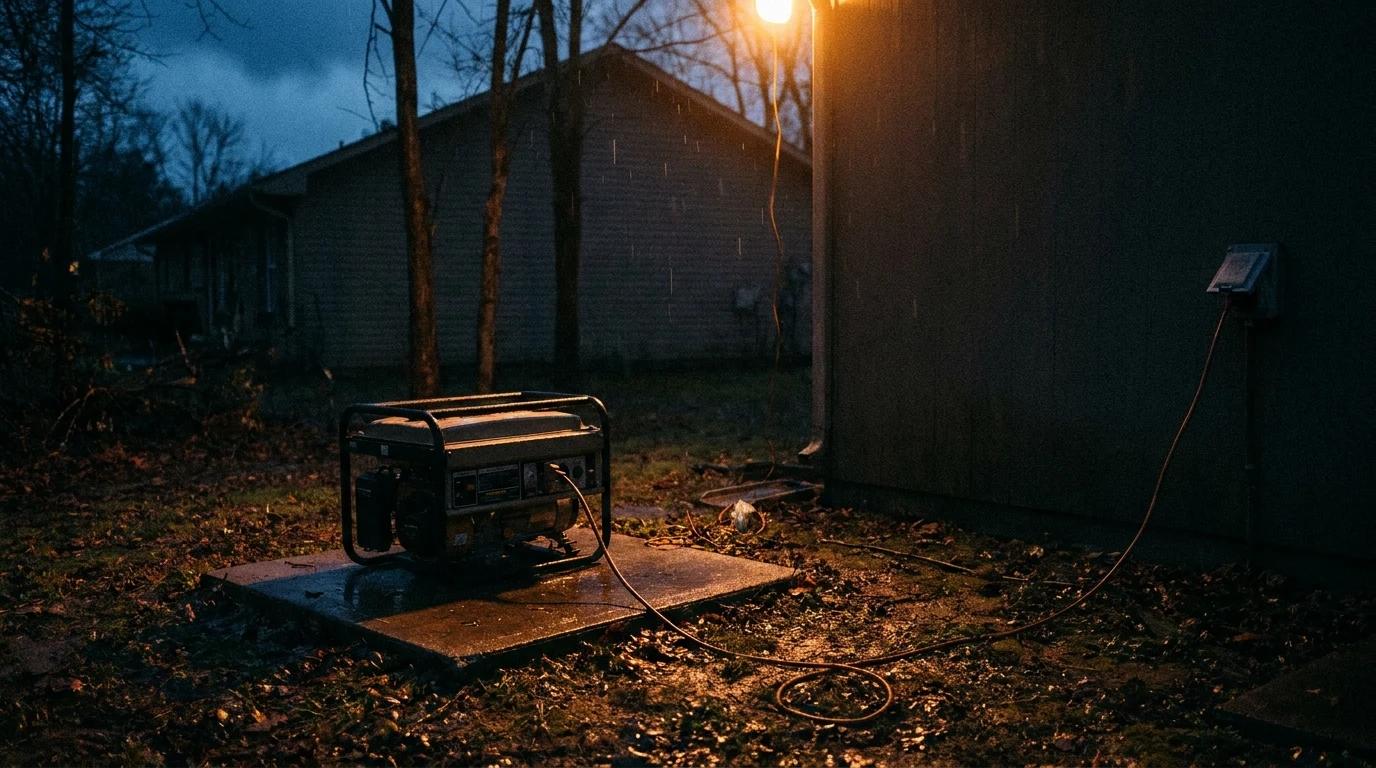
How to Connect a Generator to Your House Safely
Connect a generator with heavy-duty cords, or have an electrician fit a transfer switch or interlock with an inlet box. Never backfeed through an outlet.
5 min read
Power Station vs Generator: Which One Fits Your Outage?
A power station suits short outages and indoor use; a generator suits long outages and heavy loads you can run 20 feet from the house.
5 min read