Top pick
Anker SOLIX C1000 Gen 2
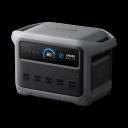
The one to buy if you buy one: 1,024 Wh gives a fridge about 10 hours, and Anker's stated 2,000 W output starts almost anything you would plug in.
$489.99Buy on Amazon
Backup power · 7 ranked · prices checked Nov 22
The 30-second answer: For most homes the best portable power station for an outage is the Anker SOLIX C1000 Gen 2: 1,024 Wh runs a fridge alone for about 10 hours, and a maker-stated 2,000 W starts almost anything you would plug in.
Top pick
The one to buy if you buy one: 1,024 Wh gives a fridge about 10 hours, and Anker's stated 2,000 W output starts almost anything you would plug in.
Value pick
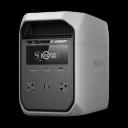
Same 1,024 Wh size as our top pick for less money, and a stated under-10 ms switchover for a router or PC left plugged in.
Budget pick
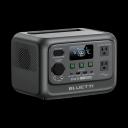
The lowest-priced way in: 288 Wh keeps a router going about 12 hours, and it weighs under 10 lb.
Skip this
Cheapest 1 kWh unit we looked at, but sold by a third party at the time of checking, and its rating is pooled with a sibling model.
Figures are the makers' stated values. Fridge hours = Wh × 0.85 ÷ 86 W.
| Spec | #1 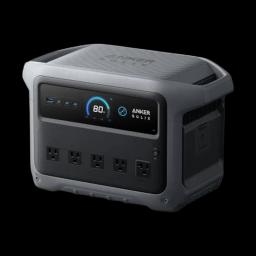 Anker SOLIX C1000 Gen 2 4.7 (1,771) stars on Amazon | #2 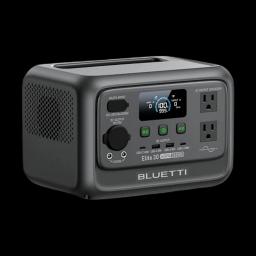 BLUETTI Elite 30 V2 4.5 (1,273) stars on Amazon | #3 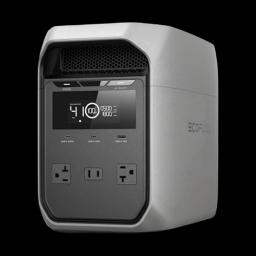 EcoFlow DELTA 3 Classic 4.7 (1,388) stars on Amazon | #4 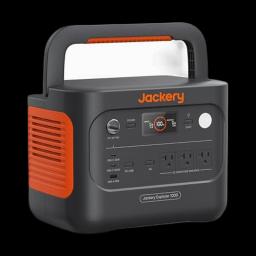 Jackery Explorer 1000 v2 4.7 (3,726) stars on Amazon | #5 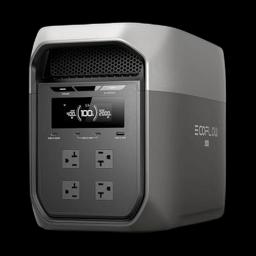 EcoFlow DELTA 3 Max 4.7 (654) stars on Amazon | #6 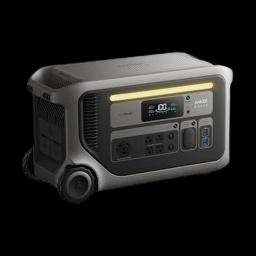 Anker SOLIX F3000 4.5 (257) stars on Amazon | #7 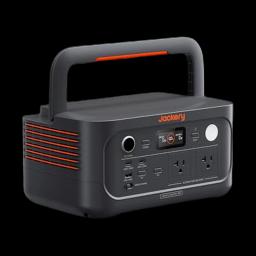 Jackery Explorer 500 v2 4.4 (123) stars on Amazon |
|---|---|---|---|---|---|---|---|
| Buy | Buy on Amazon$489.99 | Buy on Amazon$329.99 | Buy on Amazon$438.90 | Buy on Amazon$559.00 | Buy on Amazon$854.00 | Buy on Amazon$1,699.99 | No price verified |
| Ready Score | 73 | 53 | 78 | 56 | 65 | 72 | 58 |
| Fridge, alone | ~10 h | ~3 h | ~10 h | ~10 h | ~20 h | ~30 h | ~5 h |
| Capacity (Wh) | 1,024 Wh | 288 Wh | 1,024 Wh | 1,024 Wh | 2,048 Wh | 3,072 Wh | 512 Wh |
| AC Output (W) | 2,000 W | 600 W | 1,800 W | 1,500 W | 2,400 W | 3,600 W | 500 W |
| Surge Output (W) | 3,000 W | 1,500 W | 3,600 W | 3,000 W | Not stated | Not stated | 1,000 W |
| Battery Chemistry | LiFePO4 | LFP | LiFePO4 | LFP | LFP | LiFePO4 | LiFePO4 |
| Recharge Time (h) | 0.8 h | 1.2 h | 0.75 h to 80% | 1.25 h (50 min in emergency mode) | 1.13 h to 80% | Not stated | 0.9 h to 80% |
| Weight (lb) | 24.9 lb | 9.5 lb | 26.7 lb | 23.3 lb | Not stated | 91.5 lb | 12.6 lb to 14 lb |
| Best for | most homes | Wi-Fi and phones | Best low-cost 1 kWh station | Best-selling 1 kWh with the most owners | a fridge and a freezer | more than a day on one charge | a no-heater CPAP through a night |
| Why it is here | The one to buy if you buy one: 1,024 Wh gives a fridge about 10 hours, and Anker's stated 2,000 W output starts almost anything you would plug in. OutdoorGearLab also names it the best value for most people. | The lowest-priced way in: 288 Wh keeps a router going about 12 hours, and it weighs under 10 lb. A fridge gets under 3 hours, so buy it for small loads only. | Same 1,024 Wh size as our top pick for less money, and a stated under-10 ms switchover for a router or PC left plugged in. You give up 200 W of output and carry about 1.5 lb more. | The best seller of the group and the lightest stated 1 kWh unit here at 23.3 lb. Choose it if the weight or the long ownership record matters more than peak watts. | Double the battery of the 1 kWh group without the wheels-and-handle bulk of a 3 kWh unit. Buy it when a freezer also has to stay cold: about 12 hours for both, or about 20 for the fridge alone. | The most battery here without moving into whole-circuit gear: 3,072 Wh and 3,600 W, with solar input Anker rates up to 2,400 W. At 91.5 lb it rolls, and it does not get carried. | A step up that nearly doubles the Elite 30 V2's stored energy while staying a one-hand carry. Pick it when a no-heater CPAP has to last about 7 hours at the generic 60 W figure. |
| The trade-off | Fastest charging has to be switched on in the app | 288 Wh runs a fridge for under 3 hours | 1,800 W output is lower than the Anker's stated 2,000 W | 1,500 W output is the lowest of the 1 kWh picks | X-Boost is a limited mode, and the continuous rating is 2,400 W | 91.5 lb means it stays on one floor | 500 W output limits it to small appliances |
| Pros |
|
|
|
|
|
|
|
Prices checked November 22, 2026 and may have changed. A Buy button appears only where Amazon showed a live price; specs are what each maker states, and Ready Score is a reading aid, not the ranking.
Stored watt-hours decide how long you last. Output watts decide what can start. Add up what must run, multiply by hours, then divide by 0.85 for inverter loss.
A fridge is the load that sets the size. It averages about 86 W once you count the compressor's rest periods, by Silicon Valley Power's figure for an ENERGY STAR 25 cu ft side-by-side, and Champion puts its start at up to 1,200 W. So a full day needs about 2,400 Wh, and a 1,000 Wh station runs a fridge alone for about 10 hours. Add a router, two LED bulbs and a phone, and that same station lasts about 5.4 hours.
Rule of thumb: size for the night you actually expect, then add solar or a second unit if your outages run longer.
Ready.gov says a closed fridge keeps food cold for about four hours and a full freezer for about 48. That is the real deadline, and you can run the fridge in shifts to stretch a smaller battery.
LiFePO4 chemistry is now standard, so do not pay extra for it. Every pick here uses it. Recharge speed matters more than most people think: when the grid flickers back for an hour, a fast charger refills the whole thing. Solar bundles are optional; see portable solar panels once you have the station.
A battery station has no exhaust. Consumer Reports notes power stations do not pose a CO risk, which is why they suit apartments and bedrooms where a portable generator can never go.
Need whole-circuit backup or room to add batteries? That is a different purchase: see home backup battery systems.
A 1,000 Wh station runs a fridge alone for about 10 hours, and a full 24 hours takes about 2,400 Wh. That uses an 86 W average and 0.85 for inverter loss.
Yes. It burns no fuel and has no exhaust, and Consumer Reports notes power stations do not pose a CO risk. Keep it dry and clear of anything that blocks its vents.
Check your own machine. At the generic 60 W no-heater figure, 288 Wh gives about 4 hours and 512 Wh about 7, and a heated humidifier halves that. Ask your medical provider for an outage plan, as Ready.gov advises.
Jackery states about 5% drain over six months for the Explorer 500 v2. Other makers state their own figures. Top it up on a schedule so it is full when you need it.