Top pick
Kidde COB Battery CO Alarm
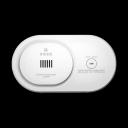
The cheapest current alarm that does the outage job: two AA batteries, Kidde's UL 2034 5th Edition statement, and no extras to pay for.
$24.97Buy on Amazon
Heat, air, safety · 7 ranked · prices checked Nov 22
The 30-second answer: The best battery carbon monoxide detector for most homes is the Kidde COB: it runs on two AA batteries with no house power, Kidde states UL 2034 5th Edition, and it costs little enough to put one outside every sleeping area.
Top pick
The cheapest current alarm that does the outage job: two AA batteries, Kidde's UL 2034 5th Edition statement, and no extras to pay for.
Skip this
Its listing rates 4.2 stars, under our 4.3-star minimum; the Kidde 30CUDR is the smoke-and-CO combo we list instead.
Figures are the makers' stated values.
| Spec | #1 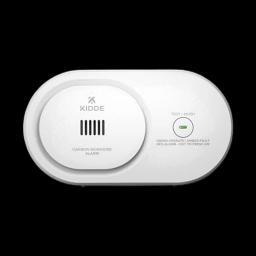 Kidde COB Battery CO Alarm 4.6 (428) stars on Amazon | #2  Kidde COBD10 10-Year CO Alarm with Display 4.6 (90) stars on Amazon | #3  First Alert CO710 4.6 (4,118) stars on Amazon | #4  Kidde COBDL Low-Level CO Alarm with Display 4.5 (87) stars on Amazon | #5  First Alert CO615 4.6 (8,841) stars on Amazon | #6  Kidde 30CUDR Smoke and CO Alarm 4.5 (806) stars on Amazon | #7  X-Sense SC07-W (6-Pack) 4.4 (1,516) stars on Amazon |
|---|---|---|---|---|---|---|---|
| Buy | Buy on Amazon$24.97 | Buy on Amazon$51.97 | Buy on Amazon$42.78 | Buy on Amazon$40.47 | Buy on Amazon$44.95 | Buy on Amazon$49.97 | Buy on Amazon$215.99 |
| Ready Score | 63 | 76 | 84 | 73 | 74 | 55 | 75 |
| Power Source | 2 AA batteries | Built-in battery, 10-year | Sealed 3V lithium, 10-year | 2 AA batteries | Plug-in with 2 AA battery backup | 2 AA batteries | Sealed lithium, 10-year |
| Sensor Life (yr) | Not stated | 10 yr | 10 yr | Not stated | Not stated | Not stated | 10 yr |
| Digital Display | No | Yes, backlit | Yes, with peak level memory | Yes, backlit | Yes, with peak level memory | Not stated | Yes, LCD |
| UL 2034 Listed | Yes, Kidde states UL 2034 5th Edition; ETL listed | Yes, Kidde states UL 2034 5th Edition; ETL listed | Yes, First Alert states compliance | Yes, Kidde states UL 2034 5th Edition; ETL listed | Yes, First Alert states compliance | Yes, Kidde states UL 2034 5th Edition; ETL listed | Yes, listing states UL 2034 certification; X-Sense's page states ETL certification |
| Interconnect | Not stated | Not stated | No, single station | Not stated | Not stated | No | Yes, wireless RF between units |
| Best for | covering several rooms on a budget | a bedroom with no night chirps | a fit-and-forget alarm with a reading | a household with vulnerable people | an outlet-powered alarm with battery backup | smoke and CO in one battery unit | whole-home interconnected alarms |
| Why it is here | The cheapest current alarm that does the outage job: two AA batteries, Kidde's UL 2034 5th Edition statement, and no extras to pay for. | Kidde's current 10-year digital alarm, which replaces the C3010D. It suits a bedroom because it holds low-battery chirps overnight, and Kidde publishes its alarm response times. | The one to buy if you want to fit it once: a sealed 10-year cell, a digital display and a peak memory, with nothing to replace.First Alert's own store lists this model as sold out and names no replacement; Amazon still sells it new. | Kidde adds a low-level alert from 30 ppm before its standard alarm at 70 ppm, worth having in a home with an infant, an older adult or someone with a heart or lung condition. | A plug-in with a display and two AA batteries behind it. Only worth choosing if you want an outlet-powered alarm day to day; in an outage it is a battery alarm.First Alert's own store lists this model as sold out and names no replacement; Amazon still sells it new. | Replaces an old smoke alarm and adds CO in one battery unit, the sensible buy when a hallway alarm is due for replacement anyway. | The whole-house answer to the interconnect advice from CPSC and NFPA: six battery combo alarms that talk wirelessly, so a basement alarm wakes the top floor, without wiring. |
| The trade-off | No display, so you get an alarm but no CO reading | A newer listing with a modest review count of 90 | The whole alarm is replaced when the cell ends | More alerts mean more investigating when levels are low | Useless in an outage if the AA batteries are flat or missing | No interconnect on this model, per Kidde's comparison table | The largest outlay on this page |
| Pros |
|
|
|
|
|
|
|
Prices checked November 22, 2026 and may have changed. A Buy button appears only where Amazon showed a live price; specs are what each maker states, and Ready Score is a reading aid, not the ranking.
An outage is when the risk climbs: generators, heaters and stoves come out, and a plug-in alarm with no battery goes dark. CDC tells households to install battery-operated or battery back-up detectors near every sleeping area. CPSC adds every level of the home, and says interconnected alarms are best because when one sounds, they all sound.
Rule of thumb: one outside every sleeping area, plus one on every other level.
CDC suggests considering a digital readout because it can show the highest CO level in the home as well as sounding an alarm. That peak number helps when you are deciding whether a heater or generator is causing a problem, and when you are telling a fire department what happened.
NFPA's instruction is to move to fresh air outdoors or by an open window or door, account for everyone, and call for help from there. Do not stay inside to find the source.
| What the alarm does | What it cannot do |
|---|---|
| Warns of rising CO | Make an unsafe heater or generator location safe |
| Keeps working on battery | Replace outdoor-only rules for stoves and generators |
If you plan to run a fuel heater indoors, read indoor-rated heaters first. The CO alarm comes before any of them.
Battery-powered models do, and plug-in or hardwired models only do if their backup battery is installed and good. CDC tells households to use battery-operated or battery back-up detectors.
CPSC says every level of the home and outside sleeping areas. NFPA says the same and recommends interconnecting them where you can.
Follow the maker's date. CDC says to follow the manufacturer's instructions or replace every 5 years; First Alert and Kidde 10-year models signal when they reach end of life.
No. CDC says never to use a generator inside a home or garage and never to use a portable gas camp stove indoors. An alarm warns you; it does not change those rules.