Top pick
Westinghouse WGen5300DFcv
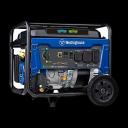
Enough power for a fridge, furnace, well pump and lights at a low price for this size.
$579.00Buy on Amazon
Backup power · 6 ranked · prices checked Nov 22
The 30-second answer: The best portable generator for a power outage is the Westinghouse WGen5300DFcv: dual fuel, a CO shutdown the maker states, and a 30-amp twist-lock outlet ready for a transfer switch. Never run any generator indoors or in a garage.
Top pick
Enough power for a fridge, furnace, well pump and lights at a low price for this size.
Value pick
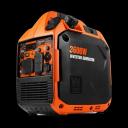
A dual-fuel inverter at 49 lb that one person can actually move.
Budget pick
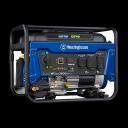
The lowest price here for a dual-fuel generator with a stated CO shutdown.
Skip this
Rated 4.0 on the live listing, below our 4.3-star minimum; the WGen5300DFcv is rated higher for much the same job.
Figures are the makers' stated values.
| Spec | #1 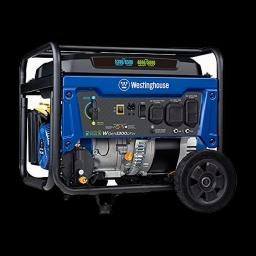 Westinghouse WGen5300DFcv 4.5 (1,048) stars on Amazon | #2  Westinghouse WGen3600DFcv 4.6 (239) stars on Amazon | #3 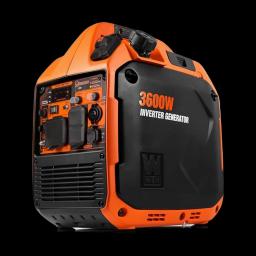 WEN DF360iX 4.4 (551) stars on Amazon | #4 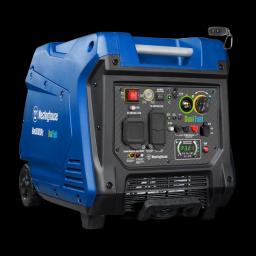 Westinghouse iGen5000DFc 4.6 (1,171) stars on Amazon | #5 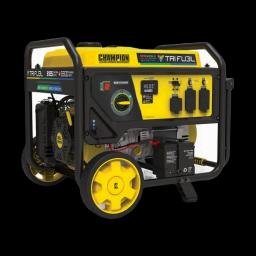 Champion 201169 Tri-Fuel 4.5 (168) stars on Amazon | #6 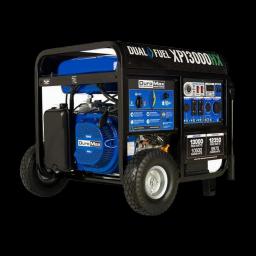 DuroMax XP13000HX 4.4 (1,052) stars on Amazon |
|---|---|---|---|---|---|---|
| Buy | Buy on Amazon$579.00 | Buy on Amazon$399.00 | Buy on Amazon$521.00 | Buy on Amazon$999.00 | Buy on Amazon$999.00 | No price verified |
| Ready Score | 71 | 63 | 65 | 78 | 64 | 72 |
| Running Watts | 5,300 W gasoline, 4,800 W propane | 3,600 W gasoline, 3,240 W propane | 2,900 W gasoline, 2,600 W propane | 3,900 W gasoline, 3,500 W propane | 6,500 W gasoline, 6,000 W propane, 5,500 W natural gas | 10,500 W gasoline, 10,000 W propane |
| Starting Watts | 6,500 W | 4,650 W | 3,600 W | 5,000 W | 8,125 W | 13,000 W |
| Fuel Type | Gasoline, propane | Gasoline, propane | Gasoline, propane | Gasoline, propane | Gasoline, propane, natural gas | Gasoline, propane |
| CO Shutoff | Yes, maker-stated | Yes, maker-stated | Yes, maker-stated | Yes, maker-stated | Yes, maker-stated | Yes, maker-stated |
| Noise (dBA) | 68 dBA | Not stated | 65 dB at quarter load (no distance stated) | 52 dBA | 74 dBA | Not stated |
| Weight (lb) | 135.6 lb | 108 lb | 49 lb | 105.8 lb | 197 lb | 240 lb |
| Best for | most houses | Best low-cost generator with a CO shutoff | Best small, light inverter | Best quiet generator for essentials | Best if you have a natural gas line | running most of a house |
| Why it is here | Enough power for a fridge, furnace, well pump and lights at a low price for this size. It has a maker-stated CO shutdown and a 30-amp outlet for a transfer switch. Outdoors only, more than 20 feet from the house. | The lowest price here for a dual-fuel generator with a stated CO shutdown. It covers a fridge, furnace blower and lights. Its outlets are 120 V, so plan on cords and not a 240 V transfer switch. | A dual-fuel inverter at 49 lb that one person can actually move. It powers a fridge and electronics cleanly but will not run a house, so pick it for a small load or a block with close neighbors. | The quiet one with real power: Westinghouse states as low as 52 dBA, 3,900 running watts and a remote start. Choose it when noise matters and you can live without a 240 V outlet.Westinghouse's site now lists an iGen5000DFc EFI with fuel injection at the same stated watts. This listing is the carbureted model. | Runs on natural gas, so a house with a gas line never needs a fuel run. Hoses for natural gas and propane are included, and the CO Shield shutoff is maker-stated. | The most power here: 10,500 running watts and a 50-amp outlet for a transfer switch, enough for central air if sized carefully. DuroMax states a CO sensor shutdown. It takes a lot of fuel and a real outdoor spot. |
| The trade-off | Open frame at a stated 68 dBA, so neighbors will hear it | No 240 V outlet, so no L14-30 transfer switch hookup | 2,900 running watts limits you to essentials | 105.8 lb even with wheels | 74 dBA is the loudest figure here | 240 lb, which is not moved casually |
| Pros |
|
|
|
|
|
|
Prices checked November 22, 2026 and may have changed. A Buy button appears only where Amazon showed a live price; specs are what each maker states, and Ready Score is a reading aid, not the ranking.
Never run a generator inside your home or garage, even with the doors and windows open. The CDC says to run it outside, more than 20 feet from windows, doors and vents. Keep working battery CO alarms on every level, as Ready.gov advises.
In a 2022 release, CPSC estimated that portable generators have been associated with 790 non-fire CO poisoning deaths since 2008. It urges buyers to look for a model that shuts off automatically when CO builds up. Every pick here has a maker-stated CO shutoff. That feature is a backstop and does not make indoor use safe.
Rule of thumb: size to running watts of what you will really run, and check that the largest motor's start fits the starting-watts figure.
Champion's method: add the running watts of what must run together, then add the highest single starting watts. Using the top of Champion's ranges, a fridge, a 1/2 HP furnace fan, a router and two LED bulbs are 1,250 W running and a 2,850 W peak, so a 3,600 W generator covers them. Add a 1/2 HP well pump and the peak is 4,250 W, which needs about 5,000 W. The generator sizing tool does this for your own list.
Dual fuel earns its small premium. Champion says gasoline can degrade within months unless stabilized, which is why propane appeals for a machine that sits idle. Champion puts propane about 10% below gasoline on power; Westinghouse states 4,800 running watts on propane against 5,300 on gas for the WGen5300DFcv.
Run heavy-duty outdoor cords to appliances, or have an electrician fit a transfer switch or inlet and interlock. Never backfeed a dryer outlet. See generator cords and inlets.
Only own a generator if you can store fuel and put it 20 feet from the house. If you rent an apartment, buy a power station instead.
The CDC says more than 20 feet from windows, doors and vents, and never inside a home or garage, even with doors and windows open.
A fridge, furnace fan, router and two bulbs peak at about 2,850 W using the top of Champion's ranges, so 3,600 W covers them. Add a 1/2 HP well pump and the peak is about 4,250 W, so buy about 5,000 W.
For outages, usually yes. Propane does not go stale in storage. It gives somewhat less power, so size up slightly; Westinghouse states 4,800 running watts on propane against 5,300 on gas for its 5300 model.
Only to power home circuits. OSHA warns that connecting to a building's wiring without one can energize lines for great distances, so have an electrician install it. Otherwise run outdoor-rated cords to the appliances.