Top pick
Jackery HomePower 3600 Plus
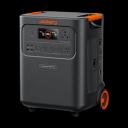
The strongest balance of capacity, cost and simplicity: 3,584 Wh today, and Jackery states 21 kWh when you add batteries.
$1,899.00Buy on Amazon
Backup power · 5 ranked · prices checked Nov 22
The 30-second answer: The best home backup battery system for most houses is the Jackery HomePower 3600 Plus: 3,584 Wh to start, a stated path to 21 kWh, and a plug-in setup that does not need solar or a contractor to get going.
Top pick
The strongest balance of capacity, cost and simplicity: 3,584 Wh today, and Jackery states 21 kWh when you add batteries.
Value pick
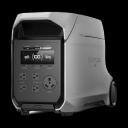
A 3 kWh system to keep indoors: EcoFlow states 25 dB running, and it grows to 11 kWh.
Budget pick
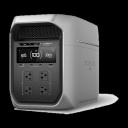
The lowest-priced starter here that can still expand: 2,048 Wh at a stated 3,000 W, and EcoFlow states expansion to 10 kWh with its extra batteries.
Skip this
Its Amazon listing now opens a DJI car-charger cable instead of the Power 2000, so there is no listing for it to link.
Figures are the makers' stated values. Fridge hours = Wh × 0.85 ÷ 86 W.
| Spec | #1 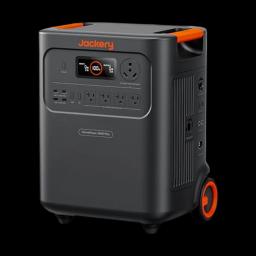 Jackery HomePower 3600 Plus 4.6 (223) stars on Amazon | #2 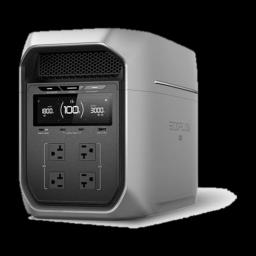 EcoFlow DELTA 3 Max Plus 4.6 (112) stars on Amazon | #3 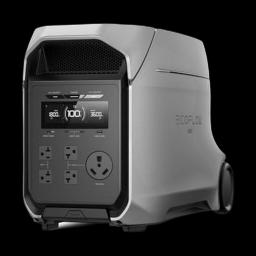 EcoFlow DELTA 3 Ultra Plus 4.4 (183) stars on Amazon | #4 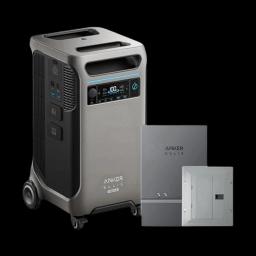 Anker SOLIX F3800 Plus with Home Power Panel 4.4 (145) stars on Amazon | #5  EcoFlow DELTA Pro 3 4.3 (721) stars on Amazon |
|---|---|---|---|---|---|
| Buy | Buy on Amazon$1,899.00 | Buy on Amazon$1,149.00 | Buy on Amazon$1,599.00 | No price verified | No price verified |
| Ready Score | 65 | 51 | 57 | 75 | 75 |
| Fridge, alone | ~35 h | ~20 h | ~30 h | ~38 h | ~40 h |
| Capacity (Wh) | 3,584 Wh | 2,048 Wh | 3,072 Wh | 3,840 Wh | 4,096 Wh |
| Expandable To (Wh) | 21,000 Wh | 10,000 Wh | 11,000 Wh | 26,900 Wh | 48,000 Wh |
| AC Output (W) | 3,600 W | 3,000 W | 3,600 W | 6,000 W | 4,000 W |
| Surge Output (W) | Not stated | Not stated | 7,200 W | 10,200 W | 6,000 W with X-Boost |
| Battery Chemistry | LFP | LiFePO4 | LFP | LFP | LFP |
| Transfer Time (ms) | Under 10 ms | Under 10 ms | Under 10 ms | Not stated | 20 ms with Smart Home Panel 2 |
| Weight (lb) | 77.2 lb | 49 lb | 74 lb | 135.6 lb | 115 lb |
| Best for | most houses | Best low-cost starter system | quiet indoor use | Best complete whole-circuit kit | Best single unit for 240 V loads |
| Why it is here | The strongest balance of capacity, cost and simplicity: 3,584 Wh today, and Jackery states 21 kWh when you add batteries. It rolls where you need it, and a plug-in setup gets you running the same day.Jackery added the HomePower 3600 Pro Max in June 2026, built around automatic backup. The 3600 Plus remains in Jackery's lineup. | The lowest-priced starter here that can still expand: 2,048 Wh at a stated 3,000 W, and EcoFlow states expansion to 10 kWh with its extra batteries. It gives a fridge about 20 hours today, with room to add more later. | A 3 kWh system to keep indoors: EcoFlow states 25 dB running, and it grows to 11 kWh. It is the pick for a bedroom or a living room during a long night, not for a large expansion plan. | The closest thing here to a finished system: battery and Home Power Panel in one purchase, a stated 6,000 W of output and 240 V. Pay for it if you want circuits backed up without shopping for each part. | One unit that does 240 V without a second box: 4,096 Wh, 4,000 W, and a stated 48 kWh ceiling. It is OutdoorGearLab's home backup pick, and it is the one to buy if a well pump or central air must run. |
| The trade-off | 120 V only unless you link two units for 240 V | 120 V, so no 240 V loads | Expands to 11 kWh, the lowest ceiling here | 135.6 lb, wheels or not | 115 lb, so plan on it staying put |
| Pros |
|
|
|
|
|
Prices checked November 22, 2026 and may have changed. A Buy button appears only where Amazon showed a live price; specs are what each maker states, and Ready Score is a reading aid, not the ranking.
A 120 V system runs fridges, lights, routers, a gas furnace blower and most outlets. It cannot start a 240 V well pump, a central air unit or an electric dryer without help. TheSolarLab notes the HomePower 3600 Plus only reaches 240 V by linking two units through a hub. EcoFlow states the DELTA Pro 3 does 120 V and 240 V from one unit, and Anker states the same of the F3800 Plus.
List your 240 V loads before anything else. If you have none you need, buy capacity and skip the 240 V premium.
Rule of thumb: the base battery gets you started. The expansion path is what you are really choosing.
Plug-in use needs nothing: run cords to the fridge. To power circuits, you need one of three things, all installed by an electrician: a manual transfer switch, an inlet box with an interlock, or a maker's smart panel. OSHA warns that connecting directly to a building's wiring without a proper transfer switch can energize lines for great distances and endanger utility workers.
EcoFlow states a 20 ms switchover with its Smart Home Panel 2. A manual switch means you walk to the garage.
A fridge alone takes about 2,400 Wh a day from a battery, so the 3,584 Wh Jackery gives one about 35 hours. Anker says one F3800 Plus base is about a day for a family, and central air can use that much in a few hours. Size your load before paying for expansion batteries.
If you only want a fridge and a router, this category is overkill. A portable power station does that for much less.
Rarely at the base size. A fridge alone takes about 2,400 Wh a day, and Anker describes one F3800 Plus base as about a day for a family's essentials. Central air and electric heat use far more, and those need 240 V and much more capacity.
Not to plug appliances into it. Connecting to home circuits needs a transfer switch or an inlet and interlock installed by a licensed electrician. OSHA warns that a direct connection without one can energize utility lines.
Most can. Jackery states a gas generator recharges the 3600 Plus in about 2.5 hours. Run the generator outdoors, more than 20 feet from windows, doors and vents, as the CDC says.