Guide
How to Connect a Generator to Your House Safely
Outage Ready Editorial · Updated November 16, 2026 · 5 min read
Quick answer
You can connect a generator to your house in three safe ways: run heavy-duty extension cords directly to appliances, or have an electrician install a manual transfer switch or an interlock kit, fed through an outdoor inlet box. Never plug a generator into a wall outlet.
Key takeaways
- Three safe methods exist: heavy-duty cords, a manual transfer switch, or an interlock kit with an inlet box.
- Never backfeed through a wall or dryer outlet. It can kill utility workers.
- Panel work belongs to a licensed electrician, and local code decides what passes.
- Keep the generator outdoors, more than 20 feet from windows, doors and vents, with a battery CO alarm working inside.
The three safe ways
You can connect a generator to your house in three safe ways: run heavy-duty extension cords directly to appliances, or have an electrician install a manual transfer switch or an interlock kit, fed through an outdoor inlet box. Everything else, especially plugging the generator into a wall outlet, is unsafe. Hire a licensed electrician for any work inside your panel.
| Method | Powers | Electrician needed | Good for |
|---|---|---|---|
| Extension cords | Plug-in appliances only | No | Fridge, lamps, chargers |
| Manual transfer switch and inlet | Preselected circuits | Yes | Furnace, well pump, hardwired loads |
| Interlock kit and inlet | Any circuit in the panel, within generator limits | Yes | Flexibility at lower hardware cost |
Never backfeed. Do not connect a generator to a wall or dryer outlet with a double-ended cord, whatever a video tells you.
Why backfeeding is off the table
Backfeeding sends generator power through your house wiring and out toward the utility lines. Generac's manual says failure to isolate the system may damage the generator and may result in injury or even death to utility workers. ESFI says backfeeding could electrocute workers making repairs. Champion calls plugging into a wall outlet extremely dangerous and says electrical codes in most areas prohibit it.
Generac states that using a portable generator on circuits normally fed by the utility requires a transfer switch by code, and that the switch must isolate your system from the utility distribution system whenever the generator runs. Check with your local authority for the rules that apply to you, since your inspector, not a forum, decides.
Option 1: Extension cords
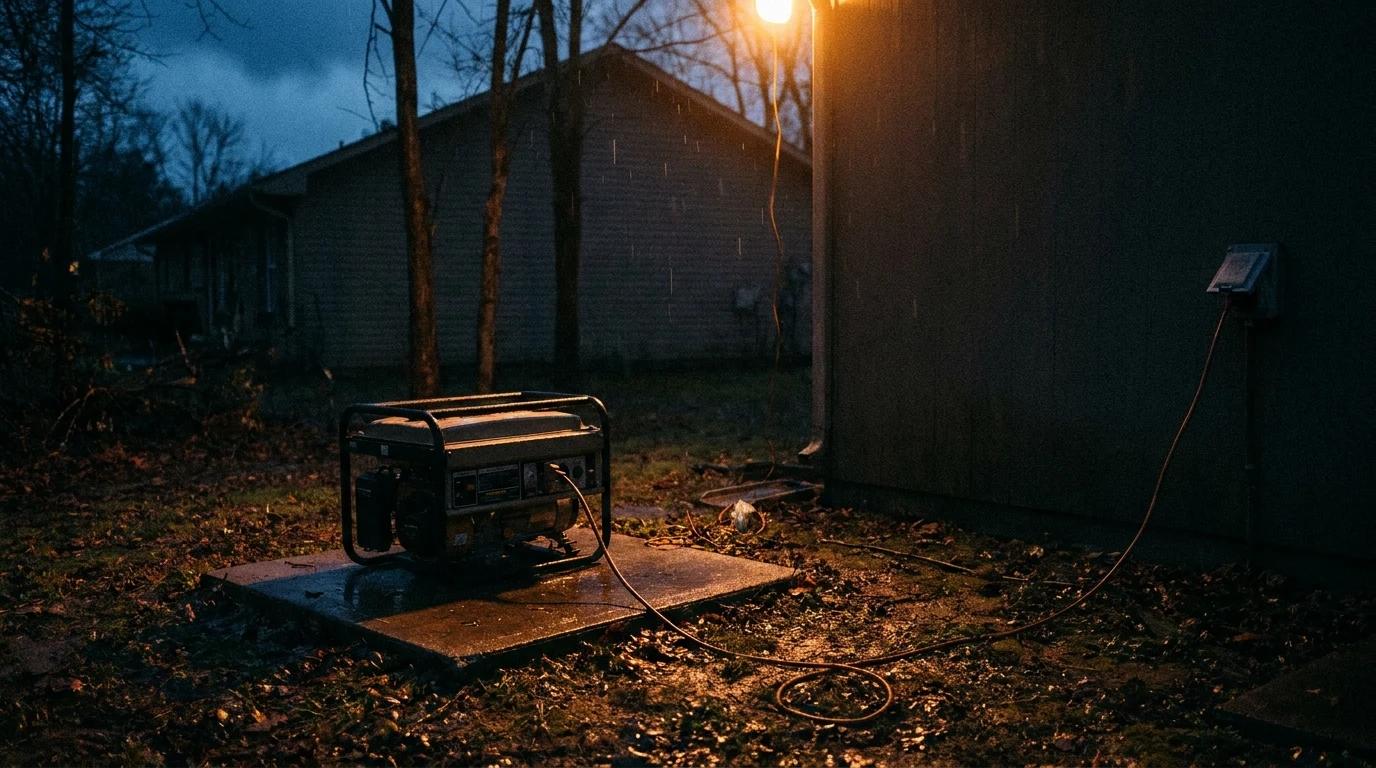
This is the simplest setup, and for a short outage it may be all you need. Ready.gov says to connect appliances to the generator with heavy-duty extension cords. Run them from the generator, placed outdoors, to the appliances you need.
- A Champion 48034 splitter cord turns a 30-amp twist-lock outlet into three household outlets.
- Champion suggests cracking a door or window only as much as the cord needs, and sealing around the opening so exhaust stays out. The generator itself still goes outdoors, more than 20 feet from that opening, per CDC.
The limit is obvious: a furnace blower or well pump wired into the house cannot plug into a cord.
Option 2: Manual transfer switch
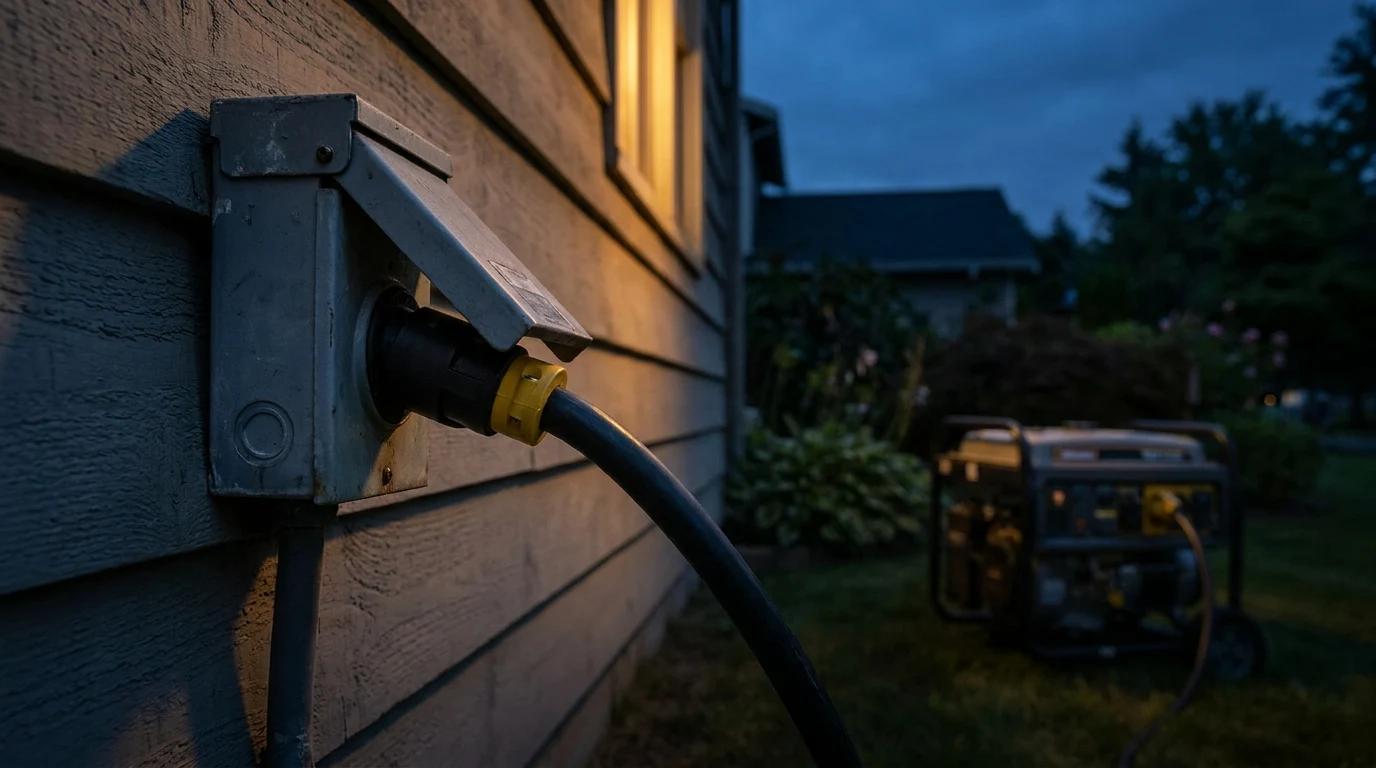
A manual transfer switch mounts beside your main panel, and an electrician moves your chosen circuits to it. Champion lists the usual picks as the refrigerator, furnace fan, well pump, sump pump, lighting and a few key outlets. Generac's switches use mechanically interlocked generator and utility mains, so both cannot be on at once.
You choose circuits in advance, which is both its strength and its limit: it is simple during a storm, but anything you left off stays off.
Option 3: Interlock kit
An interlock is a mechanical slide on your main panel. Champion describes it as physically preventing the main utility breaker and a generator breaker from being on together, while letting you power any circuit in the panel, within what the generator can supply.
It costs less in hardware than a switch, but you are the load manager. You turn off what you do not need. Whether an interlock satisfies your local code is a question for your electrician and inspector, and the kit must suit your exact panel. To weigh the two side by side, see transfer switch vs interlock kit.
Rule of thumb: a transfer switch suits a household that wants simple. An interlock suits someone who will manage breakers.
The parts you buy for either one
Both options use an outdoor inlet box and a cord between it and the generator. Champion says inlet boxes come in 30 or 50 amp versions, matched to your generator's outlet, typically NEMA L14-30 or 14-50. Generac's 30-amp kits list a 10/4 cord with L14-30 ends, and its 50-amp kit a 6/4 cord.
| Generator outlet | Cord | Inlet |
|---|---|---|
| 30-amp L14-30 | Champion 25 ft L14-30 | Reliance Controls PB30 |
| 50-amp 14-50 | Champion 30 ft 50A cord | Connecticut Electric EGSPI50 |
Check your generator's outlet before buying, and see the generator cords page for lengths and gauges.
Size the generator to the circuits
Add up what will run at once, plus the largest starting surge. Champion's method is total running watts plus the highest starting watts. A 1/2 HP furnace fan runs at 300 to 800 W and can start at up to 1,600 W. A fridge runs at 150 to 400 W and starts at up to 1,200 W. The Generator Sizing tool does this for your list, and the Westinghouse WGEN5300DFcv states 5,300 running watts on gasoline, comfortably above a fridge plus a furnace fan. Compare with a battery in power station vs generator.
The order to do it in
- List the circuits you cannot go without. Champion's list is a good start: fridge, furnace fan, well pump, sump pump, lighting and a few outlets.
- Read your generator's outlet. It decides the cord and the inlet. A generator with no 30-amp twist-lock outlet may only suit the cord method.
- Get a licensed electrician to quote the job. Champion says they can handle permits and local code as well as the wiring.
- Choose the location for the inlet. It sets how far the generator sits from the house, and so how long your cord must be.
- Test it before you need it. Champion advises testing with the generator running, to confirm each circuit works as expected.
Run the generator on a schedule between storms, as your manual directs. A setup that has never been tested is a guess. If you want no pull-starting at all, Champion also describes automatic setups, but these usually mean a permanently installed standby generator, which is a different project from this one.
Where the generator goes
A good connection does not change the first rule. CDC says to operate a generator outdoors, more than 20 feet from windows, doors and vents, and never inside a home or garage, even with doors and windows open. It also says to use a battery-powered or battery backup CO detector, such as the Kidde COB, in your home. Longer cords are how you get the distance. Ready.gov adds that a generator should be kept dry and allowed to cool before refueling.
Questions people ask
Can I plug a generator into a wall outlet or dryer outlet?
No. That is backfeeding. Champion says it is extremely dangerous and prohibited by electrical codes in most areas, and Generac warns it can injure or kill utility workers.
Do I need an electrician to connect a generator?
Not for extension cords to appliances. Champion says a transfer switch or interlock involves your electrical panel and should be done by, or under the guidance of, a licensed electrician.
Is an interlock kit as good as a transfer switch?
Both stop the generator and the utility feeding your panel together. A switch limits you to chosen circuits; an interlock lets you pick any circuit but makes you manage the load. Your local inspector decides what is acceptable.
What cord do I need for a 30-amp generator outlet?
A cord with L14-30 ends. Generac's 30-amp transfer kits list a 10/4 cord.
Sources for this guide
- Generac: Manual transfer switch installation guidelines
- Generac: GenTran manual transfer switch kits
- Champion: Guide to house generator hook up
- ESFI: Portable generator safety
- CDC: Carbon monoxide poisoning basics and prevention
- Ready.gov: Power outages
- Champion: Generator wattage chart
- Champion: What size generator do I need?
Outage Ready Editorial
We work out the arithmetic and read the maker and agency pages so you do not have to. About us.
Read next
Power Station vs Generator: Which One Fits Your Outage?
A power station suits short outages and indoor use; a generator suits long outages and heavy loads you can run 20 feet from the house.
5 min read
What Size Power Station Do I Need? The Simple Arithmetic
Multiply watts by hours, divide by 0.85, and you have your size. A fridge for a day takes about 2,400 Wh.
5 min read