Guide
Non-Perishable Food for a Power Outage: A No-Cook List
Outage Ready Editorial · Updated November 21, 2026 · 5 min read
Quick answer
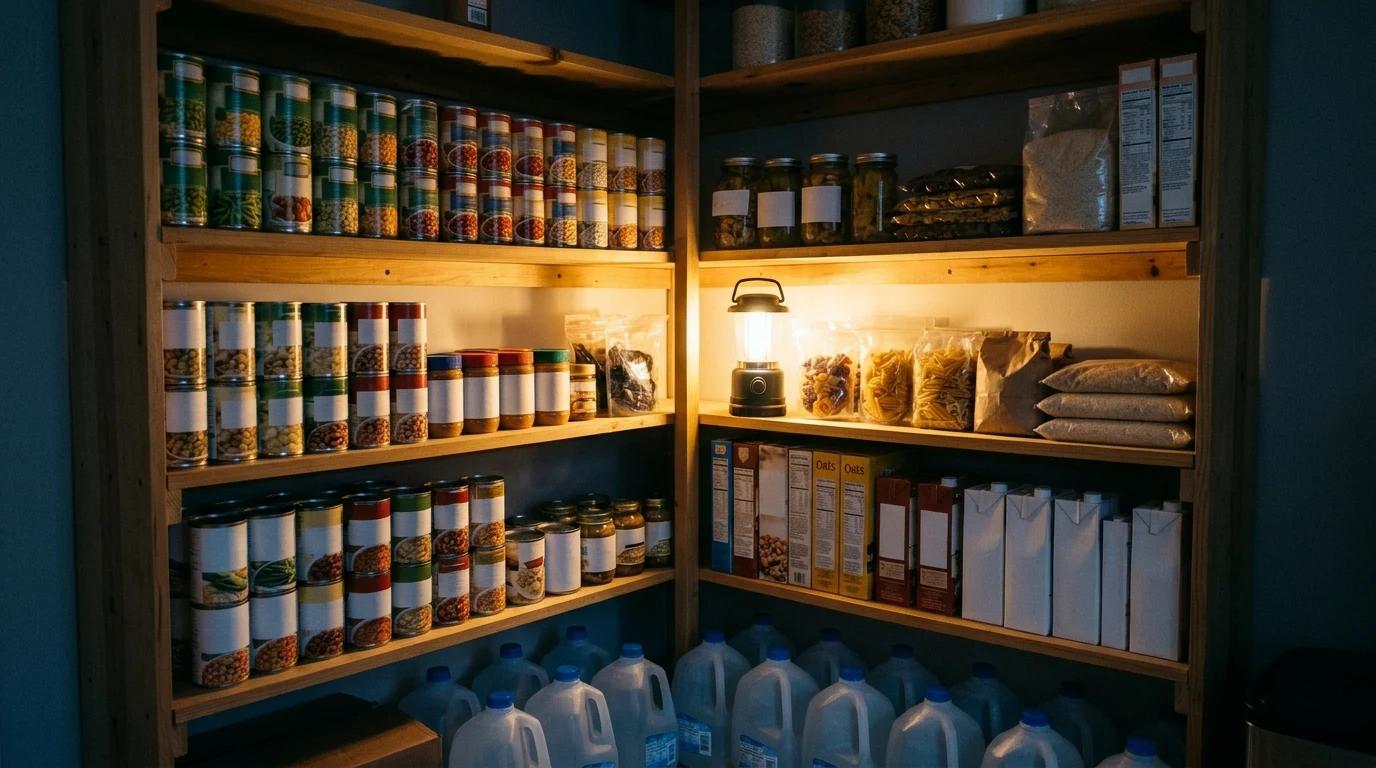
Stock food you can eat cold from the package: ready-to-eat canned meat, fish, beans and fruit, peanut butter, crackers, cereal with shelf-stable milk, protein bars and dried fruit, plus a manual can opener and at least one gallon of water per person per day for several days.
Key takeaways
- Build the first three days around food you can eat cold, straight from the package.
- Ready.gov says store at least one gallon of water per person per day, more in hot weather.
- A family of four needs about 12 gallons of water for three days.
- USDA puts low-acid canned goods at 2 to 5 years and high-acid ones at 12 to 18 months.
- Discard swollen, deeply dented, seam-dented or heavily rusted cans.
The short answer
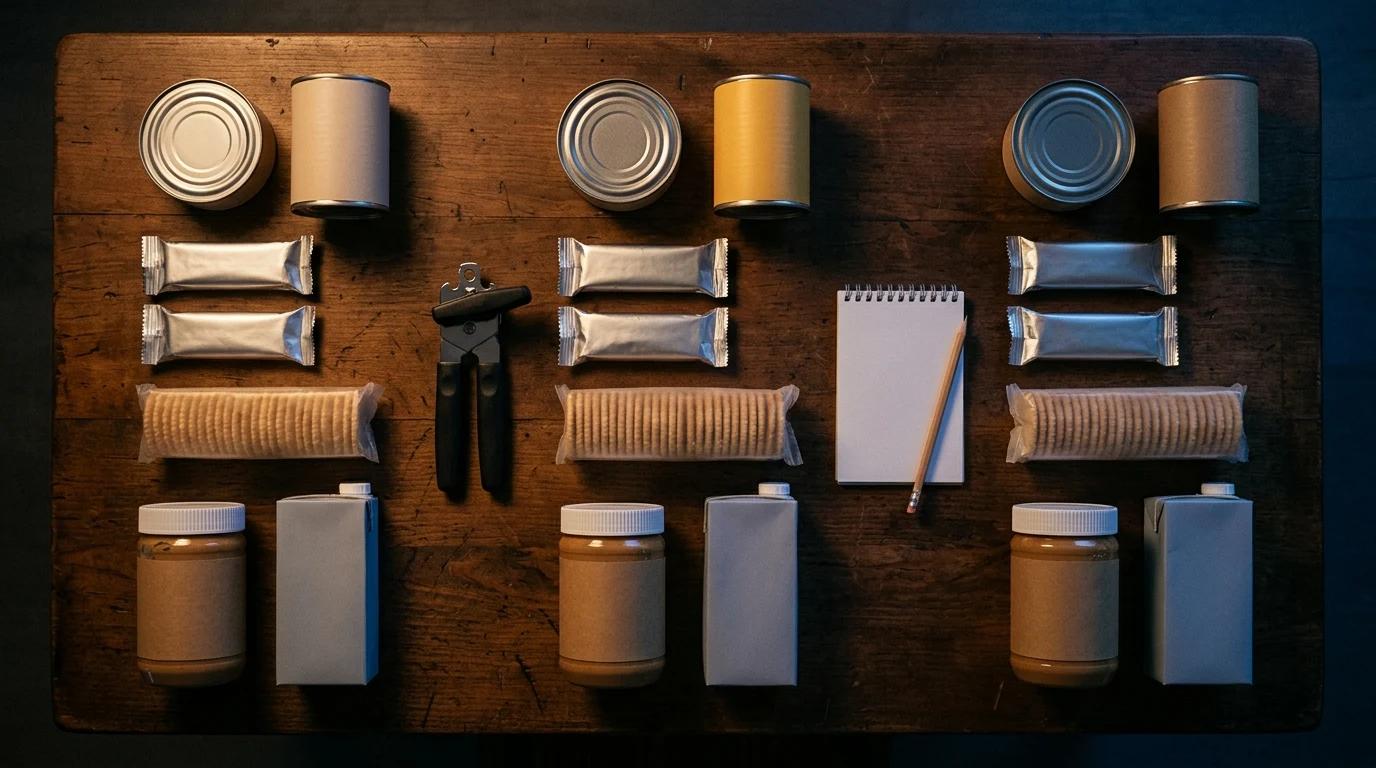
The best non-perishable food for a power outage is food you can eat cold, straight from the package: ready-to-eat canned meat, fish, beans and fruit, peanut butter, crackers, cereal with shelf-stable milk, protein bars and dried fruit, plus a manual can opener and a gallon of water per person per day. That is Ready.gov's list in substance. Its advice is to stock canned foods, dry mixes and staples that need no refrigeration, cooking, water or special preparation, and to choose foods your family will actually eat.
Rice, pasta and dried beans are cheap and keep for years, but they need water and fuel to cook. Keep some for a long outage, and build the first days around food that needs neither.
A three-day list, by household
Ready.gov asks for at least a several-day supply, so three days is the starting point. The quantities below are our planning figures for three meals and a snack a day, not an official ration. Double them for a week.
| Item | 1 person, 3 days | 4 people, 3 days | Why |
|---|---|---|---|
| Water | 3 gallons | 12 gallons | Ready.gov: 1 gallon per person per day |
| Canned meat, fish or beans, ready to eat | 3 cans | 12 cans | Protein for the main meal |
| Canned fruit or vegetables | 3 cans | 12 cans | Eaten cold from the can |
| Peanut butter or another nut butter | 1 jar | 2 jars | Dense and needs nothing |
| Crackers or crispbread | 1 box | 3 boxes | Carries the peanut butter and tuna |
| Cereal or granola | 1 box | 3 boxes | Breakfast with shelf-stable milk |
| Shelf-stable milk cartons | 3 | 12 | Ready.gov lists non-perishable pasteurized milk |
| Protein or fruit bars | 6 | 24 | Snacks and a fallback meal |
| Dried fruit and nuts | 1 bag | 3 bags | Calories that keep for months |
| Comfort food | A few | A few | Ready.gov lists comfort and stress foods |
Add infant food and any special-diet items first if anyone needs them. For babies, Ready.gov says to use ready-to-feed formula, and to mix formula only with bottled water, or boiled water as a last resort.
Shopping rule: buy what you already eat, then rotate it into normal meals so nothing expires on the shelf.
Water comes first
Ready.gov says to store at least one gallon of water per person per day for several days, for drinking and sanitation, and notes that water needs can double in very hot temperatures. Children, nursing mothers and sick people may need more. Never ration drinking water unless officials tell you to, Ready.gov adds.
The cheapest route is commercially bottled water kept sealed in a cool, dark place. If you fill your own containers, Ready.gov says to use food-grade containers, clean and sanitize them first, and replace water that was not commercially bottled every six months. The water storage picks compare stackable cans and barrels by gallons and spigots: the Saratoga Farms 20-gallon kit covers two people for about 10 days at Ready.gov's gallon a day.
How long it keeps
USDA's Food Safety and Inspection Service publishes shelf lives for unopened shelf-stable food. These are the ones that matter most for an outage kit.
| Food | Shelf life, unopened, per USDA |
|---|---|
| Low-acid canned goods: meat, poultry, stews, beans, corn, carrots | 2 to 5 years |
| High-acid canned goods: fruit, tomatoes, juices, pickles | 12 to 18 months |
| Commercially packaged jerky | 12 months |
| Tuna and other seafood in retort pouches | 18 months |
| Rice and dried pasta | 2 years |
One catch from the same page: not all canned food is shelf stable. Some canned ham and seafood are labeled Keep Refrigerated, and those belong in the fridge, not the outage box.
Which cans to throw away
USDA's guidance is specific, and Ready.gov repeats the core of it: do not eat from cans that are swollen, dented or corroded.
- Dents: a small dent on a can that is otherwise sound is fine, USDA says. Discard a deep dent, meaning one you can lay a finger into, and any sharp dent on the top or side seam.
- Rust: surface rust that wipes off is not serious. Discard heavily rusted cans, and do not eat the food if there is rust inside.
- Swelling or spurting: discard any swollen can, and do not taste food from a can that hisses loudly or spurts when opened.
- Freezing: a can that froze and thawed above 40°F should be discarded, USDA says, which matters if your stock lives in a cold garage.
Never taste to test: USDA's rule is the same for cans as for the fridge. When in doubt, throw it out.
Eat the fridge first
When the power goes, the order is fridge, then freezer, then pantry. A closed fridge keeps food safe for up to 4 hours, so the perishables are your first meals, and our food safety guide covers what to keep and what to toss after that. A full freezer holds about 48 hours with the door shut, and keeping food cold without power covers ice and coolers to stretch it. The cans wait, because they keep.
If you want hot food
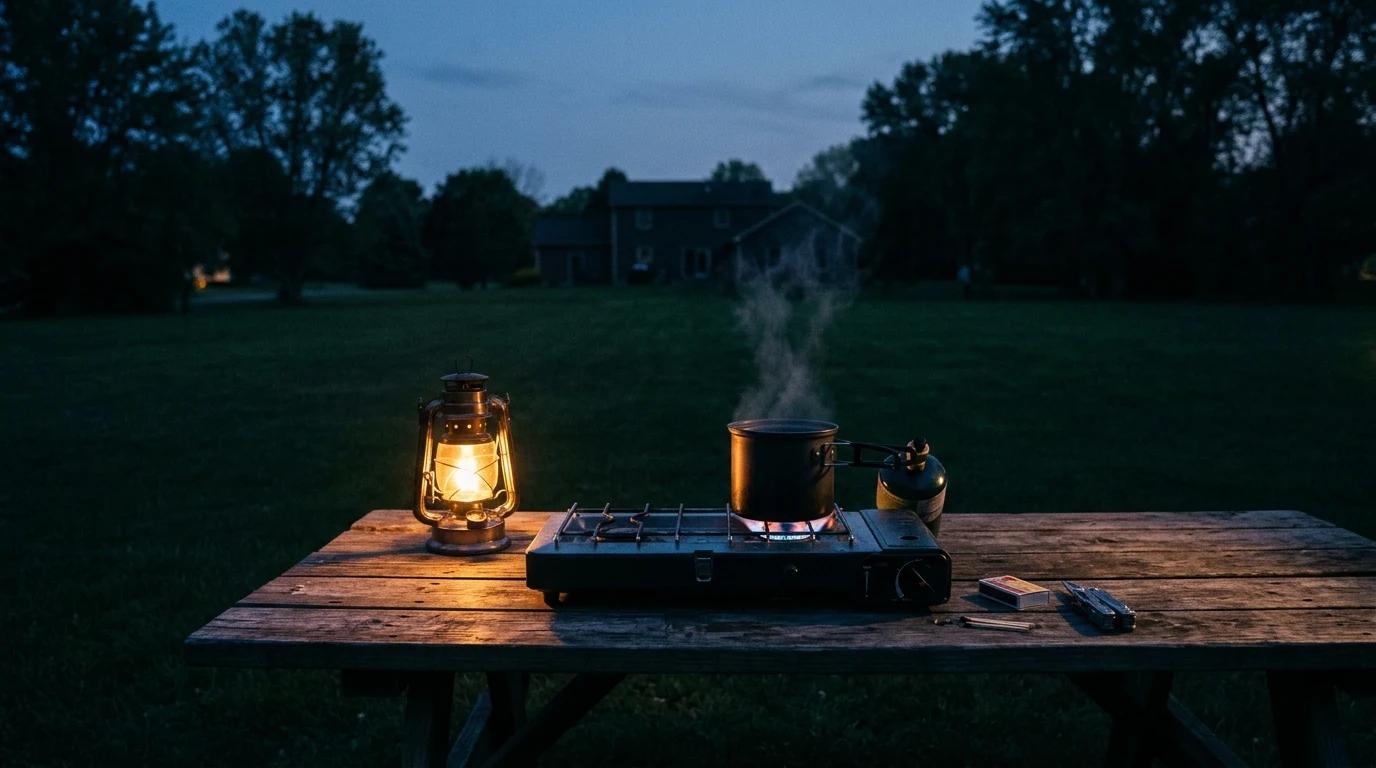
Most of the list above is good cold. If you want a hot meal or coffee, Ready.gov says commercially canned food can be warmed in the can if you remove the label, wash the can and open it first. Heat it outdoors on a camp stove or grill, never indoors: our guide to cooking without power covers the safe options, including a match-lit gas cooktop and a power station.
Rotation, so it is ready next time
- Write the purchase month on each can or box with a marker.
- Put new stock at the back and eat from the front.
- Check the box twice a year, for example when you test the smoke and CO alarms.
- Store the box somewhere cool, not a hot garage or attic. USDA's chart for MREs shows how much heat matters: about 7 years at 60°F, but only 1 month at 120°F.
- Keep the can opener, a spoon per person and paper plates in the same box, since Ready.gov puts the manual can opener and utensils on the list too.
Questions people ask
What food should I buy for a power outage?
Food that needs no fridge, cooking or water: ready-to-eat canned meat, fish, beans and fruit, peanut butter, crackers, cereal, shelf-stable milk, protein bars and dried fruit, and a manual can opener.
How much food do I need for a power outage?
Ready.gov says at least a several-day supply. Three days of three meals and a snack per person is a sensible start, then build toward a week.
How much water should I store?
At least one gallon per person per day for several days, per Ready.gov, and more in hot weather or for children, nursing mothers and sick people.
Is it safe to eat from a dented can?
A small dent on an otherwise sound can is fine, USDA says. Discard deep dents you can lay a finger into, any sharp dent on a seam, and swollen or heavily rusted cans.
How long does canned food last?
USDA puts low-acid canned goods such as meat, stews and beans at 2 to 5 years and high-acid ones such as fruit and tomatoes at 12 to 18 months.
Sources for this guide
Outage Ready Editorial
We work out the arithmetic and read the maker and agency pages so you do not have to. About us.
Read next
How Long Is Food Safe in a Power Outage?
A closed fridge holds food safely for up to 4 hours and a full freezer about 48. Here is what to do at each mark.
5 min read
How to Keep Food Cold Without Power
Keep doors shut, pack a cooler with block ice, and handle dry ice the way the gas industry says to.
5 min read
How to Cook Without Power, Safely
Camp stoves and grills go outside, a gas cooktop can be lit with a match, and a power station runs an induction burner indoors.
5 min read
Power Outage Kit Checklist: Starter, Household, Full
Three build-your-own outage kits, with every item listed and the totals worked out.
5 min read