Guide
How Long Is Food Safe in a Power Outage?
Outage Ready Editorial · Updated November 2, 2026 · 5 min read
Quick answer
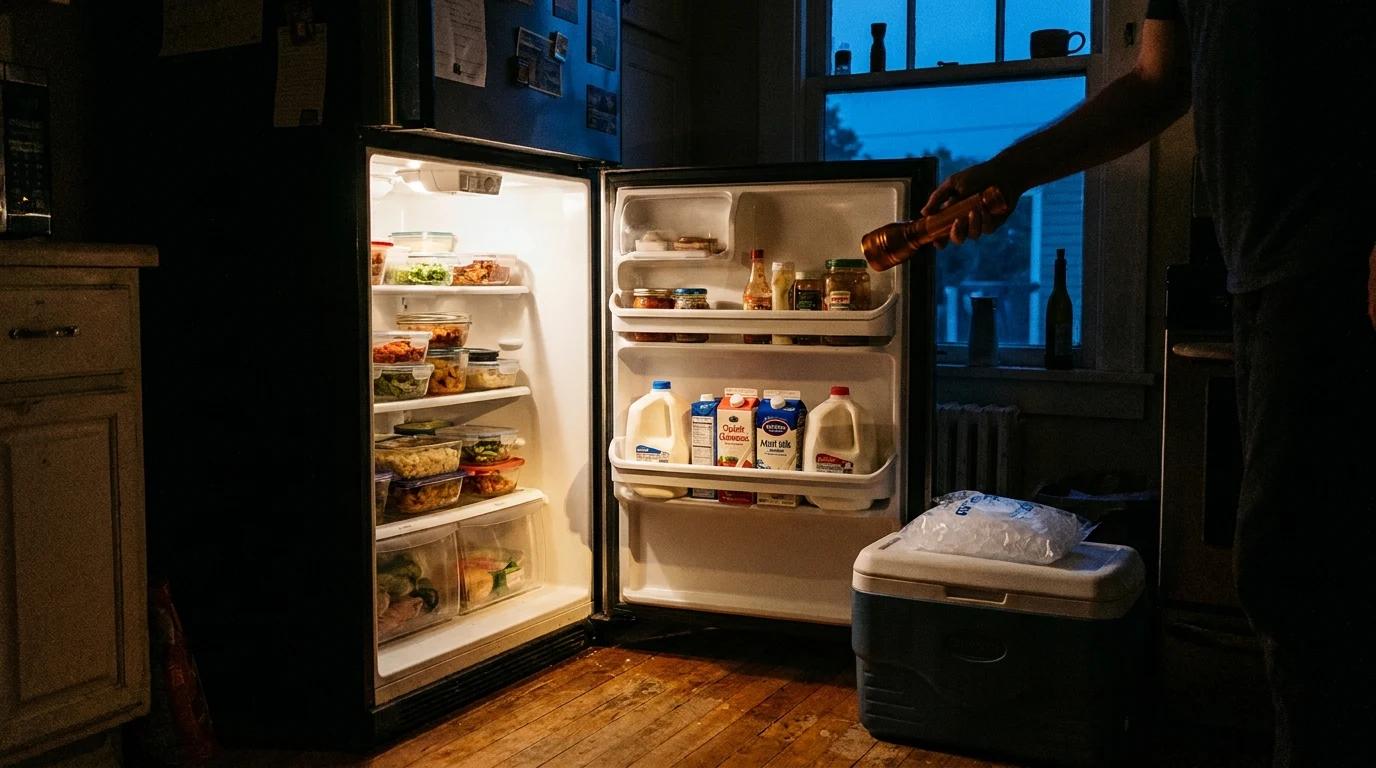
A closed refrigerator keeps food safe for up to 4 hours without power, and a closed full freezer holds its temperature for about 48 hours, or about 24 if half full. After that, go by a thermometer: most perishables held at 40°F or above for more than 2 hours should be discarded.
Key takeaways
- A closed fridge keeps food safe for up to 4 hours; a full freezer holds about 48 hours, or about 24 half full.
- 40°F is the line, and most perishables held above it for over 2 hours go in the trash.
- Never taste food to test it. A thermometer costs little and settles the question.
- A household fridge averages about 86 W, about 2,400 Wh for 24 hours after inverter loss.
The two numbers that decide everything
A closed refrigerator keeps food safe for up to 4 hours without power, and a closed full freezer holds its temperature for about 48 hours, or about 24 if it is half full. Those are the USDA and FoodSafety.gov figures. Everything else on this page is about using those hours well.
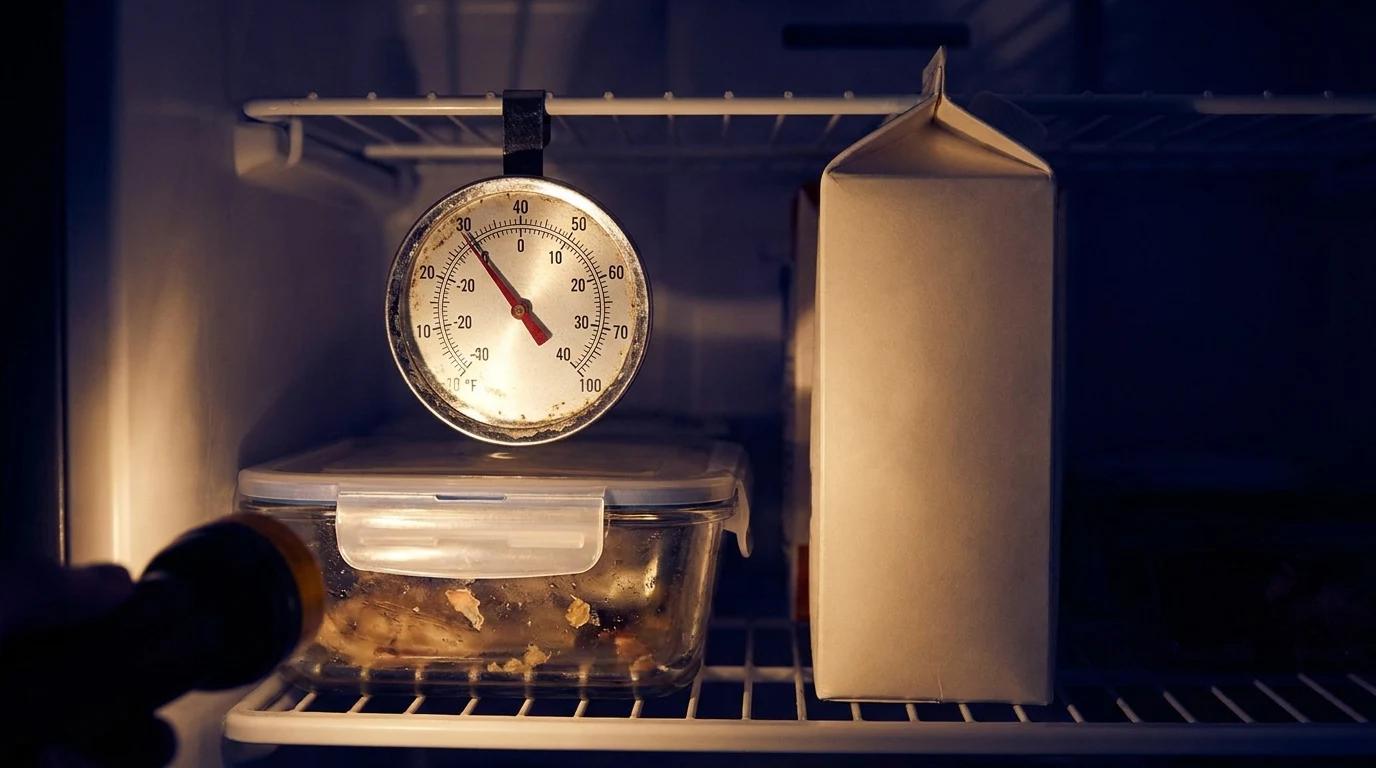
The line that matters is 40°F. FoodSafety.gov's chart says to discard most perishables held at 40°F or above for more than 2 hours. A thermometer settles the question, and tasting never does. USDA's rule is plain: never taste food to decide if it is safe.
Do this now: keep an appliance thermometer in both the fridge and the freezer, before anything goes wrong.
Get ready before the storm
USDA's preparation list is short, and most of it is cheap:
- Keep appliance thermometers in the fridge and freezer, reading 40°F or below and 0°F or below.
- Have a large insulated cooler and frozen gel packs on hand.
- Find out where dry ice and block ice can be bought near you.
- Keep the freezer full, since a full one holds about twice as long.
Your first four hours
- Keep the doors closed. Those 4 and 48 hour figures assume it.
- Note the time the power went out. You will want it later.
- Read the thermometer without opening the door for long.
- Decide by hour 3 whether you will move food, so you are not rushing at hour 4.
The BougeRV 30 Quart and other 12V coolers help only if they are ready before the outage, so treat them as a plan rather than a rescue. A plain Taylor Refrigerator Freezer Thermometer is the cheapest useful thing on this page, at $6.79.
What to keep and what to toss
This is a short version of the official chart for food in a fridge that sat at 40°F or above for more than 2 hours. Our Food Safety Timer walks you through your own hours and temperatures.
| Food | Verdict |
|---|---|
| Raw or cooked meat, poultry, fish, leftovers | Discard |
| Milk, cream, yogurt, soft cheese | Discard |
| Eggs and egg dishes | Discard |
| Cut fresh fruit | Discard |
| Hard cheese such as Cheddar or Swiss | Keep |
| Butter or margarine | Keep |
| Uncut fresh fruit | Keep |
| Opened mayonnaise | Discard if above 50°F for over 8 hours |
The chart has many more rows. In general, USDA says to throw out anything with an unusual odor, color or texture, and when in doubt, throw it out.
The freezer is your best asset
A full freezer outlasts a half-full one by about a day, so keep it full if a storm is coming. If food still contains ice crystals, or reads 40°F or below, USDA says it can be safely refrozen, though the quality may suffer.
For a long outage, USDA says 50 pounds of dry ice should hold an 18 cubic foot freezer for 2 days. Do not touch dry ice with bare hands, and keep it from touching food directly.
Rule of thumb: if the outage will run past 4 hours, get fridge food onto ice by hour 3. Freezer food stays put with the door shut.
Moving food to a cooler
If the power will be off longer than 4 hours, USDA's advice is to move perishables to a cooler with ice or frozen gel packs before the 4 hours are up, with enough ice to hold 40°F or below, adding more as it melts. Fridge food that has already gone 4 hours without power follows the discard chart below. Keep the thermometer in the cooler, because this is the step where food quietly warms up. A cooler on ice costs nothing to run, and for a one-day outage it is often all you need.
Can a battery keep the fridge running?
Yes, if you do the arithmetic first. A household fridge averages about 86 W once you count cycling, so a full day takes about 2,400 Wh after a 15% loss in the inverter. A chest freezer averages about 60 W. Those are typical figures for ordinary efficient models, so yours will differ.
| Power station | Fridge at 86 W |
|---|---|
| Anker Solix C1000 Gen 2, 1,024 Wh | About 10 hours |
| EcoFlow Delta 3 Max, 2,048 Wh | About 20 hours |
| Anker Solix F3000, 3,072 Wh | About 30 hours |
You rarely need the whole day, because a full fridge coasts for hours between charges. The Runtime Calculator does this for your own appliances, and how big a power station you need covers sizing in detail.
A smaller box on a smaller battery
If you only need to protect medication, baby food or a few days of meals, a 12V compressor cooler asks far less of a battery. BougeRV rates its 30 Quart at about 45 W in ECO mode, which is at most about 1,270 Wh a day, and the EUHOMY 23QT carries the same 45 W rating. Our calculator plans a cooler at a cautious 100 W, because no cycling average is published for this type.
Avoid thermoelectric coolers for this. OutdoorGearLab measured them at about 46 to 62 W steady state, against about 6 to 11 W for compressor models once cold.
A timeline for a long outage
| Hours out | What to do |
|---|---|
| 0 | Close the doors and note the time |
| 3 | Decide whether to move fridge food |
| 4 | Fridge limit: anything not already on ice follows the discard chart |
| 24 | A half-full freezer reaches its limit; check it |
| 48 | A full freezer reaches its limit; check it |
These marks assume the doors stayed shut. If someone opened the fridge or the freezer repeatedly, read the thermometer and rely on that, and treat any doubt as a reason to discard. Ready.gov puts the same idea simply: monitor temperatures with a thermometer and throw out food if the temperature is 40 degrees or higher.
The expensive mistake is not losing a few groceries. It is keeping a chicken that sat warm for a day because it still looks fine. Food that has gone unsafe often looks and smells normal, which is why the official advice rests on time and temperature.
When the power comes back
Check the thermometers first. Food in the fridge at 40°F or below that was out of power for under 4 hours is fine. Anything past those limits follows the chart, even if it looks and smells normal. Then reset your freezer contents: refreeze what qualifies, and write down what you did so nobody guesses next week.
Questions people ask
How long can food stay in the fridge without power?
Up to 4 hours with the door closed, per USDA. If the outage will run longer, pack perishables in a cooler with enough ice to hold 40°F or below before the 4 hours pass.
Can I refreeze food that thawed in an outage?
USDA says yes if it still contains ice crystals or is at 40°F or below, though the quality may suffer.
How long does a freezer last without power?
About 48 hours if full and about 24 hours if half full, with the door closed.
Can I run my fridge on a power station?
Yes. A typical fridge averages about 86 W, so a 1,024 Wh station runs it for about 10 hours after inverter loss.
Sources for this guide
Outage Ready Editorial
We work out the arithmetic and read the maker and agency pages so you do not have to. About us.
Read next
What to Do When the Power Goes Out: First-Hour Checklist
A calm, ordered first hour: light, breaker, fridge door, surge protection, then a plan for food, heat and medical devices.
5 min read
Best Power Station for a Power Outage: Sized for Real Nights
About 1,000 Wh runs a fridge for about 10 hours, and the Anker SOLIX C1000 Gen 2 is the one most homes should buy.
5 min read