Guide
How to Keep Food Cold Without Power
Outage Ready Editorial · Updated November 21, 2026 · 5 min read
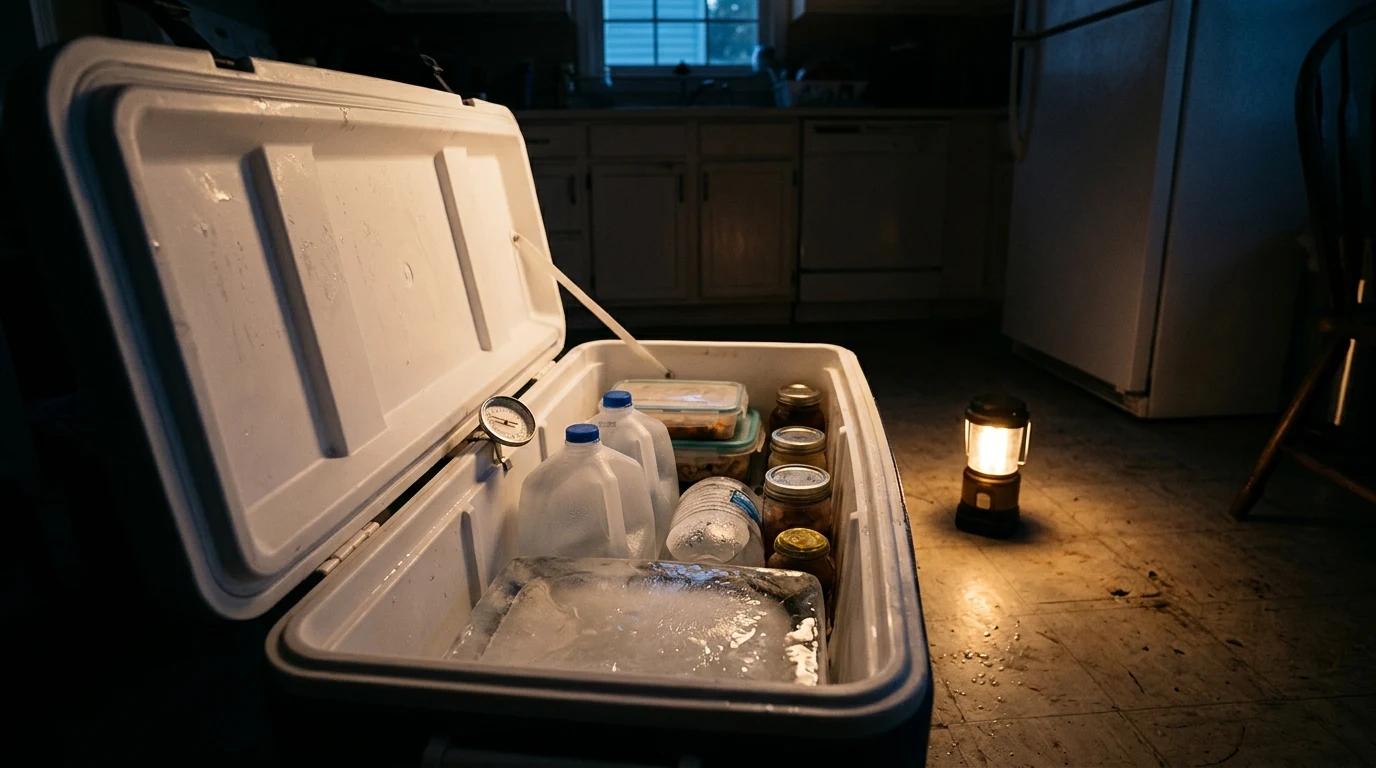
Quick answer
Keep the fridge and freezer closed, move fridge perishables into a cooler packed with block ice before the 4-hour mark, and add dry ice or block ice to the freezer if the outage will pass a day. A full freezer holds about 48 hours shut, per USDA.
Key takeaways
- A closed fridge keeps food safe up to 4 hours; a full freezer about 48, per USDA.
- Maker ice-retention claims are best cases: Coleman advertises 5 days at 90°F; OutdoorGearLab reports 3.7 days below 40°F.
- Block ice outlasts cubes; frozen water jugs make free blocks.
- USDA says 50 lb of dry ice holds an 18 cu ft freezer for 2 days.
- Dry ice gives off carbon dioxide: never seal it, never handle it bare, and ventilate. A CO alarm will not detect it.
The short answer
To keep food cold without power, leave the fridge and freezer shut, move fridge perishables into a cooler packed with block ice before the 4-hour mark, and use dry ice or block ice in the freezer if the outage will run past a day. USDA's figures set the clock: a closed fridge keeps food safe for up to 4 hours, and a full freezer holds its temperature for about 48 hours, or 24 if it is half full. A thermometer reading 40°F or below is the goal everywhere.
This page is about buying time. What to keep and what to throw out afterward is in our food safety guide.
| Cold source | What the source says | Best for |
|---|---|---|
| Closed fridge | Safe for up to 4 hours, USDA | The first hours |
| Closed full freezer | About 48 hours, 24 if half full, USDA | Doing nothing at all |
| Cooler with block ice | USDA names block ice for prolonged outages | Fridge food past hour 3 |
| Dry ice in the freezer | 50 lb holds an 18 cu ft freezer for 2 days, USDA | Saving a full freezer |
| Compressor cooler on a battery | 45 W in ECO mode, per BougeRV | Medication and a few days of meals |
How long does ice last in a cooler?
Longer on the box than in your kitchen. Coleman advertises 5-day ice retention at temperatures up to 90°F for its Xtreme coolers, while OutdoorGearLab reports the 70-quart Xtreme held its contents below 40°F for 3.7 days under its own conditions. Treat every maker's day count as a best case, then plan around your thermometer.
What stretches it, per YETI's own guidance:
- Ice to food at about 2 to 1. YETI recommends a 2:1 ratio of ice to contents.
- Pre-chill. Put cold food in a cold cooler; YETI suggests a sacrificial bag of ice a few hours before.
- Shade. YETI says ice lasts up to twice as long in the shade.
- Keep the lid shut, and keep the cold meltwater, which YETI says is better than warm air, as long as exposed food and meat stay out of the water.
Open once: decide what you want before you lift the lid, for the cooler and the freezer alike.
USDA's cooler rule is simple: enough ice to hold the food at 40°F or below, and more ice as it melts. Put a thermometer in the cooler too. If freezer food thaws, USDA says items that still have ice crystals, or have stayed at 40°F or below, can be refrozen, though their quality may suffer.
Block ice beats cubes
USDA's outage advice names block ice and dry ice, not bagged cubes, for a prolonged outage. A block has far less surface touching warm air than the same weight of cubes, so it melts more slowly; cubes are better packed into the gaps around food. Put a block on the bottom, food on it, and cubes around the sides.
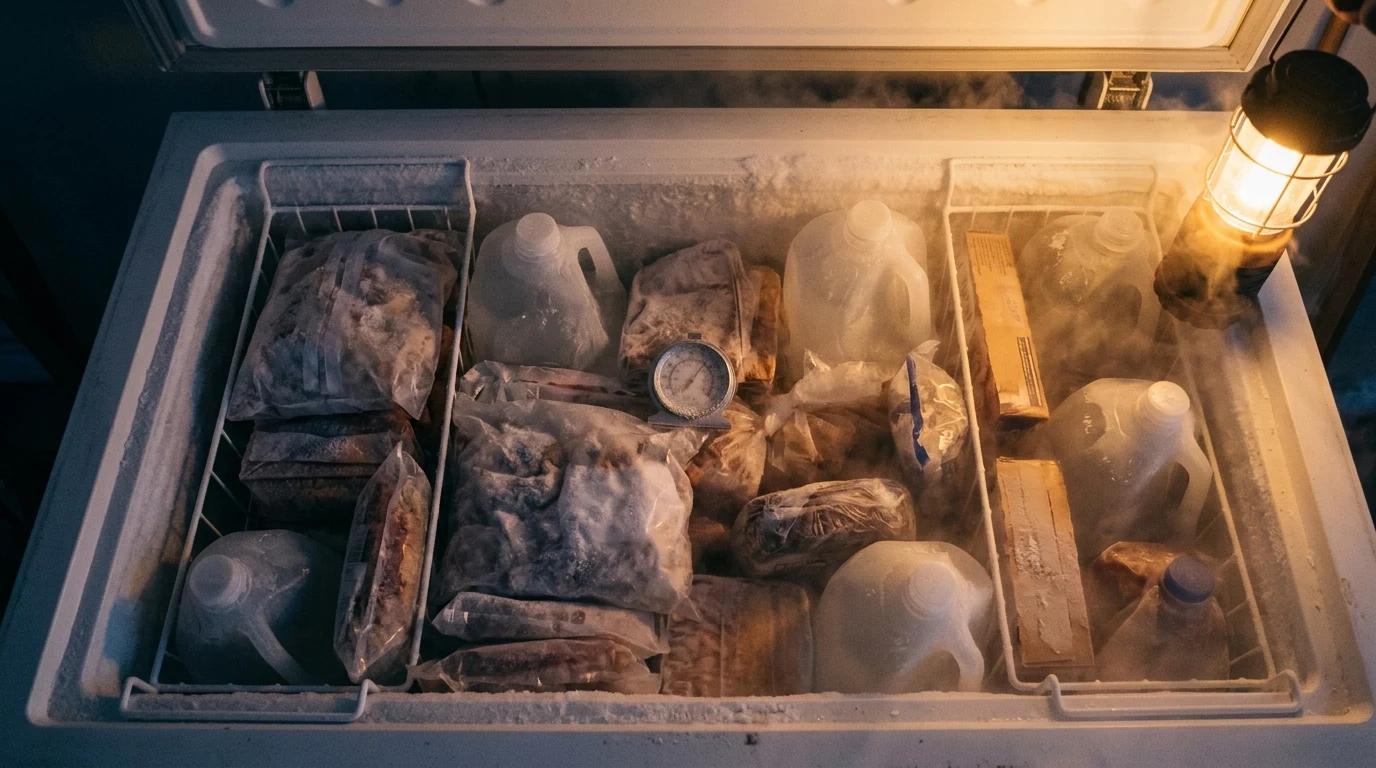
You can make block ice ahead. USDA suggests filling empty freezer space with frozen plastic jugs of water, which keeps the freezer full now and gives you blocks for the cooler later. In a snowstorm, USDA says not to put food out in the snow, where temperatures vary and animals get at it; instead, fill buckets or milk jugs with water, leave them outside to freeze, and use that ice.
Before the storm: set the freezer up
USDA's preparation list costs almost nothing:
- Keep appliance thermometers in the fridge and freezer, at 40°F or below and 0°F or below.
- Group foods together in both, which helps them stay cold longer.
- Freeze leftovers, milk and fresh meat you will not need right away.
- Have a large insulated cooler and frozen gel packs ready, and find out where dry ice and block ice are sold.
USDA also notes that food in the front of the freezer, in the door, or in small, thin packages thaws faster than large, thick items at the back or bottom. Move the expensive meat to the back and bottom before the storm, and leave the bread and ice cream in the door.
A plain Taylor fridge and freezer thermometer is the cheapest useful thing here, at $6.79. It turns guessing into a reading.
Dry ice: more cold, and its own hazard
Dry ice is frozen carbon dioxide at about minus 109°F, and it is the strongest tool for saving a full freezer. USDA says 50 pounds should hold an 18 cubic foot freezer for 2 days; Ready.gov says 25 pounds keeps a 10 cubic foot freezer below freezing for three to four days. Neither lets it touch food directly.
It turns straight into carbon dioxide gas, and that is the part most guides skip. The Compressed Gas Association's safety rules:
- Gloves or tongs, never bare hands. Ready.gov says dry, heavy gloves.
- Never in an airtight container. Gas pressure builds as it sublimates.
- Ventilate. Store it in a cool, well-ventilated area. In a car, carry small amounts and open the windows or keep fresh air flowing for the whole trip.
- Mind low spaces. CGA says carbon dioxide is about 1.5 times as heavy as air, so it collects low, and that a concentration of 3% can be dangerous.
A carbon monoxide alarm detects carbon monoxide, not carbon dioxide, so it will not warn you about dry ice. Keep it out of small closed rooms where people sleep, and leave the area if someone gets a headache or starts breathing fast, which CGA lists among the effects.
Dry ice rule: gloves, a vented container, and fresh air, never a sealed box or a closed car.
A battery for the fridge instead
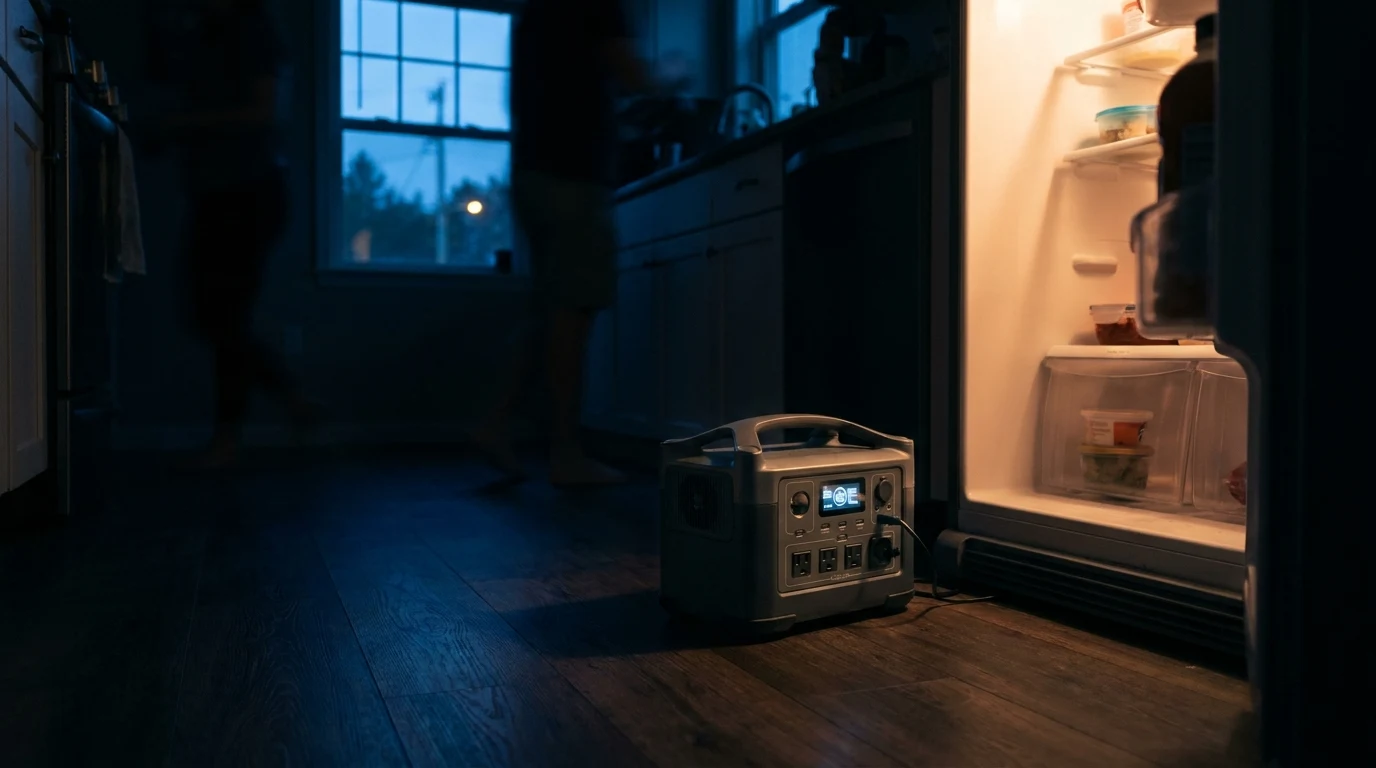
If you would rather keep the fridge running, a 25 cu ft ENERGY STAR side-by-side averages about 86 W, on Silicon Valley Power's figures, so a 1,024 Wh station such as the Anker Solix C1000 Gen 2 covers it for about 10 hours; how many watts a refrigerator uses shows how to check your own. Once the power is back, our food safety guide covers what to keep and what to throw out.
Questions people ask
How long does ice last in a cooler?
It depends on the cooler, the ice and the heat. Coleman advertises up to 5 days at 90°F for its Xtreme line; OutdoorGearLab reports 3.7 days below 40°F for the 70-quart model. Treat any maker claim as a best case.
Is block ice better than cubed ice?
For a long outage, yes. USDA names block ice for prolonged outages, and a block melts more slowly than the same weight of cubes. Use cubes to fill gaps around food.
How much dry ice do I need for a freezer?
USDA says 50 pounds should hold an 18 cubic foot freezer for 2 days. Ready.gov says 25 pounds keeps a 10 cubic foot freezer below freezing for three to four days.
Is dry ice dangerous in the house?
It can be. It turns into carbon dioxide gas, so never seal it in an airtight container, handle it with gloves or tongs, ventilate the space, and keep it out of small closed rooms.
Can I put food outside in the snow during an outage?
USDA says no, because outside temperatures vary and animals can reach it. Freeze jugs of water outside instead and use that ice.
Sources for this guide
- USDA FSIS: Keep your food safe during emergencies
- Ready.gov: Food (managing food without power, dry ice)
- Compressed Gas Association: Dry ice safety
- Coleman: 50-Quart Xtreme 5-Day hard cooler
- OutdoorGearLab: Coleman Xtreme 5-Day 70qt review
- YETI: Maximising ice retention
- BougeRV: 30 Quart 28L fridge specifications
- Silicon Valley Power: appliance energy use chart
Outage Ready Editorial
We work out the arithmetic and read the maker and agency pages so you do not have to. About us.
Read next
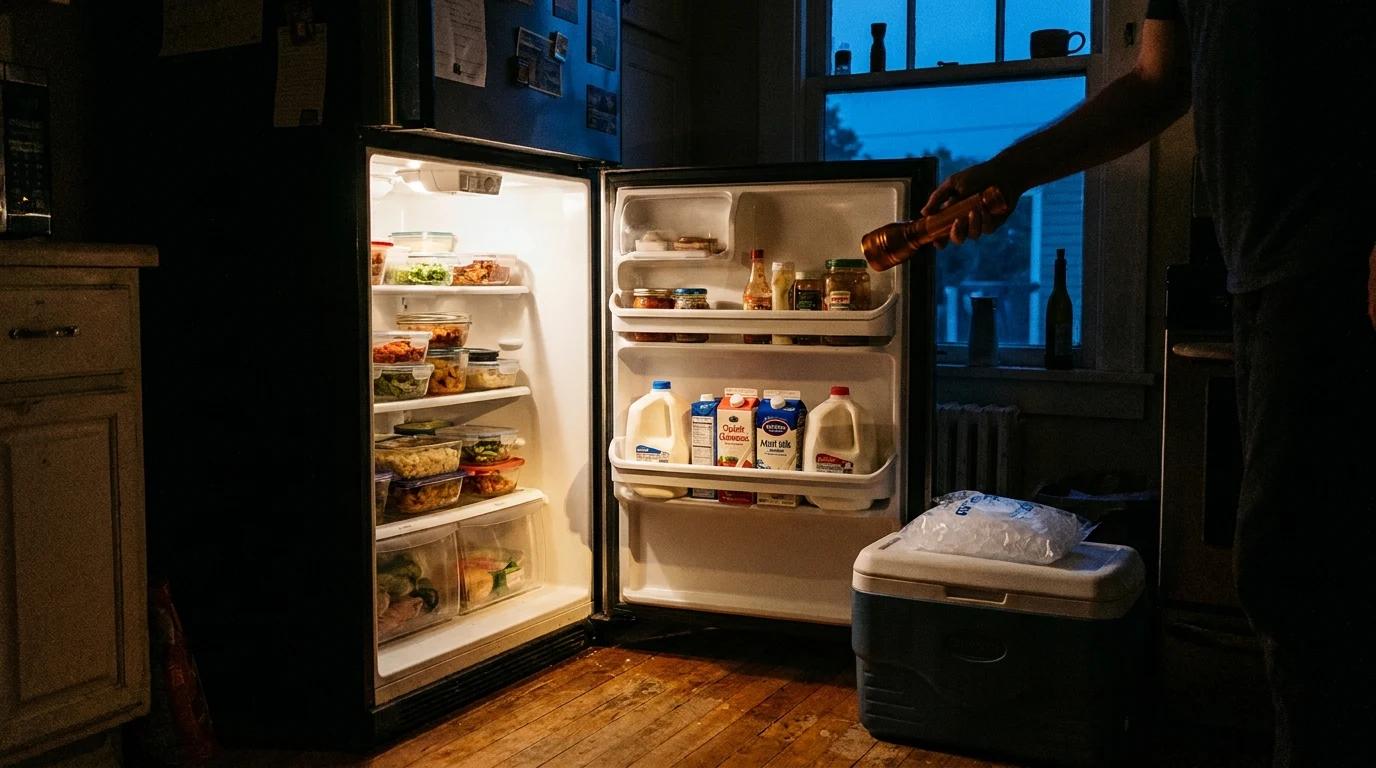
How Long Is Food Safe in a Power Outage?
A closed fridge holds food safely for up to 4 hours and a full freezer about 48. Here is what to do at each mark.
5 min read
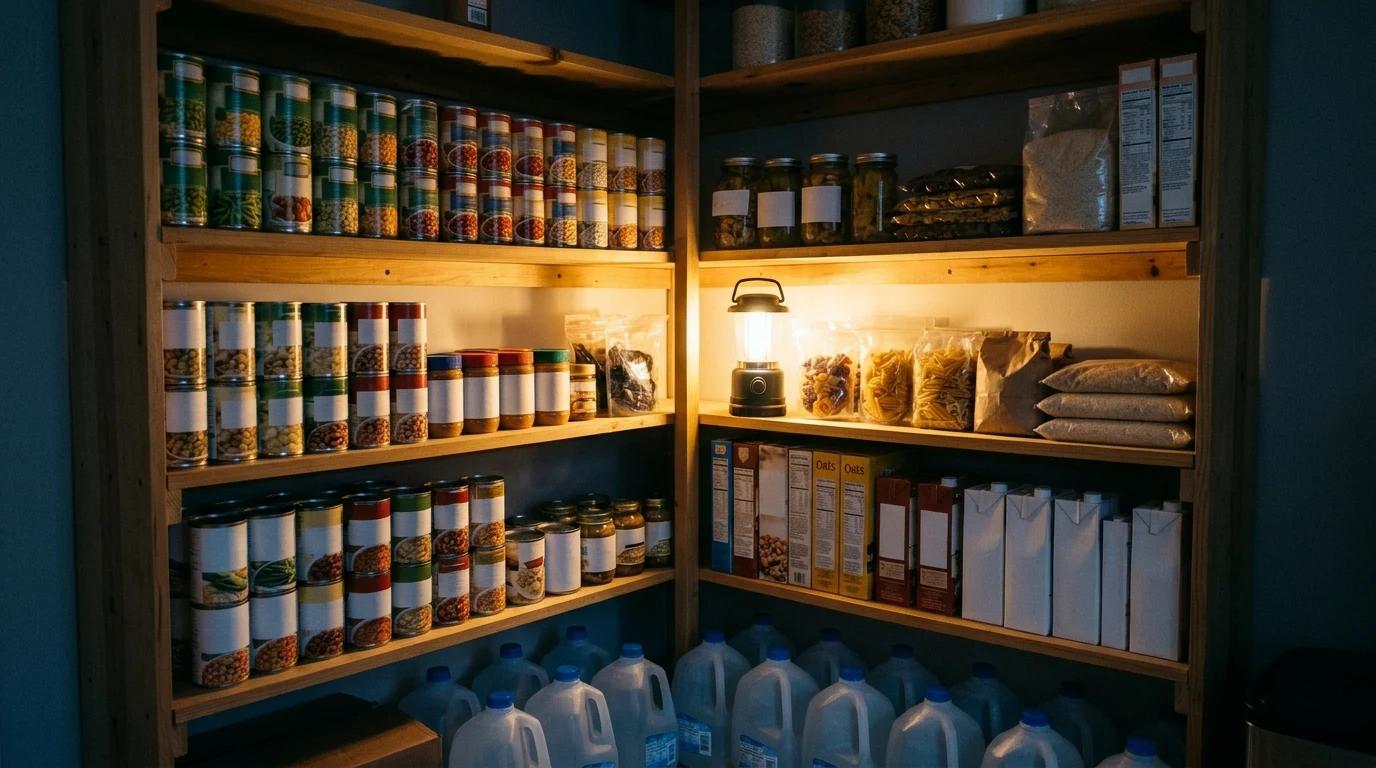
Non-Perishable Food for a Power Outage: A No-Cook List
A no-cook shopping list for three days, sized for one person or a family of four, with water and can safety.
5 min read
Best Power Station for a Power Outage: Sized for Real Nights
About 1,000 Wh runs a fridge for about 10 hours, and the Anker SOLIX C1000 Gen 2 is the one most homes should buy.
5 min read