Guide
How Long Do Power Outages Last? What Utility Data Shows
Outage Ready Editorial · Updated November 21, 2026 · 5 min read
Quick answer
The average power outage lasts about 2 hours, EIA's figure for days without major events. Storms stretch them to days, and in 2024 hurricanes pushed the average customer's total to 11 hours for the year. Plan backup for at least one day and know your three-day plan.
Key takeaways
- EIA data puts a routine US outage at about 2 hours, roughly once a year per customer.
- Hurricanes pushed 2024's average to 11 hours a year; South Carolina averaged nearly 53 hours.
- Utilities restore plants, transmission, substations and essential services before single homes.
- Size backup in tiers: a few hours, one day, three days, a week, per your area's storm risk.
The short answer
Most power outages are short: on ordinary days, EIA's data puts the average US interruption at about 2 hours, and the typical customer has about one a year. Major storms are what make outages long. In 2024, hurricanes pushed the average customer's total time without power to 11 hours for the year, and customers in South Carolina averaged nearly 53 hours. Plan for the short outage you will usually get, and size your backup for the long one your area can get.
What the national numbers show
EIA collects two reliability measures from utilities. SAIDI is the total time the average customer is without power in a year; SAIFI is how many interruptions they have. Dividing one by the other gives CAIDI, the average length of one interruption.
| Year | Total hours out per customer | Interruptions per customer | Average interruption, all events | Average interruption, without major events |
|---|---|---|---|---|
| 2022 | 5.6 h | 1.4 | 3.9 h | 2.0 h |
| 2023 | 6.1 h | 1.3 | 4.5 h | 2.0 h |
| 2024 | 11.0 h | 1.5 | 7.2 h | 2.1 h |
| 2025 | 4.5 h | 1.3 | 3.4 h | 1.9 h |
Figures are EIA's IEEE-method values, converted from minutes. The right-hand column barely moves from year to year. The middle columns swing with the weather.
Reading the table: a normal outage is about two hours; a bad year is a storm year.
Why averages hide the outage you remember
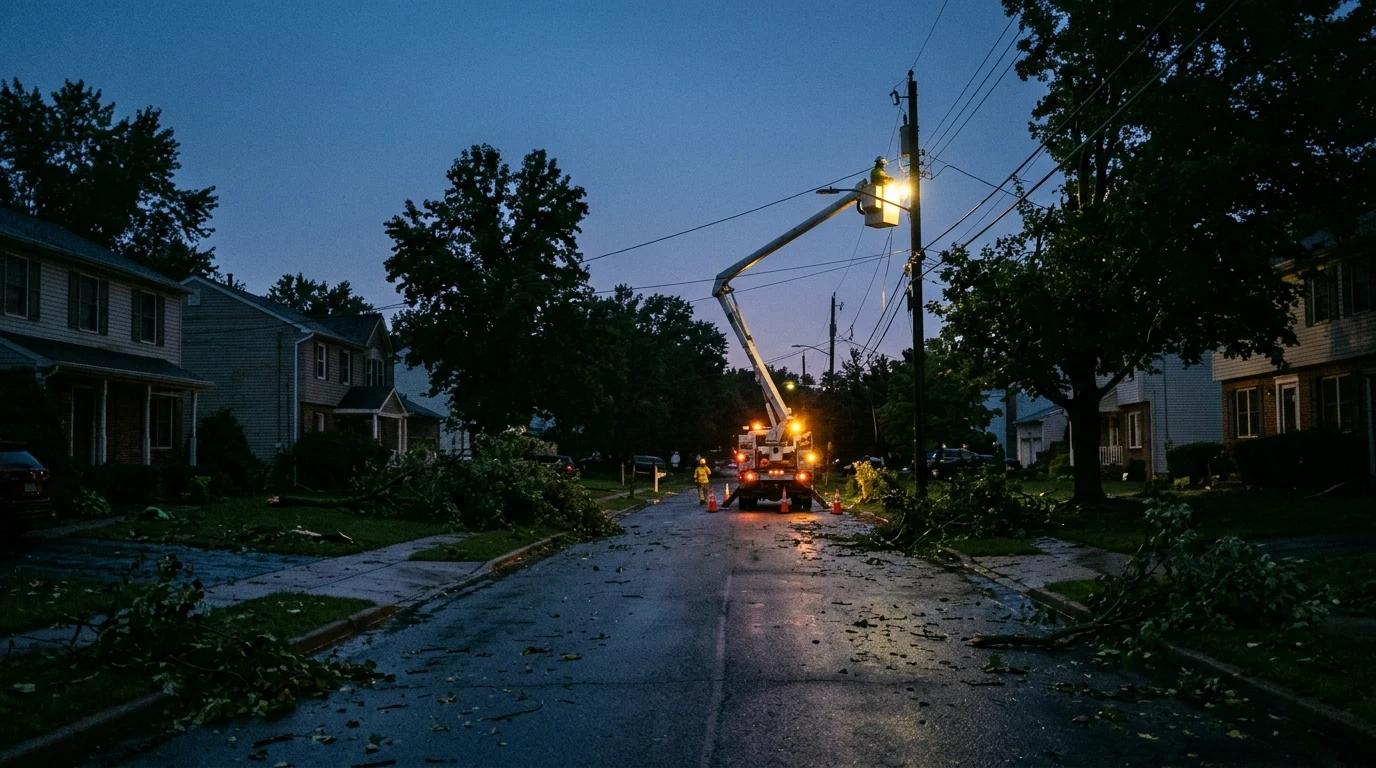
An average of a few hours includes the many brief outages most people barely notice. EIA says major events such as Hurricanes Beryl, Helene and Milton accounted for 80 percent of the hours without electricity in 2024. Helene alone left 5.9 million customers without power across 10 states.
Where you live matters as much as the year. EIA reports that customers in Arizona, South Dakota, North Dakota and Massachusetts averaged less than two hours of interruptions in 2024, while Hawaii customers averaged 4.4 separate interruptions, the most of any state. In Puerto Rico, EIA found customers lost about 27 hours a year between 2021 and 2024 even without major events.
Check your own utility's record
The national figures are a starting point, not your forecast. EIA publishes reliability statistics for each utility in its Annual Electric Power Industry Report, so you can look up the company that serves you and see whether its customers average one short outage a year or several long ones. EIA also notes that states such as Maine and Vermont tend to have more frequent outages, often from storm damage to trees that affects power lines.
These measures count only sustained outages. SAIDI, EIA says, measures the total time a customer experiences non-momentary interruptions, so the brief flickers that reset your microwave clock are not in the averages above.
Why the power goes out
EIA says utilities sort interruptions by cause: major events such as hurricanes and other storms, interference from vegetation near power lines, and atypical utility operations. Two other kinds of outage are planned rather than accidental: a public safety power shutoff in wildfire weather, and rolling blackouts when demand outruns supply. Both usually come with some warning.
How long until your power comes back
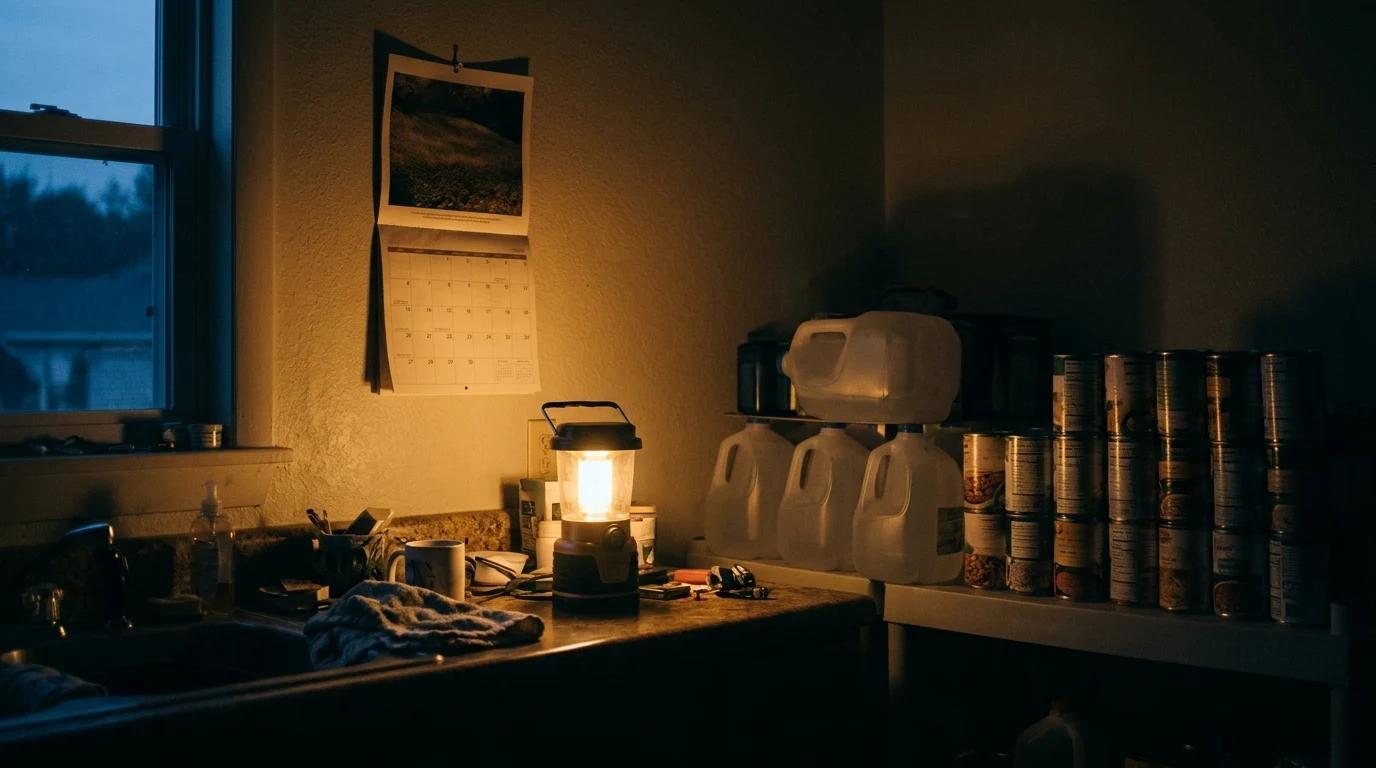
After a storm, utilities restore power in a set order. The Department of Energy and the Edison Electric Institute describe it as:
- Power plants are assessed and restored.
- Transmission lines serving thousands of customers are repaired.
- Substations are brought online.
- Essential services such as hospitals, nursing homes, fire and police departments, and water systems come next.
- Large service areas that return the most customers fastest.
- Individual homes and small groups of customers, last.
That order explains why your street can be dark after the rest of town is back. If only your service line is damaged, you are at the end of the queue. DOE also notes that a home with flood damage may need an inspection by a licensed electrician before it can receive power. Report your outage and check your utility's estimate, but treat the first estimate after a big storm as a guess.
How much backup to plan for
Ready.gov says that after an emergency you may need to survive on your own for several days, and its kit list includes water at one gallon per person per day for several days. Match your backup to four tiers:
| Plan for | What it covers | Gear to look at |
|---|---|---|
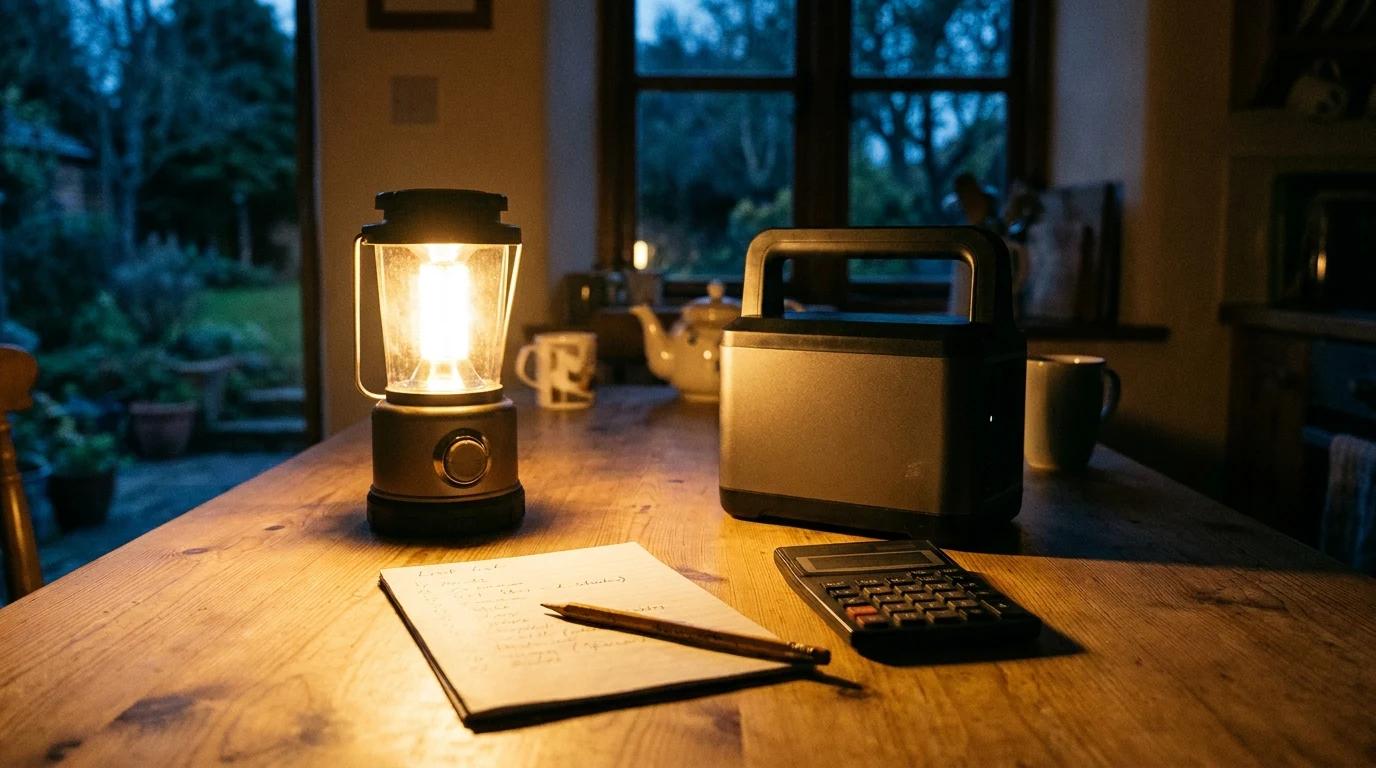
| A few hours | Light, phones, keeping the fridge shut | Lanterns, a power bank |
| One day | Phones, Wi-Fi, a fridge for part of the day | A 1 kWh power station |
| Three days | Fridge, freezer, medical devices, heat in a cold climate | A 2 kWh station plus solar, or a generator outdoors |
| A week or more | Most of a home's essential circuits | A generator with a proper connection, or a home battery |
A few hours. The routine outage. A lantern and a power bank cover it, and the food safety guide tells you when the fridge becomes a problem.
One day. A 1 kWh station such as the Anker Solix C1000 Gen 2 runs a typical fridge for about 10 hours by our arithmetic, or a router much longer. The Runtime Calculator works it out for your own list.
Three days. You need either more battery and a way to refill it, such as the 2,048 Wh EcoFlow DELTA 3 Max with solar panels, or fuel. Our power station vs generator guide weighs the two.
A week or more. This is generator territory, run outdoors and connected properly, as covered in how to connect a generator to your house, or a home backup battery sized with the generator sizing tool.
Rule of thumb: buy for one day, plan for three, and know what you would do at seven.
Build your plan
The kit builder turns your household, your climate and your outage length into a shopping list in buying order. If you expect long winter outages, read our winter storm guide as well.
How long should you plan for?
- City, buried lines, few storms
- One day
- Routine outages average about 2 hours.
- Trees over the lines, winter storms
- Three days
- EIA ties frequent outages in states like Maine and Vermont to storm damage to trees on lines.
- Hurricane coast
- A week or more
- Major events drove 80 percent of 2024's outage hours.
- Medical device at home
- Three days at least
- Single homes are restored last after a big storm.
Questions people ask
How long does a typical power outage last?
About 2 hours on average, by EIA's figures for interruptions that are not caused by major events. Storm outages run much longer.
How many hours of power outage does the average American have?
EIA says US customers averaged 11 hours of interruptions in 2024, nearly twice the previous decade's average, with 80 percent of those hours from major events such as hurricanes.
Why does my power come back later than my neighbors'?
Utilities restore transmission lines, substations and essential services before individual homes. If only your service line is damaged, you are among the last to be reconnected.
How long should I plan to be without power?
Ready.gov says you may need to get by on your own for several days after an emergency. Buy for one day and plan for three.
Sources for this guide
- EIA: Hurricanes in 2024 led to the most hours without power in 10 years
- EIA: Electric Power Annual table 11.1, reliability metrics of the US distribution system
- EIA: Even without hurricanes, customers in Puerto Rico lose about 27 hours of power per year
- DOE and EEI: Restoring power after a storm, a step-by-step process
- Ready.gov: Build a kit
Outage Ready Editorial
We work out the arithmetic and read the maker and agency pages so you do not have to. About us.
Read next
What to Do When the Power Goes Out: First-Hour Checklist
A calm, ordered first hour: light, breaker, fridge door, surge protection, then a plan for food, heat and medical devices.
5 min read
Power Station vs Generator: Which One Fits Your Outage?
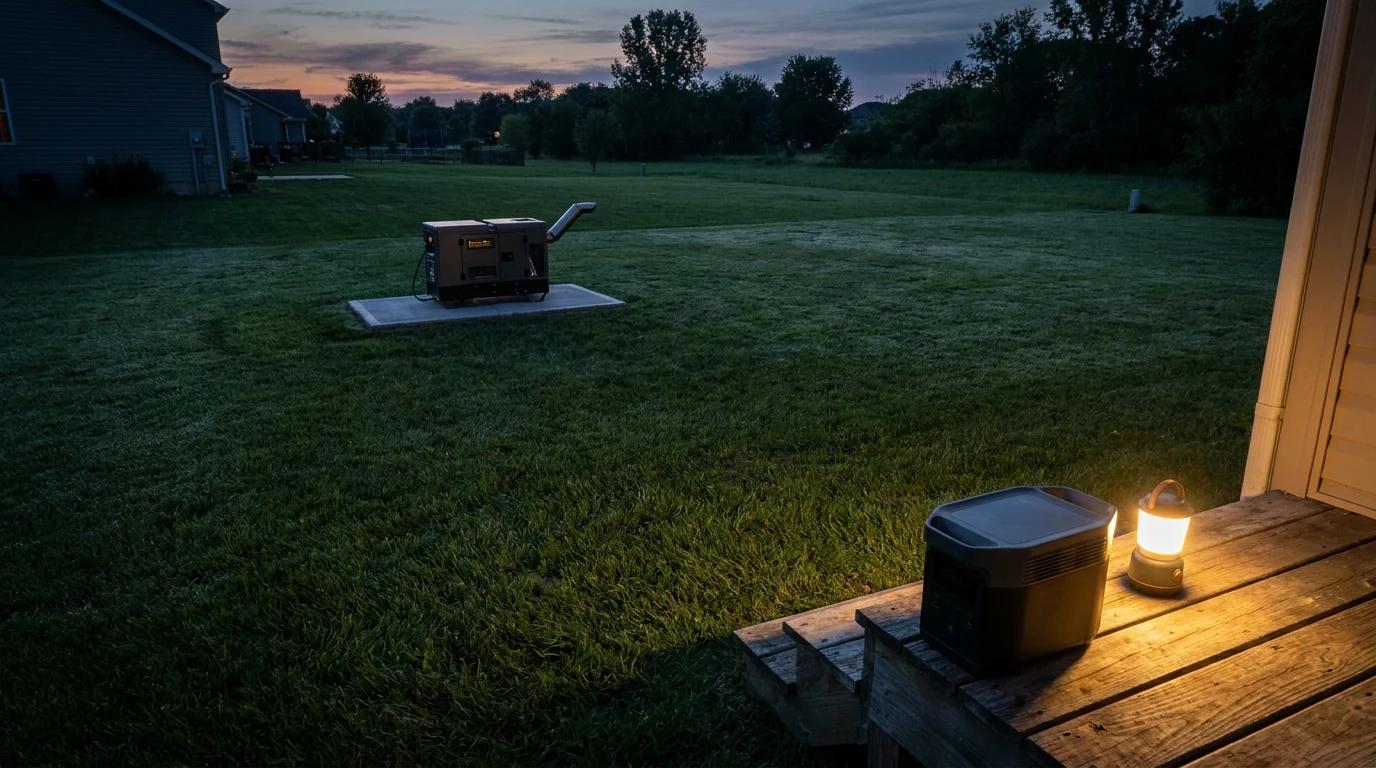
A power station suits short outages and indoor use; a generator suits long outages and heavy loads you can run 20 feet from the house.
5 min read
What Size Power Station Do I Need? The Simple Arithmetic
Multiply watts by hours, divide by 0.85, and you have your size. A fridge for a day takes about 2,400 Wh.
5 min read