Guide
What to Do When the Power Goes Out: First-Hour Checklist
Outage Ready Editorial · Updated November 16, 2026 · 5 min read
Quick answer
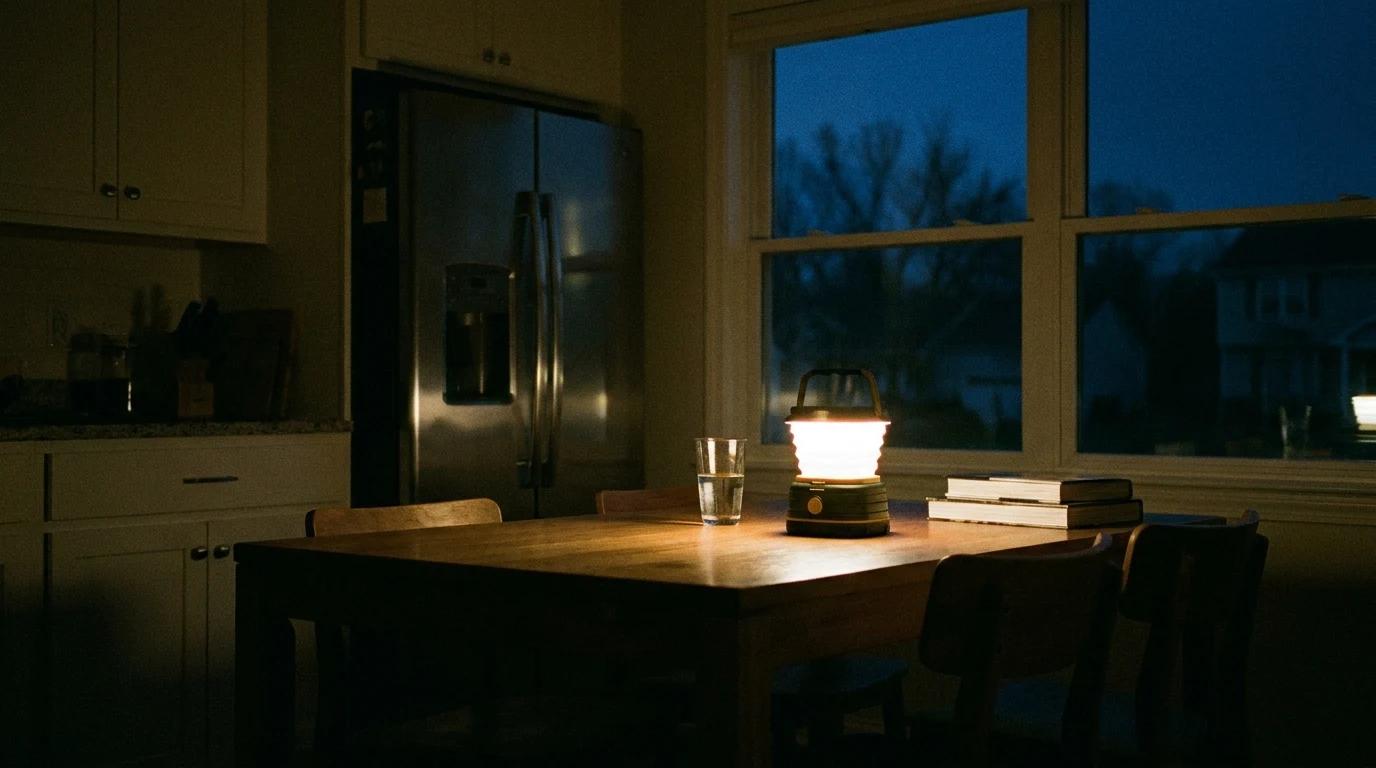
When the power goes out, get a safe battery light on, find out whether the outage is only yours, keep the fridge and freezer closed, and unplug electronics. Then plan for food, medical devices and heat.
Key takeaways
- Use battery light first; CDC advises against candles because of fire risk.
- Keep the fridge shut: CDC says it keeps food safe for up to 4 hours if unopened.
- A full freezer holds about 48 hours, or 24 if half full, per FoodSafety.gov.
- Unplug electronics, since Ready.gov warns of surges when power returns.
- Run a generator only outdoors, at least 20 feet from windows, doors and vents.
The first hour, in order
When the power goes out, get a safe light on, find out whether the outage is only yours, keep the fridge and freezer closed, and unplug electronics. Almost everything else can wait until you know how long the outage will last.
The order below matters because each step makes the next one easier. Most of it takes minutes, and none of it needs tools.
| When | Do this | Why |
|---|---|---|
| First minute | Use a flashlight or lantern, not a candle | CDC advises battery lights to minimize fire risk |
| First 5 minutes | Check neighbors' lights and your breaker | Tells you whether it is your house or the area |
| First 10 minutes | Close the fridge and freezer, and leave them closed | The 4-hour clock depends on it |
| First 15 minutes | Unplug appliances and electronics | Ready.gov warns of surges when power returns |
| First 30 minutes | Report the outage and look up an estimate | Sets the plan for the rest of the day |
| First hour | Plan for food, medical devices, heat and phones | Decisions are easier in daylight |
Minute one: light, and no candles
CDC's advice is to use battery-powered flashlights and lanterns rather than candles, gas lanterns or torches, to minimize the risk of fire. If you must use a candle, CDC says to keep it away from anything that can catch fire and stay near it.
A plug-in light solves the first moments, because the Energizer Auto-On comes on by itself when the power fails, according to Energizer. Beyond that, one room light and one hands-free light cover most of an evening: the Lepro lantern for the table and an Energizer headlamp 2-pack for stairs and chores. Our lantern guide compares the options.
First-minute rule: battery light first, and leave the candles in the drawer.
Minutes one to five: is it just you?
Look out the window. If the neighbors are lit and you are not, check your breaker panel with a flashlight, since a tripped main breaker looks exactly like an outage. If the whole street is dark, the problem is not in your house.
Stay clear of downed lines. CDC warns against driving through standing water if downed power lines are in it, and the same caution applies on foot. Report a downed line to your utility rather than going to look at it.
Minutes five to ten: shut the fridge
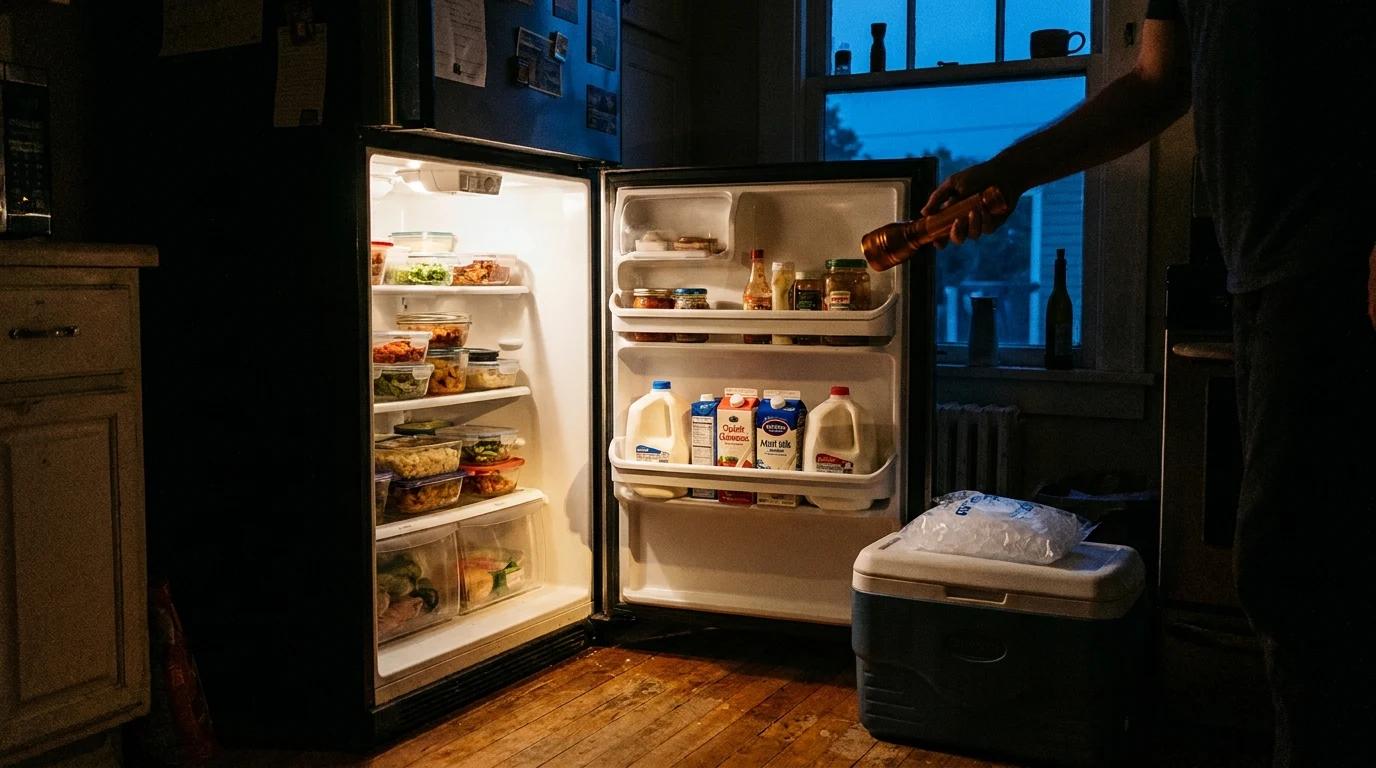
This is the step that saves the most money. CDC says your refrigerator keeps food safe for up to 4 hours without power if you do not open the door. FoodSafety.gov adds that a full freezer holds a safe temperature for about 48 hours, or 24 hours if it is half full and the door stays closed.
- Decide what you want before opening the door, and open it once
- After 4 hours without power, CDC says to throw out perishables such as meat, poultry, fish, eggs and leftovers
- Use the food safety timer when you are unsure about what to keep
Minutes ten to fifteen: protect your electronics
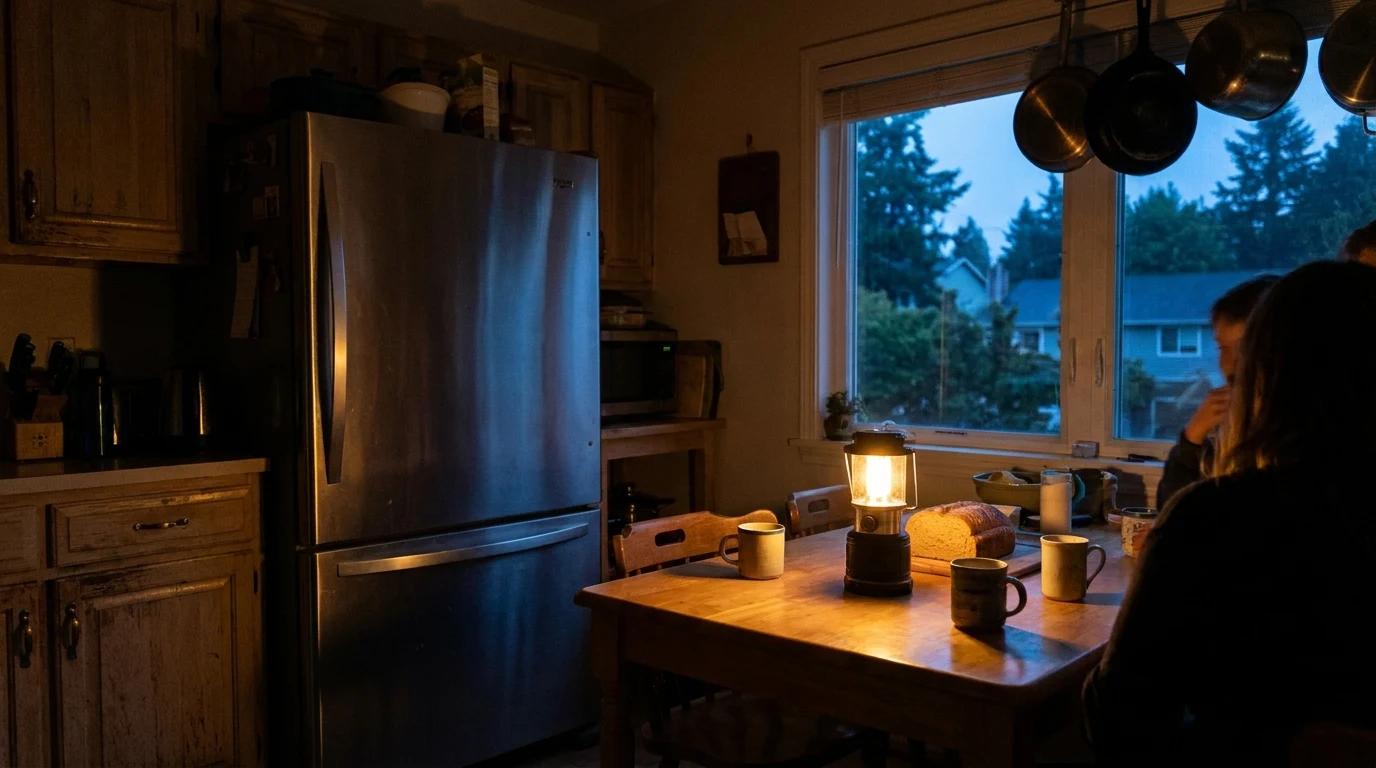
Ready.gov says to disconnect appliances, equipment and electronics, because power may return with momentary surges or spikes that can cause damage. Unplug the TV, computer and anything else expensive. Leave one lamp switched on, so you can see at a glance when the power returns.
Minutes fifteen to thirty: get an estimate
Report the outage through your utility's app or phone line, and check its map for an estimate. Your phone is now your link to everything, so lower its brightness and close what you do not need. A power bank such as the Anker Zolo 20,000 mAh removes that worry for most outages.
If cell service is shaky too, a weather radio keeps you informed. The Midland WR400 sounds NOAA weather alerts and runs on four AA cells when the power is out.
The rest of the hour: make a plan
Three questions decide the rest of your day.
Does anyone depend on power?
Ready.gov asks households to have alternate plans for refrigerating medicines and using power-dependent medical devices. If someone relies on one, this comes first. Call your provider or equipment supplier if you do not already have a plan.
Will it get too hot or too cold?
Ready.gov says to check with local officials about heating and cooling locations open near you. Do not use a gas stove or oven to heat your home: Ready.gov says this raises your risk of carbon monoxide poisoning, fires and burns. Our guide to heating your home without power covers safer options.
In heat, CDC's guidance is to use fans only when indoor temperatures are below 90°F, because above that a fan can raise your body temperature.
Will you use a generator?
Only outdoors. CDC says never to run one inside your home, basement or garage, or less than 20 feet from any window, door or vent, even with doors or windows open. Use a battery-powered or battery backup CO alarm in the house whenever one is running. The Kidde COB runs on two AA batteries.
Generator rule: outdoors, at least 20 feet from windows, doors and vents, with a battery CO alarm inside.
When the power comes back
Plug things back in one at a time rather than all at once, and give the house a few minutes first. Then check the fridge before trusting anything in it: FoodSafety.gov's chart lists what to keep and what to discard, and a food held above 40°F for more than 2 hours is generally a discard.
If the food question is the hard one, our guide to food safety in an outage goes through it in detail.
Afterward, write down what you wished you had. That list is your power outage kit, and it will be far more useful than a generic one.
Questions people ask
How long will food last in the fridge when the power is out?
CDC says up to 4 hours if you do not open the door. FoodSafety.gov says a full freezer holds about 48 hours, or 24 hours if half full and the door stays closed.
Should I unplug things during a power outage?
Yes. Ready.gov says to disconnect appliances and electronics because power may return with surges or spikes that can cause damage. Leave one lamp on so you know when it is back.
Is it safe to use candles during a power outage?
CDC advises battery-powered flashlights and lanterns instead, to minimize fire risk. If you must use a candle, keep it away from anything that can catch fire and stay near it.
Can I heat my home with the gas stove in an outage?
No. Ready.gov says not to use a gas stove or oven to heat your home, because it raises your risk of carbon monoxide poisoning, fires and burns.
Sources for this guide
Outage Ready Editorial
We work out the arithmetic and read the maker and agency pages so you do not have to. About us.
Read next
How Long Is Food Safe in a Power Outage?
A closed fridge holds food safely for up to 4 hours and a full freezer about 48. Here is what to do at each mark.
5 min read
Power Outage Kit Checklist: Starter, Household, Full
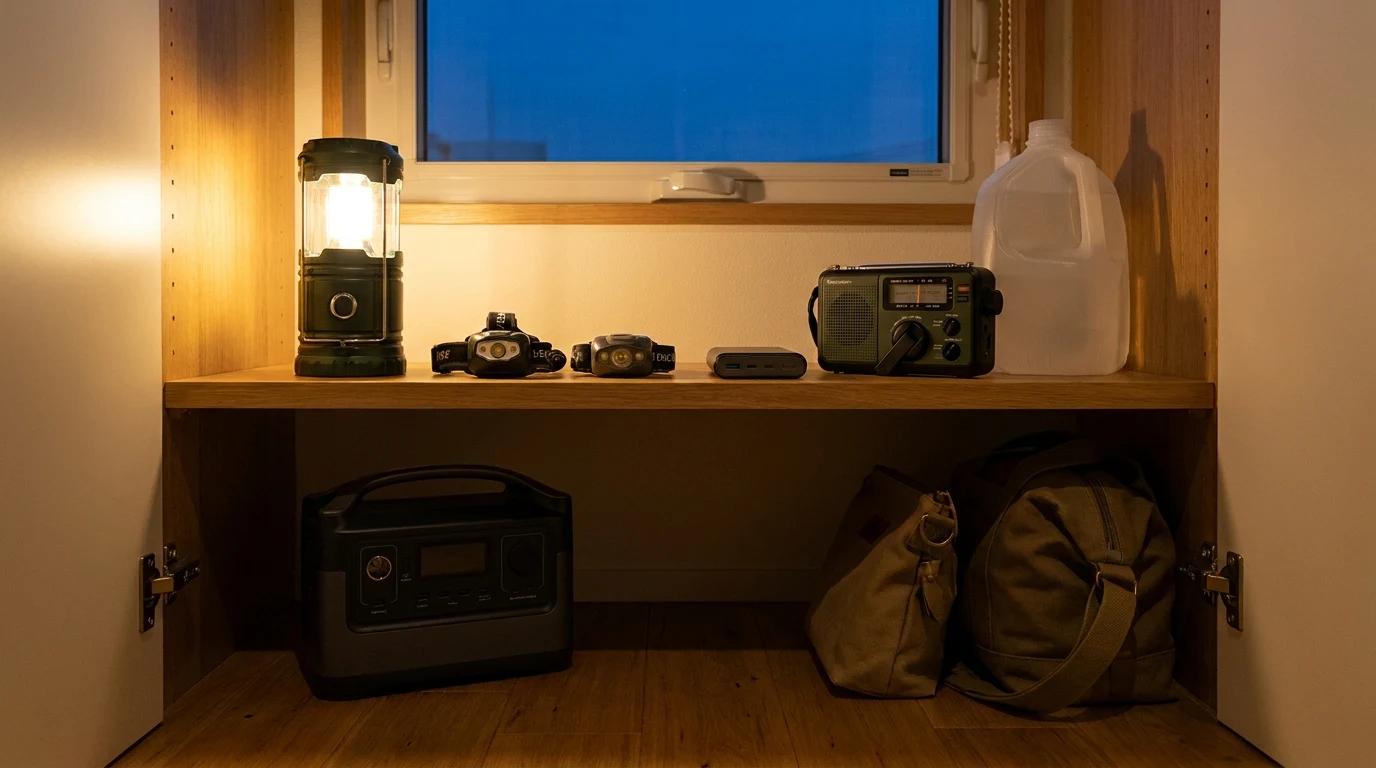
Three build-your-own outage kits, with every item listed and the totals worked out.
5 min read