Guide
Do Battery-Powered Heaters Work? The Honest Math
Outage Ready Editorial · Updated November 21, 2026 · 5 min read
Quick answer
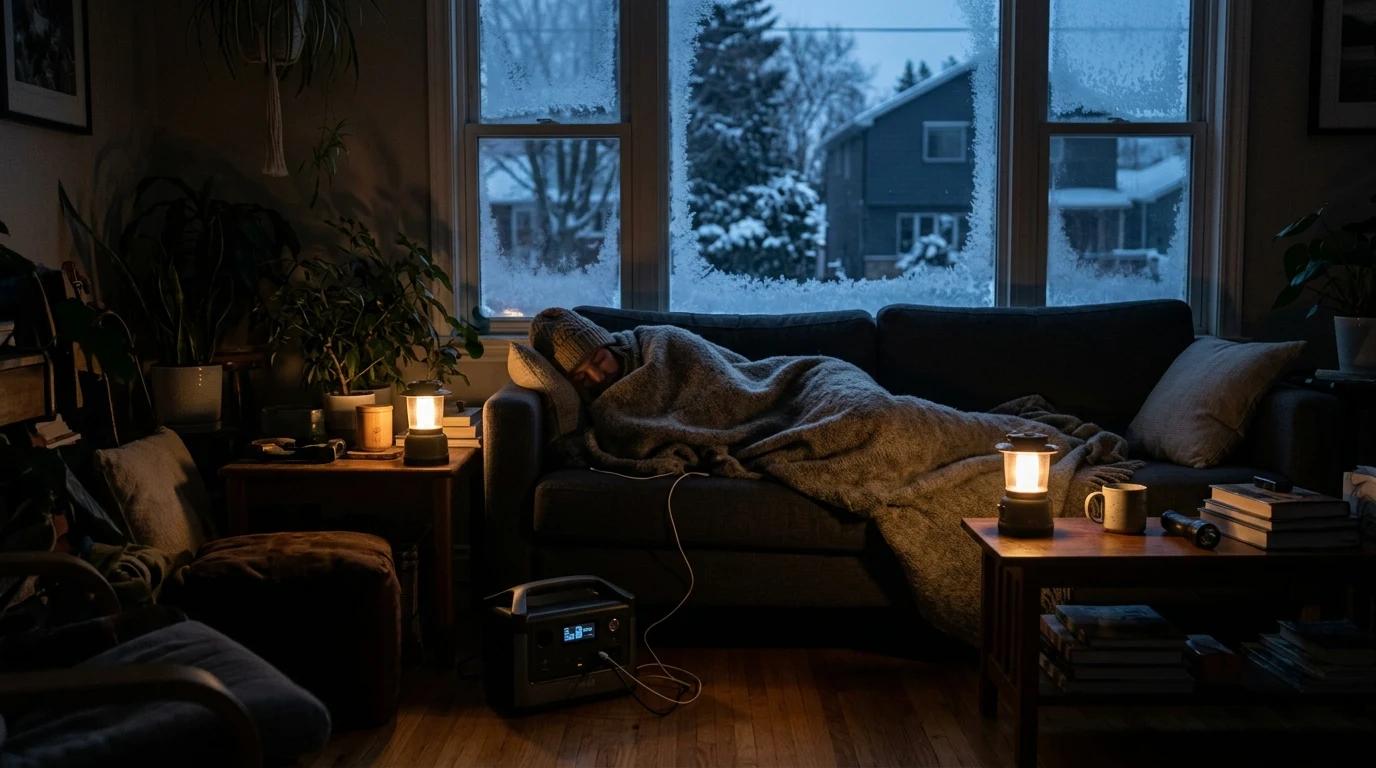
Battery-powered heaters work only for small jobs: a 1,024 Wh power station holds about 3,500 BTU of energy in total, less than a Portable Buddy propane heater makes in one hour on low. Use battery power for a heated blanket or clothing, and fuel or the furnace for room heat.
Key takeaways
- A 1,024 Wh power station holds about 3,500 BTU in total, less than a Portable Buddy makes in an hour on low.
- A 1,500 W space heater empties a 1,024 Wh station in about 35 minutes.
- Spend battery power on a heated blanket or clothing, which warms the person directly.
- Room heat without power means fuel or the furnace, with a battery CO alarm and someone awake.
The short answer
Battery-powered heaters work, but only for a small job or a short time. A battery holds very little heat: by EIA's conversion of 3,412 BTU per kilowatt-hour, a 1,024 Wh power station stores about 3,500 BTU in total, less than a Portable Buddy propane heater puts out in one hour on its low setting. Use battery power to warm people, with a heated blanket or heated clothing, and use fuel or your furnace to warm a room.
That is not a knock on batteries. It is simply how much energy they hold.
Battery heat vs fuel heat
| Heat source | Heat delivered | How long it lasts |
|---|---|---|
| 1,500 W space heater on a 1,024 Wh station | About 5,100 BTU per hour | About 35 minutes |
| A whole 1,024 Wh station, turned into heat | About 3,500 BTU stored, about 3,000 usable | Once, then recharge |
| Portable Buddy on low, one 1 lb cylinder | 4,000 BTU per hour | Up to 6 hours |
| Portable Buddy on high, one 1 lb cylinder | 9,000 BTU per hour | Up to 3 hours |
| Heated blanket on a power station | Warms the person, not the room | Hours, set by its watts |
Why the math is so unkind
An electric heater turns every watt it draws into heat, and EIA puts one kilowatt-hour at 3,412 BTU. A 1,500 W space heater therefore makes about 5,100 BTU an hour. It empties the usable part of a 1,024 Wh battery, about 870 Wh after inverter loss, in roughly 35 minutes.
Fuel holds far more. Mr. Heater rates the Portable Buddy at 4,000 or 9,000 BTU per hour and states up to 3 to 6 hours on a 1 lb cylinder. That works out to roughly 24,000 to 27,000 BTU from one small cylinder, about eight times the usable heat in a 1 kWh power station. Even the biggest station we list, the 3,072 Wh Anker Solix F3000, runs a 1,500 W heater for only about an hour and three quarters.
Rule of thumb: a battery can keep a person warm, but it cannot keep a room warm.
Do low settings or a bigger battery help?
A little, but not enough to change the answer. Usable battery energy divided by heater watts gives the hours:
| Station (usable after inverter loss) | 1,500 W high | 750 W low | 400 W small heater |
|---|---|---|---|
| 1,024 Wh (about 870 Wh) | 35 min | 70 min | About 2 h |
| 2,048 Wh (about 1,740 Wh) | 70 min | About 2.3 h | About 4.3 h |
| 3,072 Wh (about 2,610 Wh) | 1.75 h | About 3.5 h | About 6.5 h |
A small heater on a big battery can take the chill off a bathroom while you dress. It will not hold a living room through a winter night, and it leaves nothing for the fridge or phones.
What "battery-powered heater" usually means
Searches for a battery heater mix up three different things:
- Small battery or USB heaters. They can only draw what a small battery supplies, so they warm hands or a lap, not the air in a room.
- Propane heaters with a battery fan. Mr. Heater's Big Buddy manual says four D-cell batteries are required for fan operation. The batteries move air; the propane makes the heat, and every indoor rule for a fuel heater still applies.
- Battery warmers for cars and engines. A different product for a different problem, and the reason the search term is so busy.
What actually keeps you warm without power
1. Warm the people first
Gather in one room, close off the rest, and dress in layers. Our guide to heating your home without power covers this step, and it costs nothing.
2. Put battery power into the bed, not the room
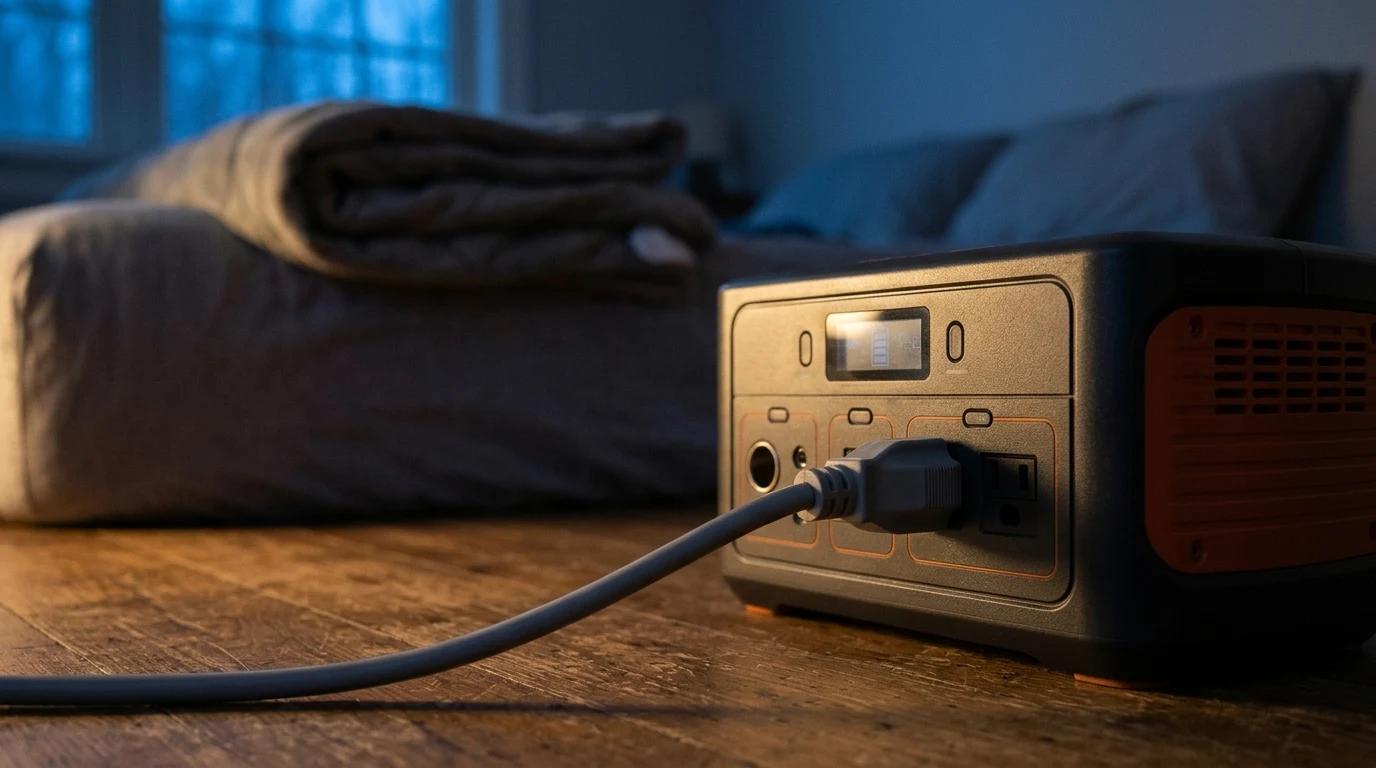
A heated blanket is the heating job batteries do well, because it warms you directly instead of the air around you. Read the watts on its label and divide the station's usable watt-hours by that number. At 100 W, for example, the 1,024 Wh Anker Solix C1000 Gen 2 would last about 8 to 9 hours. Check your own label rather than assuming. Our battery heated blanket guide compares blankets built for this, and the Runtime Calculator does the division for your list.
Heated clothing that runs from a USB power bank works the same way on a smaller scale.
3. Heat one room with an indoor-rated fuel heater
If a room has to stay warm, the realistic portable options burn fuel. The Portable Buddy manual allows emergency indoor heating on a disposable 1 lb cylinder, requires a 9 square inch fresh-air opening, says never to operate it while sleeping, and states it is not for use in a dwelling home in California and not for sale in Massachusetts. Compare the models on our indoor-rated heater page. If you are weighing kerosene instead, read whether a kerosene heater is safe indoors first.
4. Run the furnace instead of a space heater
A gas furnace needs electricity for its controls and blower, a far smaller load than making heat from electricity. See running a gas furnace in a power outage. A gas fireplace may also light with no power at all: check which ones work in an outage.
Heater safety still applies
NFPA's heating tips apply to every option above:
- Keep anything that can burn at least three feet from any heater
- Turn portable heaters off when you leave the room or go to bed
- Never use your oven to heat your home
Any fuel-burning heater also needs a carbon monoxide alarm that works without house power. CDC says to install battery-operated or battery back-up CO detectors near every sleeping area. The Kidde COB runs on two AA batteries.
Before any fuel heater: a battery CO alarm on the wall and someone awake.
When to stop and leave
If the room cannot be kept safely warm, leave. Ready.gov says to go to a community location with power if heat or cold is extreme, and to check with local officials about heating locations open near you.
Which heat fits your outage
- One or two people, overnight
- Heated blanket on a power station
- It warms the person and draws a fraction of a space heater.
- A family in one room for a few hours
- Indoor-rated propane heater
- Fuel holds the heat; follow the manual's vent rule and stay awake.
- A gas furnace in the house
- Power the furnace
- Its blower needs far less power than electric heat.
- Only a space heater and a battery
- Do not count on it
- About 35 minutes at 1,500 W from a 1,024 Wh station.
Questions people ask
Can a power station run a space heater?
Only briefly. At 1,500 W, a 1,024 Wh station lasts about 35 minutes after inverter loss, and about 70 minutes on a 750 W low setting.
Is there a battery heater that can heat a room?
Not for long. One kilowatt-hour is 3,412 BTU by EIA's conversion, so even a 3,072 Wh station holds less heat than a Portable Buddy makes in two hours on high.
Are battery-powered heaters safe indoors?
An electric heater on a battery makes no carbon monoxide, but NFPA's three-foot clearance and turn-off-when-you-leave rules still apply. A propane heater with a battery fan burns fuel and needs its manual's vent and a CO alarm.
How long will a heated blanket run on a power station?
Divide the station's usable watt-hours, about 85 percent of its rating, by the blanket's label watts. At 100 W, a 1,024 Wh station gives about 8 to 9 hours.
Sources for this guide
Outage Ready Editorial
We work out the arithmetic and read the maker and agency pages so you do not have to. About us.
Read next
How to Heat Your Home Without Power, Safely
Heat one small room, with a wood stove or an indoor-rated heater if you have one, and never with an oven, a camp stove or a generator inside.
5 min read
What Size Power Station Do I Need? The Simple Arithmetic
Multiply watts by hours, divide by 0.85, and you have your size. A fridge for a day takes about 2,400 Wh.
5 min read