Guide
How to Run a Gas Furnace During a Power Outage
Outage Ready Editorial · Updated November 21, 2026 · 5 min read
Quick answer
A gas furnace stops in an outage because its blower, igniter and controls need electricity; run it from a power station or generator only through an electrician-installed transfer switch or inlet, never a backfed wall outlet.
Key takeaways
- A gas furnace needs electricity for its blower, igniter and controls, so it stops in an outage.
- Champion puts a 1/2 HP furnace fan at 300 to 800 W running and 800 to 1,600 W starting.
- A 1,024 Wh power station gives the blower about 1 to 3 hours of run time; a generator runs it while fuel lasts.
- Connect through a transfer switch or an inlet with an interlock; OSHA warns backfeeding can electrocute utility workers.
The short answer
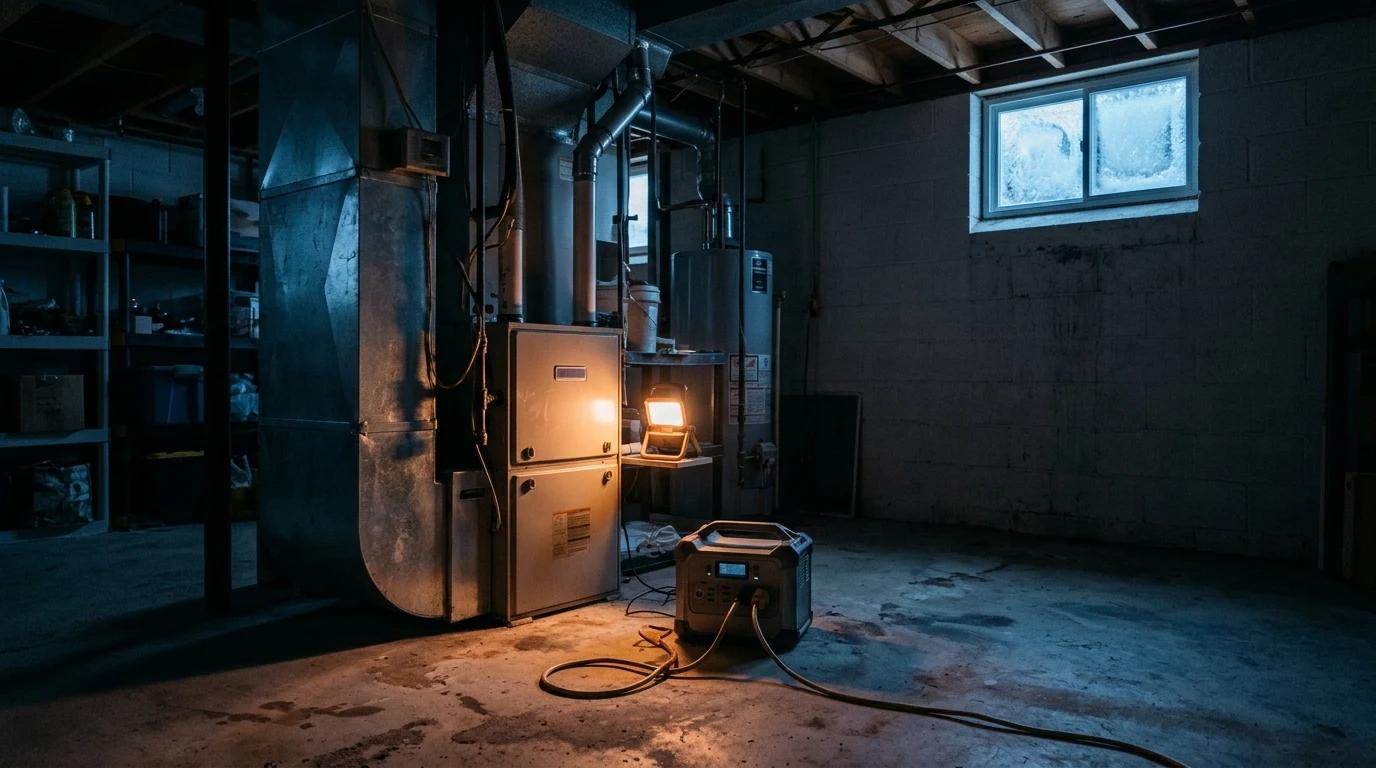
A gas furnace stops in a power outage because its blower, draft inducer, igniter and controls run on electricity. You can run it from a power station or a generator, but only through a proper connection: an electrician-installed transfer switch for the furnace circuit, or a generator inlet with a transfer switch or interlock. Never plug a generator into a wall outlet to feed the house.
The blower is the big load. Champion puts a 1/2 HP furnace fan at 300 to 800 W running and 800 to 1,600 W starting.
| Backup source | Blower run time at 300 W | At 800 W | Connection |
|---|---|---|---|
| 1,024 Wh power station | About 2.9 hours | About 1.1 hours | Furnace transfer switch, fitted by an electrician |
| 2,048 Wh power station | About 5.8 hours | About 2.2 hours | Same |
| 3,584 Wh home battery | About 10 hours | About 3.8 hours | Same, or the maker's transfer switch |
| Portable generator | As long as the fuel lasts | As long as the fuel lasts | Inlet plus transfer switch or interlock; outdoors only |
Run time is hours of the blower actually running, with 15% inverter loss counted. The blower cycles with the thermostat, so the clock time is longer, and it depends on how cold it is and how well the house holds heat.
Why a gas furnace needs electricity
WestLight Energy, the public power agency formerly called Peninsula Clean Energy, puts it plainly: most heating systems need electric fans to circulate warm air and will not operate when the power is out. A modern furnace also lights its burner with an electric igniter, watched by a flame sensor on the control board; Trane's installer guide for one such control kit covers both parts.
There are exceptions. WestLight notes that gas wall furnaces typically keep working in an outage, as do most gas fireplaces, though neither heats a house well. If yours is one of these, our heating guide covers safe use.
How many watts your furnace needs
Start with Champion's figures: 300 to 800 W running and up to 1,600 W to start for a 1/2 HP fan. Then read your furnace's rating plate for its own amps. Watts are volts × amps, the same arithmetic GE gives for appliances. Your own plate figure beats any chart.
Worth remembering: the start matters as much as the run. A power station or generator must clear the blower's starting surge on top of everything else that is on.
Why the connection matters
Furnaces are commonly hardwired to their circuit rather than plugged into an outlet, and that wiring is part of how they stay safe. Trane's installer guide for a furnace control kit warns that the control board is polarity sensitive, with the hot leg on a specific lead, and that the cabinet needs an unbroken ground to code. A cord rigged to a power station or generator can get either one wrong.
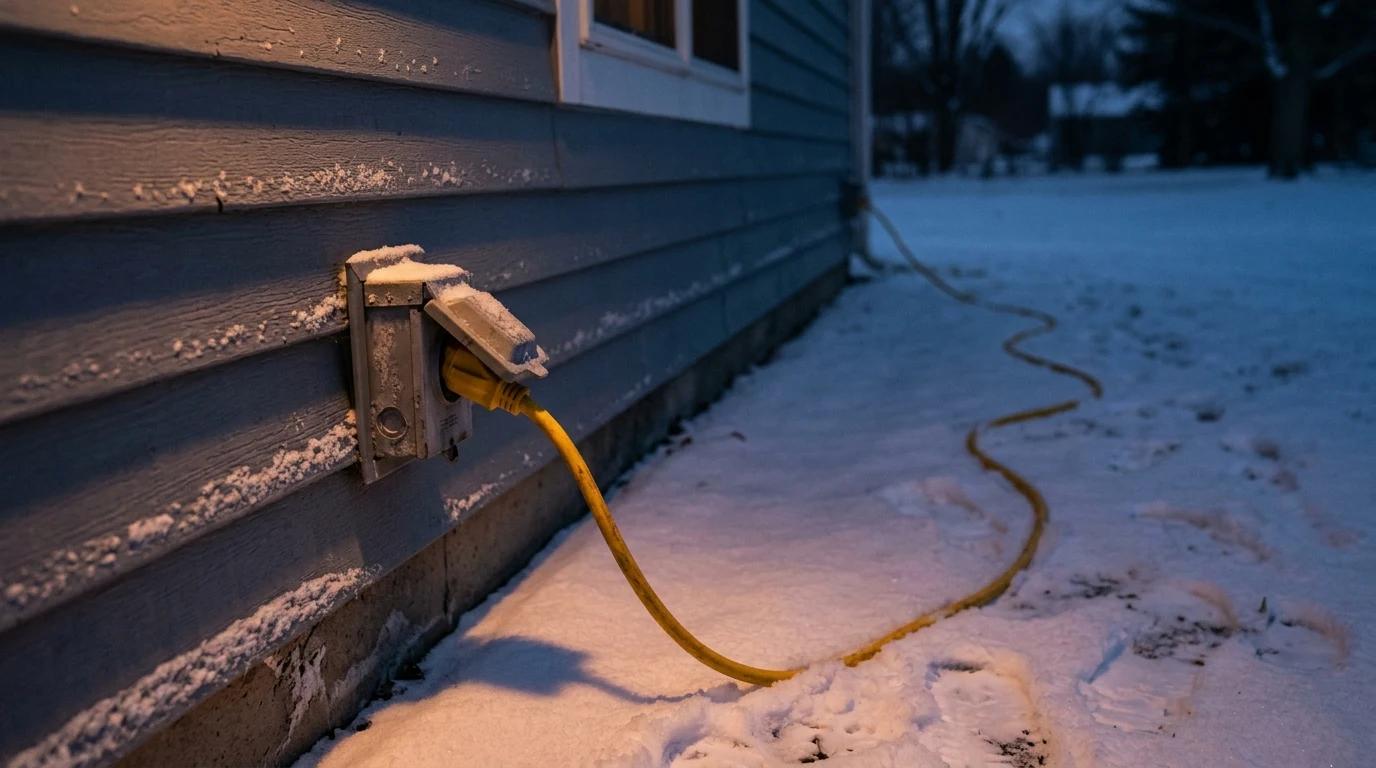
Then there is backfeeding. OSHA warns never to attach a generator directly to a building's electrical system unless a qualified electrician has installed a transfer switch, because doing so can energize wiring for great distances and electrocute utility workers. A cord with two male ends plugged into a wall outlet does exactly that. Do not use one.
A furnace that will not light on backup power is telling you something is wrong with the connection, not asking for a workaround. The safe options:
- A furnace transfer switch. An electrician fits a switch on the furnace circuit so it can draw from either the grid or a power station or generator, never both. This is the usual route for a power station.
- An inlet with a transfer switch or interlock. An electrician fits a weatherproof inlet outside, and the furnace circuit is one of several a generator can feed. See how to connect a generator to your house and transfer switch vs interlock kit.
Power station or generator?
A power station is silent, runs indoors and makes no exhaust, so it suits a short outage or a home with no safe place for an engine. The table shows the limit: a 1 kWh station gives the blower only a few hours of run time. Pick a station whose output clears the 1,600 W start, such as the Anker SOLIX C1000 Gen 2 $489.99 with a stated 2,000 W.
A generator runs the furnace for as long as you have fuel, which makes it the practical choice for a cold snap that lasts days. The Westinghouse WGen3600DFcv $399.00 states 3,600 running watts, enough for a furnace fan, a fridge and lights. CDC says to run it outdoors only, more than 20 feet from windows, doors and vents, never in a garage even with the door open.
The parts for the inlet route are ordinary: a Reliance Controls PB30 inlet box $59.98 and a Champion 25-foot L14-30 cord $60.50, connected by an electrician.
Set it up before the cold
- Read the rating plate and write down the furnace's amps, so you know the watts.
- Have an electrician fit the switch or inlet while the weather is mild. It is not a storm-day job.
- Test the setup once on a cool day: switch over, start the station or generator, and let the furnace run a full cycle.
- Fit CO alarms with battery backup near every sleeping area.
- Keep fuel or a charge ready, and know where the outside vents are so you can clear them of snow.
Carbon monoxide: two sources now
Your furnace burns gas, and so does a generator. CPSC's winter warning asks you to clear snow from the outside vents of furnaces and other fuel-burning appliances so carbon monoxide does not build up inside. CDC advises battery-powered or battery backup CO detectors near every sleeping area, and one in the home whenever a generator runs. See the CO alarm picks.
Rule of thumb: if the plan involves a cord through a window to the furnace, it is the wrong plan. Call an electrician before the cold arrives, not during it.
Which setup fits you
- Short outages, no safe place for an engine
- Power station and a furnace transfer switch
- Silent and indoors, for a few hours of blower time.
- Cold snaps that last days
- Generator, inlet and transfer switch
- Runs the blower as long as fuel lasts.
- Furnace plus fridge and well pump
- Westinghouse WGen5300DFcv
- 5,300 running watts and a 30-amp outlet for a transfer switch.
- Gas wall furnace or fireplace
- No backup needed for it
- WestLight Energy says these typically keep working in an outage.
Questions people ask
Will a gas furnace work without electricity?
Usually not. Its blower, igniter and controls need power, and WestLight Energy notes most heating systems will not operate when the power is out. Gas wall furnaces are the common exception.
What size generator do I need for a furnace?
The blower alone runs at 300 to 800 W and starts at up to 1,600 W, per Champion. A 3,000 W class generator covers it with a fridge and lights; add a well pump and look at 5,000 W.
Can a portable power station run a gas furnace?
Yes, through a transfer switch, for a limited time. A 1,024 Wh station gives a 300 W blower about 2.9 hours of run time, and an 800 W blower about 1.1 hours, once inverter loss is counted.
Can I plug my furnace into a generator with an extension cord?
Only if the furnace was built with a plug, which most are not. Never feed a wall outlet from a generator; OSHA warns it can energize wiring far beyond your home.
Sources for this guide
- Champion: generator wattage chart, furnace fan row
- WestLight Energy: myths and facts about gas appliances during a power outage
- Trane: furnace control kit installer's guide, polarity and ground warnings
- OSHA: portable generator hazards fact sheet
- CPSC: winter storm warning on carbon monoxide and power outages, 2026
- CDC: carbon monoxide poisoning basics
- GE Appliances: running an appliance on a generator
- Jackery: what is a watt-hour, the 0.85 working-time formula
Outage Ready Editorial
We work out the arithmetic and read the maker and agency pages so you do not have to. About us.
Read next
How to Heat Your Home Without Power, Safely
Heat one small room, with a wood stove or an indoor-rated heater if you have one, and never with an oven, a camp stove or a generator inside.
5 min read
How to Connect a Generator to Your House Safely
Connect a generator with heavy-duty cords, or have an electrician fit a transfer switch or interlock with an inlet box. Never backfeed through an outlet.
5 min read
Appliance Wattage Chart: Running and Starting Watts
Running and starting watts from Champion, energy use from Silicon Valley Power, and how to use both to size a generator or a power station.
5 min read