Guide
Is a Kerosene Heater Safe Indoors? CPSC and Maker Rules
Outage Ready Editorial · Updated November 21, 2026 · 5 min read
Quick answer
A UL 647-listed kerosene heater is designed for well-ventilated indoor rooms, but only on 1-K kerosene, refueled outdoors when cool, with a door open to the house or a window open about an inch, three feet of clearance, and a battery CO alarm. Check local codes first.
Key takeaways
- UL 647 covers kerosene heaters for well-ventilated indoor spaces, on 1-K kerosene only.
- CPSC: never gasoline, refuel outdoors when cool, three feet of clearance, a door open to the house.
- Dyna-Glo wants 200 cubic feet of air per 1,000 BTU per hour, or a door or window open.
- Run a battery CO alarm, never leave the heater on unattended, and turn it off before bed.
The short answer
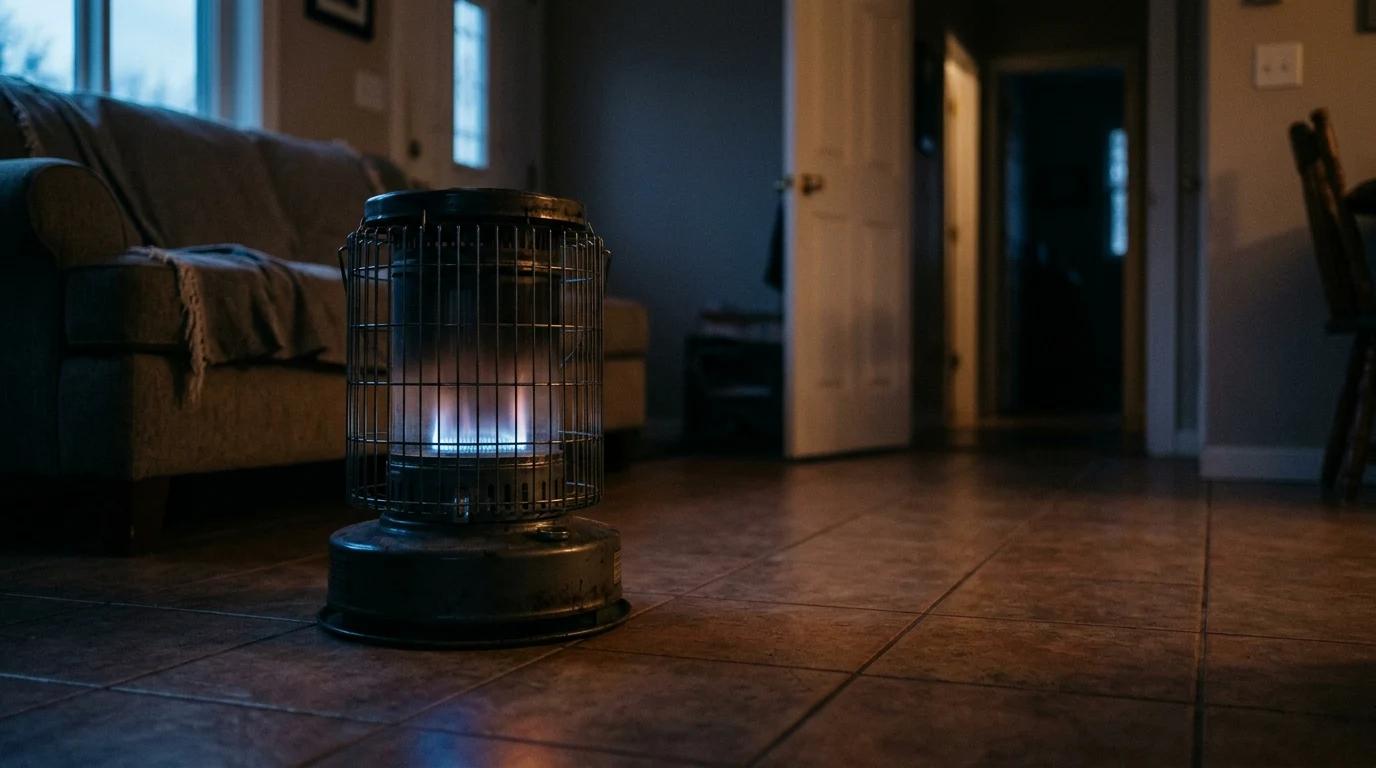
A kerosene heater listed to UL 647 is designed for use in well-ventilated indoor spaces, and CPSC publishes the rules for doing it. Those rules are strict because the heater burns fuel in your room: use 1-K kerosene only, refuel outdoors once it has cooled, keep a door open to the rest of the house or a window open about an inch, keep it three feet from anything that burns, and run a battery carbon monoxide alarm. Local codes vary, so check with your fire department before you rely on one.
CPSC's warning label, in brief: never gasoline, never refuel while hot, three feet of clearance, doors open.
The rules, and who sets them
| Rule | What it says | Source |
|---|---|---|
| Fuel | Water-clear 1-K kerosene only, never gasoline | CPSC |
| Storage | A separate blue container marked kerosene, outside the living space | CPSC, Dyna-Glo |
| Refueling | Outdoors, heater off and cool, not above the full mark | CPSC |
| Air | A door open to the rest of the house; a window open about an inch in a closed or tight room | CPSC |
| Clearance | At least three feet from furniture and clothing | CPSC |
| Attention | Never unattended, off before going to bed | Dyna-Glo |
| Alarms | Smoke alarms on every level; a battery CO alarm near sleeping areas | CPSC, CDC |
What a UL 647 listing actually covers
UL 647 is the safety standard for unvented kerosene-fired room heaters and portable heaters. Its scope says these heaters are for use with Type 1-K kerosene in spaces well ventilated enough to supply combustion air and to reduce the risk of carbon monoxide building up. It also requires automatic safety controls against abnormal fuel discharge if ignition fails or the flame goes out, caps fuel input at 25,000 BTU per hour for portable heaters, and says the heaters are not for cooking or for spaces where flammable vapors may be present.
Two things follow. A listing is about how the heater is built, not permission to close up a room. And the standard itself points to NFPA 31 and mechanical codes for where and how a heater may be used, which is why your local fire department is the one to ask.
Look for the listing mark on the heater and in the manual. Dyna-Glo's RMC-55R7 manual, for example, states "U.L. Listed".
Fuel is where most trouble starts
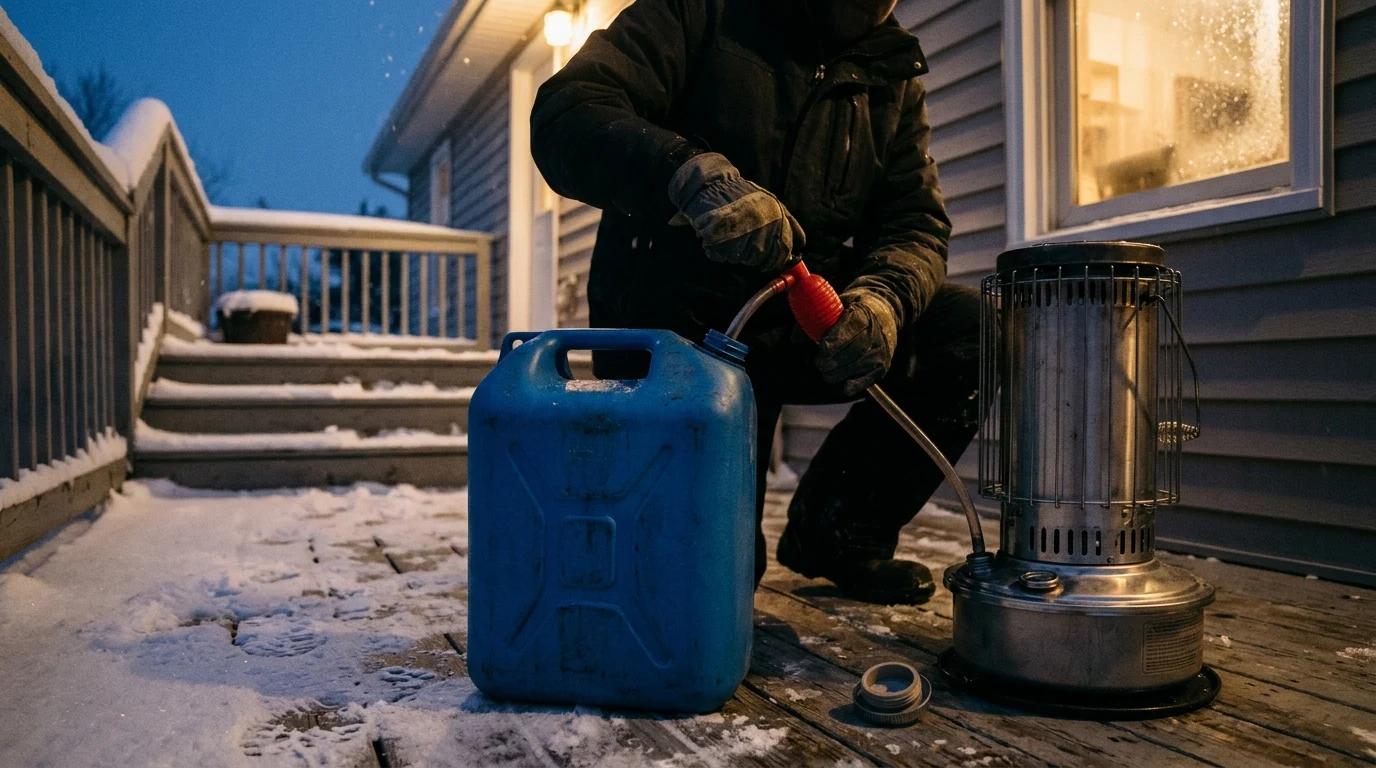
CPSC's first rule is the fuel. Even small amounts of gasoline or other volatile fuels mixed with kerosene can substantially increase the risk of fire or explosion, it says, and other grades of kerosene can release more pollutants into your home. Different grades can look the same, so CPSC advises buying from a dealer who can certify the kerosene is 1-K.
- Use the kerosene pump, not the gasoline pump
- Store it in a container intended for kerosene, usually blue; never a red gasoline can
- Keep the fuel outside the living area, as Dyna-Glo's manual requires
Air: how much ventilation is enough
CPSC says kerosene heaters produce low levels of pollutants such as carbon monoxide and nitrogen dioxide. Its rule is to run the heater in a room with a door open to the rest of the house, and to open an outside window about one inch if the door has to be closed or if the house is new and tight or has been winterized.
Dyna-Glo puts a number on it for its RMC-55R7, rated 10,000 BTU per hour. If a room has less than 200 cubic feet of air for each 1,000 BTU per hour, the manual says to keep doors to adjacent rooms open or open a window at least 1 inch. For that heater, that is 2,000 cubic feet: about a 250 square foot room with an 8 foot ceiling. The manual also says not to use the heater in a bathroom or any small room with the door closed.
Room-size check: BTU rating ÷ 1,000 × 200 = the cubic feet of air Dyna-Glo wants per heater.
Flame, wick and the off switch
CPSC says to operate the heater only at the recommended flame height and to keep the wick clean. Dyna-Glo warns that running below the wick-stop setting can produce smoke, odor and carbon monoxide.
The manual also says never to leave the heater operating if you leave the room, and to turn it off and confirm it is out before going to bed. If it flares up, CPSC says not to move or carry it: use the manual shut-off, and if the fire continues, leave and call the fire department.
The manual's other never-rules
Dyna-Glo's manual adds several rules that are easy to skip in a cold house:
- Never use the heater to cook or boil water
- Never use it to dry clothes or anything else
- Never place objects on the top plate
- Never operate it without the guard or grille attached
- Never carry it while it is running
It also explains that a kerosene heater has no thermostat: it is either on or off, and turning the wick down to reduce heat causes improper combustion. If the room gets too hot, the manual says to open a door or window or turn the heater off.
Kerosene vs indoor-rated propane
We do not list kerosene heaters. Our indoor-rated heater page covers propane heaters such as the Mr. Heater Portable Buddy, which runs on a sealed 1 lb cylinder, so there is no liquid fuel to pour. Its manual allows emergency indoor heating with a 9 square inch vent, says never to operate it while sleeping, and states it is not for use in a dwelling home in California and not for sale in Massachusetts. Both kinds are unvented and both need a CO alarm.
The alarm comes first
CDC says to install battery-operated or battery back-up CO detectors near every sleeping area, and CPSC's kerosene guidance adds smoke alarms on every level. A battery alarm such as the Kidde COB keeps working when the power is out, which is exactly when the heater comes out. If it sounds, our guide to a carbon monoxide detector beeping explains each pattern.
For the wider picture, see how to heat your home without power.
Should you run it in this room?
- Living room, door open to the house
- Yes, if local code allows
- CPSC's basic rule is a door open to the rest of the house.
- Bedroom with the door shut
- No
- Dyna-Glo rules out small rooms with the door closed, and it must be off before anyone sleeps.
- Bathroom or small closed room
- No
- Dyna-Glo's manual rules out a bathroom or any small room with the door closed.
- No working CO alarm
- Not yet
- CDC says battery CO detectors near every sleeping area.
Questions people ask
Can I sleep with a kerosene heater on?
No. Dyna-Glo's manual says to turn the heater off and make sure it is out before going to bed, and never to leave it running when you leave the room.
Can I use diesel or gasoline in a kerosene heater?
Never gasoline: CPSC says even small amounts mixed with kerosene can substantially increase the risk of fire or explosion. Use the fuel your heater's manual names, which for UL 647 heaters is 1-K kerosene.
How much ventilation does a kerosene heater need?
CPSC says a door open to the rest of the house, and an outside window open about an inch if the door is closed or the house is tight. Dyna-Glo's rule is 200 cubic feet of air per 1,000 BTU per hour.
Are kerosene heaters legal indoors?
It depends on where you live. UL 647 points to NFPA 31 and local mechanical codes for installation and use, and CPSC's label says to follow all applicable codes, so ask your local fire department.
Sources for this guide
- CPSC: CPSC stresses kerosene heater safety (Pub. 5052)
- UL Standards & Engagement: UL 647 unvented kerosene-fired room heaters and portable heaters
- Dyna-Glo: RMC-55R7-1 kerosene heater owner's manual (Appliance Factory Parts copy)
- Mr. Heater: Portable Buddy MH9BX owner's manual
- CDC: Carbon monoxide poisoning basics
Outage Ready Editorial
We work out the arithmetic and read the maker and agency pages so you do not have to. About us.
Read next
How to Heat Your Home Without Power, Safely
Heat one small room, with a wood stove or an indoor-rated heater if you have one, and never with an oven, a camp stove or a generator inside.
5 min read
What to Do When the Power Goes Out: First-Hour Checklist
A calm, ordered first hour: light, breaker, fridge door, surge protection, then a plan for food, heat and medical devices.
5 min read