Guide
What Gauge Extension Cord for a Generator? Length Matters
Outage Ready Editorial · Updated November 25, 2026 · 6 min read
Quick answer
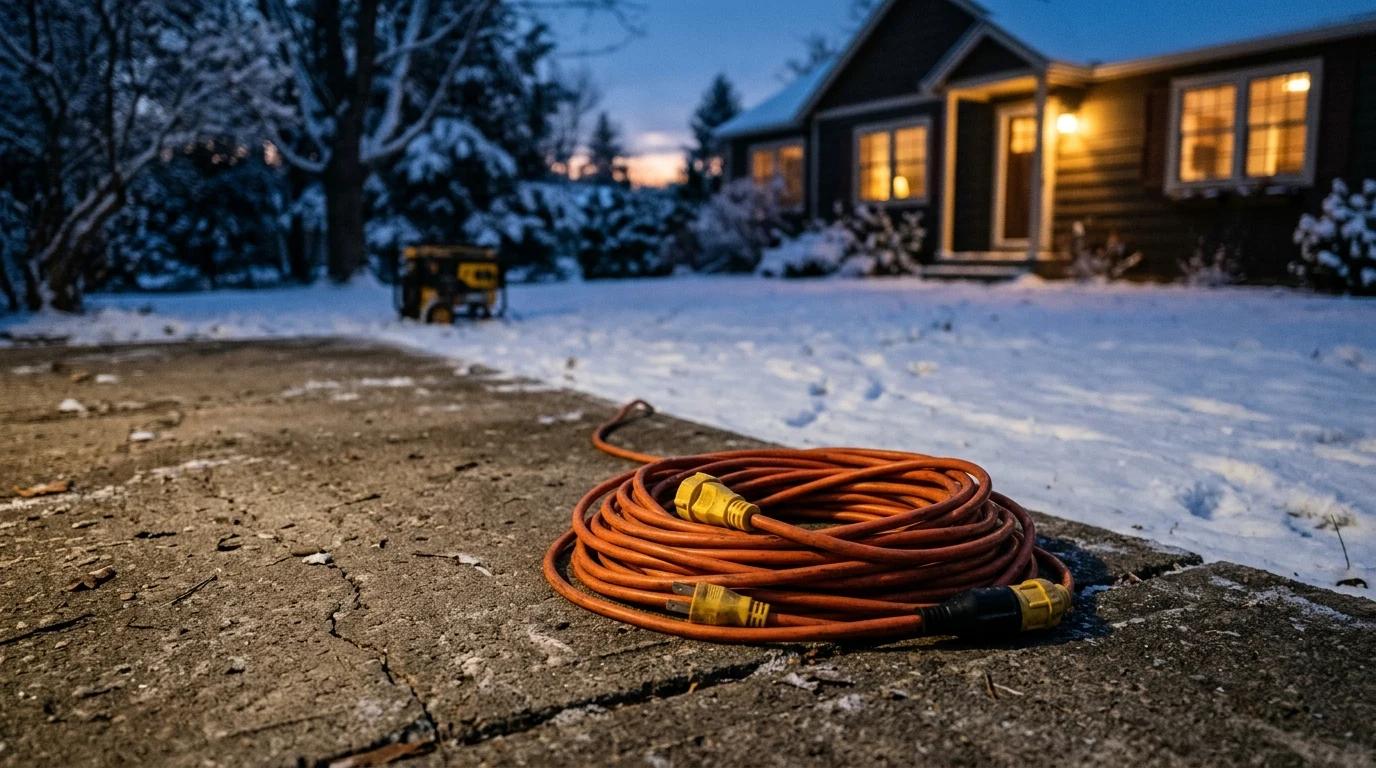
For a household extension cord from a generator, 12 gauge covers most loads up to 15 A at 50 feet; go to 10 gauge for 100 feet or 16 to 20 A. To feed a transfer switch, use a 10 AWG, 30 A L14-30 generator cord instead of several extension cords.
#1 · Generator to a transfer switch or inlet
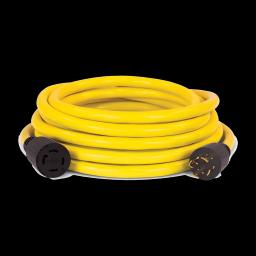
Champion 25-Foot 30-Amp L14-30 Generator Power Cord
10 AWG, 30 A, 125/250 V, per Champion.
$60.50Buy on Amazon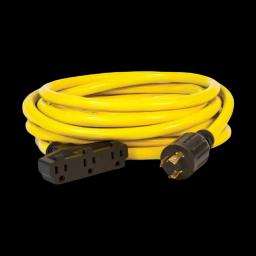
#2 · Generator with an L5-30 outlet to three household plugs
Champion 25-Foot L5-30 to Three Outlets
4.8 (3,536)25 ft, 10 AWG, 30 A, L5-30P to three 5-15R.
$58.31Buy on Amazon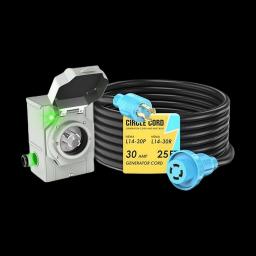
#3 · Cord plus an inlet box in one kit
CircleCord 25-Foot L14-30 Cord and Inlet Box Kit
4.8 (1,221)25 ft, 10 AWG, 30 A L14-30.
$94.69Buy on Amazon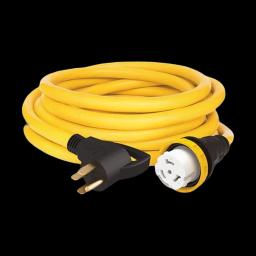
#4 · 50 A generators
Champion 30-Foot 50-Amp Generator Cord
4.8 (164)30 ft, 6/3 + 8/1 AWG, 50 A, 14-50P to SS2-50R.
$199.00Buy on Amazon
| Pick | Best for | Ready | Buy |
|---|---|---|---|
 1. Champion 25-Foot 30-Amp L14-30 Generator Power Cord | Generator to a transfer switch or inlet 10 AWG, 30 A, 125/250 V, per Champion. | $60.50Buy on Amazon | |
 2. Champion 25-Foot L5-30 to Three Outlets 4.8 (3,536) | Generator with an L5-30 outlet to three household plugs 25 ft, 10 AWG, 30 A, L5-30P to three 5-15R. | 55 | $58.31Buy on Amazon |
 3. CircleCord 25-Foot L14-30 Cord and Inlet Box Kit 4.8 (1,221) | Cord plus an inlet box in one kit 25 ft, 10 AWG, 30 A L14-30. | 46 | $94.69Buy on Amazon |
 4. Champion 30-Foot 50-Amp Generator Cord 4.8 (164) | 50 A generators 30 ft, 6/3 + 8/1 AWG, 50 A, 14-50P to SS2-50R. | 86 | $199.00Buy on Amazon |
Key takeaways
- CPSC says to use heavy-duty outdoor-rated cords whose wattage rating exceeds the total wattage of everything connected.
- Divide watts by 120 to get amps, and add every appliance on the cord: 1,800 W is 15 A.
- On the voltage-drop math, 12 gauge at 15 A drops about 2.5% at 50 feet and 5.0% at 100 feet; 10 gauge drops 3.1% at 100 feet.
- The Grainger chart tolerates roughly 5% drop at the far end of each band, so go one gauge thicker if you want under 3%.
- To power the house, use a 10 AWG, 30 A L14-30 generator cord to a transfer switch instead of several extension cords.
Gauge is about distance as much as load. Current travels out to the appliance and back, so a cord twice as long loses twice the voltage while carrying the same amps. That is why a cord that is fine for a lamp at 25 feet can struggle under a heater at 100 feet.
The CPSC rule: Use heavy-duty extension cords made for outdoor use, and make sure each cord's wattage rating exceeds the total wattage of everything plugged into it.
Start with the amps
Cords are rated in amps and appliances are labelled in watts. Divide watts by 120 to convert: 1,800 W ÷ 120 = 15 A. Then add every appliance sharing the cord, which is exactly what Grainger's guide tells you to do.
Running watts from Champion's chart (the full list is in our appliance wattage chart):
- Refrigerator: 150 to 400 W running, 800 to 1,200 W to start
- Space heater: 750 to 1,500 W
- Furnace fan, 1/2 HP: 300 to 800 W running
- Sump pump, 1/2 HP: 800 to 1,050 W running, 1,300 to 2,150 W to start
A refrigerator at its 400 W ceiling is 3.3 A. A 1,500 W heater is 12.5 A. Share one cord and the load is 1,900 W, about 15.8 A, which pushes you out of the 14 to 15 A row of the store chart and into the 16 to 20 A row. Starting watts last a moment, so they are mostly the generator's problem. The generator sizing tool handles that side.
The voltage-drop table
Every foot of copper resists current, and the resistance shows up as lost volts at the far end. The formula:
volts lost = 2 × length (ft) × amps × ohms per 1,000 ft ÷ 1,000
The 2 is out and back. The resistances come from NEC Chapter 9, Table 8 (75°C stranded copper, as reproduced by Mike Holt): 14 AWG is 3.140 ohms per 1,000 ft, 12 AWG is 1.980 and 10 AWG is 1.240. Resistance rises with temperature, about 1% per 3°C, so a cord warmed by its load does slightly worse than these figures.
Worked example: 15 A on 100 feet of 12 AWG is 2 × 100 × 15 × 1.98 ÷ 1,000 = 5.94 V, about 5% of 120 V. Here is the full grid at 120 V.
| Load | Length | 14 AWG | 12 AWG | 10 AWG |
|---|---|---|---|---|
| 5 A (600 W) | 25 ft | 0.7% | 0.4% | 0.3% |
| 5 A (600 W) | 50 ft | 1.3% | 0.8% | 0.5% |
| 5 A (600 W) | 100 ft | 2.6% | 1.7% | 1.0% |
| 10 A (1,200 W) | 25 ft | 1.3% | 0.8% | 0.5% |
| 10 A (1,200 W) | 50 ft | 2.6% | 1.7% | 1.0% |
| 10 A (1,200 W) | 100 ft | 5.2% | 3.3% | 2.1% |
| 15 A (1,800 W) | 25 ft | 2.0% | 1.2% | 0.8% |
| 15 A (1,800 W) | 50 ft | 3.9% | 2.5% | 1.6% |
| 15 A (1,800 W) | 100 ft | 7.8% | 5.0% | 3.1% |
Read it by length: at 25 feet even 14 gauge stays near 2% at 15 A. At 100 feet the same load costs 7.8% on 14 gauge and 3.1% on 10 gauge.
Moving one size thicker (14 to 12, or 12 to 10) cuts the drop by about 37%, because the resistance falls from 3.140 to 1.980 to 1.240.
What the store chart assumes
Grainger and Zoro publish a minimum-gauge chart by cord length and amps. We ran its entries through the same formula, at the top amp of each band:
| Chart row | Minimum gauge | Math at top of band |
|---|---|---|
| 25 ft, 14 to 15 A | 14 | 2.0% |
| 25 ft, 16 to 20 A | 12 or 10 | 1.7% on 12 |
| 50 ft, 14 to 15 A | 14 | 3.9% |
| 100 ft, 14 to 15 A | 12 | 5.0% |
| 100 ft, 16 to 20 A | 10 | 4.1% |
| 150 ft, 11 to 15 A | 10 | 4.7% |
The pattern is plain: the retail chart tolerates roughly 5% drop at the far end of a band, and at short lengths it is far looser than that. If you want under 3%, go one gauge thicker than the chart says. For 15 A at 100 feet that means 10 gauge, which the table above puts at 3.1%.
The chart is not perfectly uniform. Its 100 foot row allows 14 gauge up to 13 A, and the math gives about 6.8% there, so a few cells run past 5%. This post does not claim any drop figure is a code limit, and none of the sources here say that a particular drop damages an appliance. What the numbers do show is how much slack each row carries.
Rule of thumb from the math: 12 gauge covers most household loads up to 50 feet. Past 100 feet, or at 16 to 20 A, step up to 10 gauge.
When to skip extension cords
If your goal is to power the house, several cords through a window is the wrong answer. Champion's 25-foot, 10 AWG, 30 A cord (SJTW, 125/250 V) is made for generators with an L14-30 receptacle and connects to a manual transfer switch, "eliminating the need to run extension cords throughout the house." Champion advises consulting a certified electrician about the switch. The ranked generator cords include that cord, a splitter cord for L5-30 outlets and a 50 A option.
The scale matters too. Our top-ranked generator, the Westinghouse WGen5300DFcv in the portable generator rankings, is rated at 5,300 running watts on gasoline. That is about 44 A at 120 V, more than twice the 20 A top row of the store chart, so no single household extension cord covers a whole generator.
Never plug a generator into a wall outlet to feed the house wiring. CPSC calls this backfeeding and warns against it. The right way is an inlet and a switch: see how to connect a generator to your house and transfer switch vs interlock kit.
Cord checks before the storm
CPSC's portable generator alert asks for a short list:
- Cords long enough to keep the generator outdoors, far from windows, doors and vents
- Heavy-duty cords designed for outdoor use
- No cuts or tears anywhere along the cord, and a plug with all three prongs
- No pinching or crushing where a cord passes through a window or doorway
For wet weather, see can you run a generator in the rain. Keep a working CO alarm inside the house whenever a generator runs.
Which cord for which job
- Refrigerator on a 25 to 50 foot run
- 12 gauge extension cord
- A fridge at 400 W is 3.3 A, and 12 gauge stays well under 1% at that load and length.
- 1,800 W heater load at 100 feet
- 10 gauge extension cord
- 15 A on 12 gauge drops 5.0%; 10 gauge drops 3.1%.
- Several appliances at once
- Add the amps first
- Grainger says to total the amps on a cord; one 30 A cord to a switch beats several cords.
- 30 A generator feeding a transfer switch
- Champion 25-ft L14-30 cord
- 10 AWG, 30 A, 125/250 V, made for L14-30 generators.
- 50 A generator
- Champion 30-ft 50 A cord
- 6/3 + 8/1 AWG, 50 A, 14-50P to SS2-50R.
Questions people ask
Is 14 gauge OK for a generator?
For short runs and light loads, yes. The math gives 3.9% drop at 15 A over 50 feet and 7.8% over 100 feet, so use 12 or 10 gauge as the load or length grows.
Can I use a 100-foot extension cord with a generator?
Yes, with a thicker gauge. Grainger's chart calls for 12 gauge at 14 to 15 A and 10 gauge at 16 to 20 A over 100 feet, and the math puts those at about 5.0% and 4.1% drop.
Is 10/3 better than 12/3?
For length and load, yes. 10 gauge has 1.240 ohms per 1,000 feet against 1.980 for 12 gauge, about 37% less loss at the same amps.
Can I plug my generator into a wall outlet?
No. CPSC warns against backfeeding house wiring this way. Use an inlet and a transfer switch or interlock kit installed by a qualified electrician.
Do I need an outdoor-rated cord?
Yes. CPSC says to connect appliances with heavy-duty extension cords designed for outdoor use, with a wattage rating above the total wattage connected.
Sources for this guide
Outage Ready Editorial
We work out the arithmetic and read the maker and agency pages so you do not have to. About us.
Read next
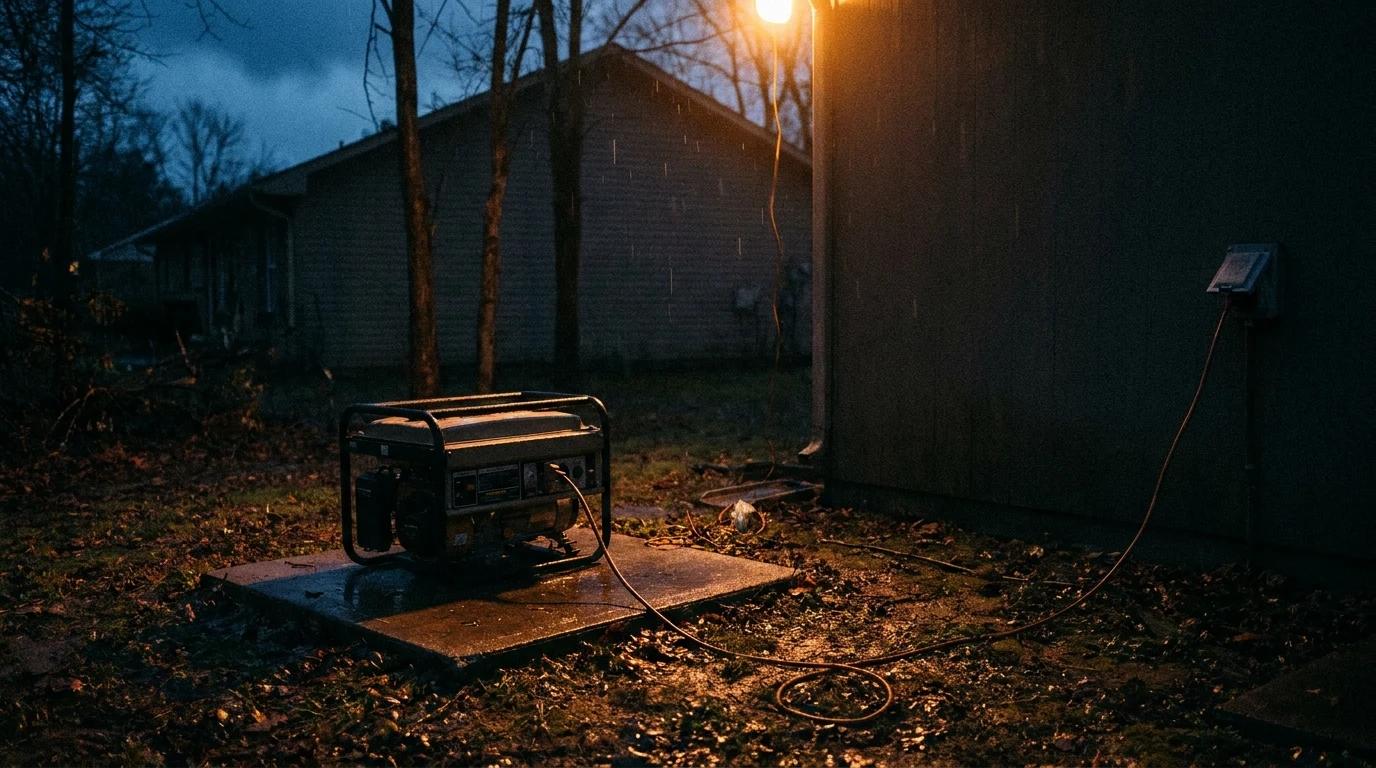
How to Connect a Generator to Your House Safely
Connect a generator with heavy-duty cords, or have an electrician fit a transfer switch or interlock with an inlet box. Never backfeed through an outlet.
5 min read
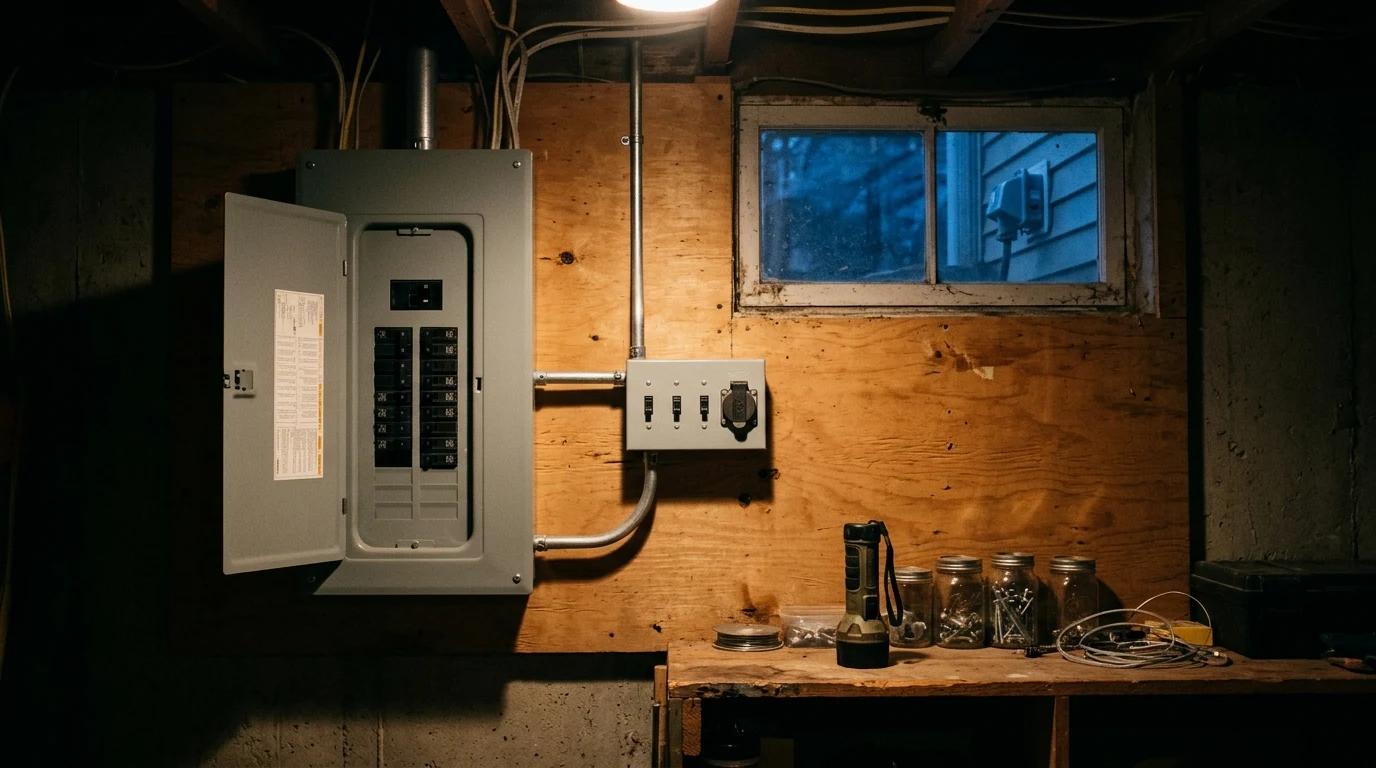
Transfer Switch vs Interlock Kit: Which to Install?
An interlock suits a panel with a listed kit and an owner who will manage breakers; a transfer switch suits preselected circuits and simple storm nights.
5 min read

Appliance Wattage Chart: Running and Starting Watts
Running and starting watts from Champion, energy use from Silicon Valley Power, and how to use both to size a generator or a power station.
5 min read