Guide
Can You Run a Generator in the Rain? What CPSC Says
Outage Ready Editorial · Updated November 21, 2026 · 5 min read
Quick answer
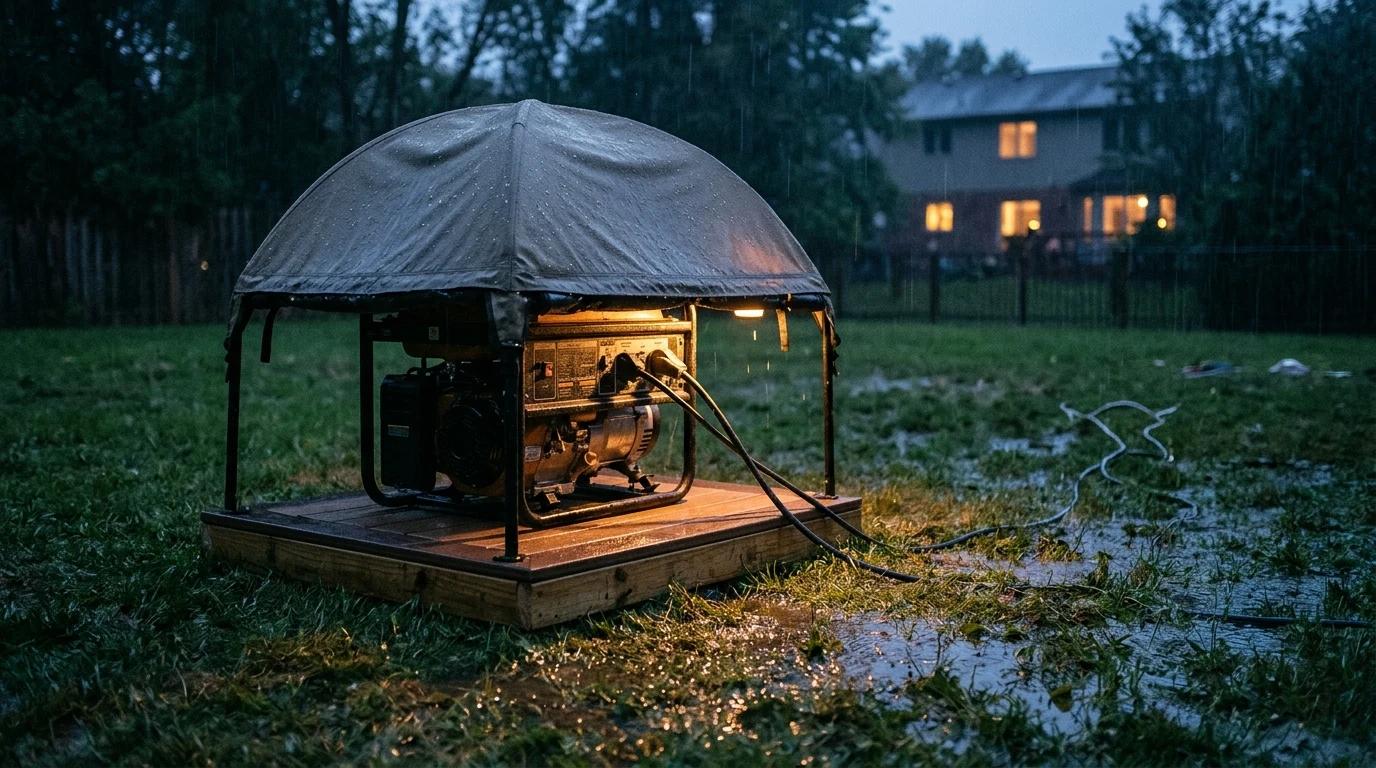
No, not uncovered: rain on a running generator risks electric shock, so run it only under an open canopy or a purpose-made running cover on dry ground, still outdoors and more than 20 feet from windows, doors and vents, or wait for the rain to pass.
Key takeaways
- Do not run a generator exposed to rain or snow: Generac, Westinghouse and OSHA all say so.
- CPSC's answer for wet weather is an open, canopy-like structure on a dry surface where water cannot reach, puddle or drain under it.
- Shelter never means closer: CPSC says a porch or carport is too close, and the CDC says more than 20 feet from windows, doors and vents.
- Tarps and homemade boxes are out: Champion says they can trap heat and create fire hazards.
The short answer
No, not uncovered. Rain on a running generator risks electric shock, and the makers say not to do it. Run it only under an open canopy or a purpose-made running cover, on dry ground, still outdoors and more than 20 feet from windows, doors and vents. Or wait for the rain to pass.
| Setup in rain or snow | OK? | Source |
|---|---|---|
| Uncovered in the yard | No | Generac: do not operate in rain or snow |
| Open canopy, dry ground, 20-plus feet out | Yes | CPSC safety alert |
| Purpose-made running cover, 20-plus feet out | Yes, if your maker allows it | CPSC: may include an NFPA-rated non-combustible tent |
| Tarp or homemade box | No | Champion: can trap heat and create fire hazards |
| Porch or carport | No | CPSC: too close to the home |
| Garage, even with the door open | No | CDC and CPSC |
Why rain is a problem
A generator makes the same electricity as your wall outlets, in the open air. Ready.gov says touching a wet generator or devices connected to one can cause electrical shock. CPSC's safety alert says generators pose a risk of shock and electrocution, especially in wet conditions. The makers agree:
- Generac: do not operate the generator in wet conditions, such as rain or snow.
- Westinghouse, in the WGen5300DFcv manual: never expose the generator to rain, snow, water spray or standing water while in use, and store and operate it in a dry or covered, but not enclosed, location.
- OSHA: keep a generator dry and do not use it in rain or wet conditions; if needed, protect it with a canopy.
The setup that works
CPSC's safety alert describes it: operate the generator under an open, canopy-like structure on a dry surface where water cannot reach it or puddle or drain under it. Dry your hands before touching it.
- Pick the spot first. More than 20 feet from windows, doors and vents, per the CDC, with the exhaust pointed away from the house, per CPSC.
- Get it off wet ground. A slightly raised, level, drained surface. Champion suggests keeping the unit elevated, away from puddles.
- Cover it, open-sided. Either a running cover made for your generator, or a canopy with open sides. OSHA asks for 3 to 4 feet of clear space on all sides and above, and Generac 5 feet on all sides.
- Keep connections dry. OSHA says to use GFCI protection where equipment is used in wet or damp locations, and cords listed for those conditions. Champion says to use weather-resistant cords rated for outdoor use.
- Refuel only when it is off and cool. CPSC says gasoline spilled on hot engine parts could ignite.
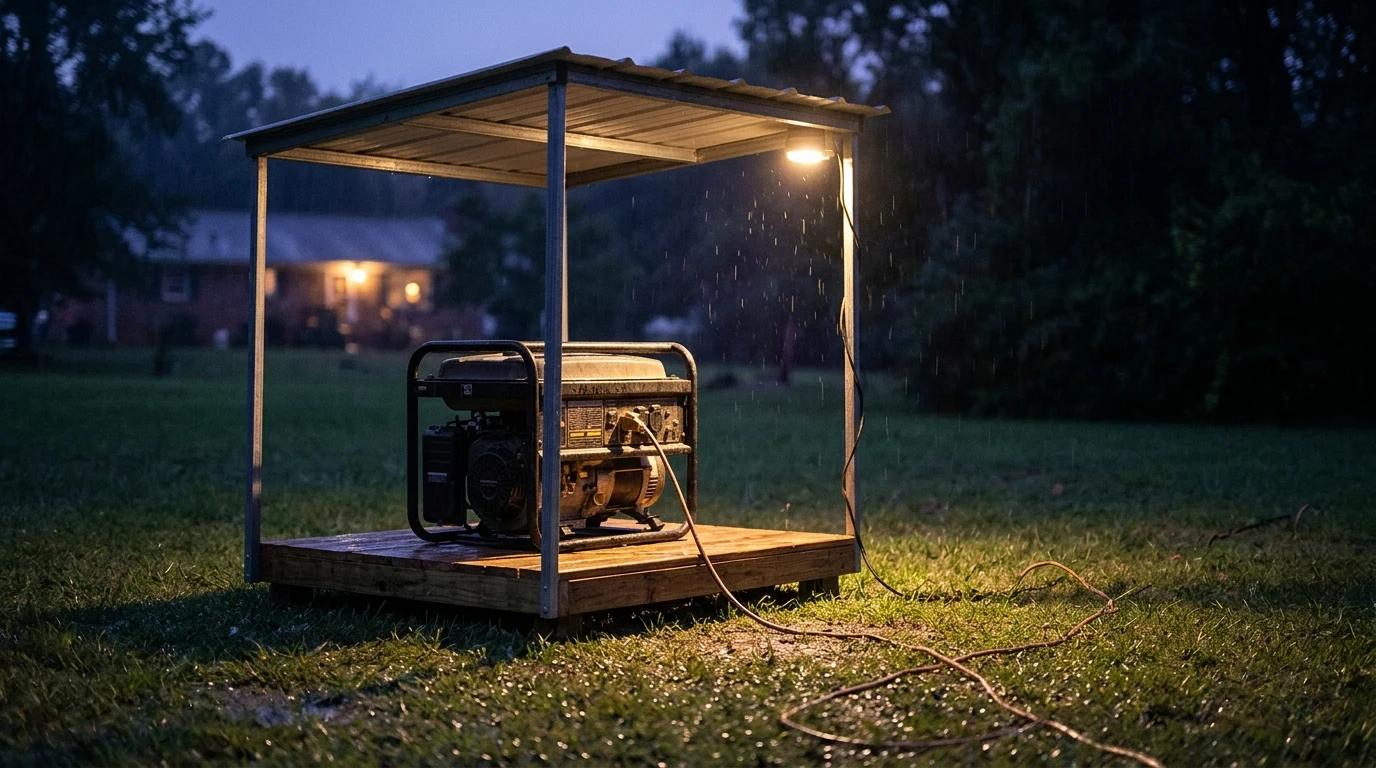
Rule of thumb: cover it from above, never from the sides. If air cannot move freely around it, it is too enclosed.
Running covers and generator tents
The simplest way to meet the canopy rule is a cover built to run under. CPSC's January 2026 storm release says to follow the generator maker's instructions on shock hazards in bad weather, which may include an NFPA-rated non-combustible generator tent or may tell you to wait until rain or snow passes. Champion warns that a tarp or makeshift shelter can trap heat and create fire hazards, which a purpose-made cover is designed to avoid.
Our generator tents and covers page compares the running covers by fit, materials and what each maker says they handle. Match the cover to your generator's size and outlet side, and remember that a storage cover is not a running cover.
Where it must not go
When it pours, the temptation is to pull the generator under something. These spots are off-limits:
- The garage, even with the door up. The CDC says never use a generator inside a home or garage, even if doors and windows are open. CPSC says opening doors or windows will not provide enough ventilation.
- A porch or carport. CPSC says it is too close to the home and puts your family at risk of carbon monoxide poisoning.
- A shed, crawlspace or basement. CPSC names all three among the enclosed spaces where deadly CO can build up quickly and linger for hours, even after the generator shuts off.
CPSC says an average of nearly 100 people in the U.S. die each year from carbon monoxide poisoning from portable generators. A shutoff helps, and all six generators on our portable generators page state one, but CPSC still says to keep the generator outside at least 20 feet away. Keep a battery CO alarm working inside; see our CO alarms.
Worth remembering: distance is what protects you from CO, and the cover protects the generator from water. You need both.
Cords in wet weather
Water and cords are the other shock risk. CPSC says to use heavy-duty extension cords designed for outdoor use, long enough to keep the generator far from the house, and to check each cord for cuts and a three-prong plug. Protect cords from being pinched in a door or window. Our generator cords page lists 25 and 30-foot outdoor-rated options, and our guide to connecting a generator to the house covers inlet boxes, which keep the connection out of windows altogether.
Snow and ice storms
Snow is water too. Generac says not to operate it in snow, and Westinghouse says never to expose it to snow while in use. Clear a level spot down to the ground before you set it out, keep the cover's open sides free of drifts, and keep the exhaust clear. Inside, CPSC adds a related step for winter storms: clear snow away from the outside vents of fuel-burning appliances such as furnaces, so carbon monoxide does not build up in the house.
After the storm
Shut it down and let it cool before covering, refueling or moving it. Champion suggests wiping the unit down after moisture exposure, checking outlets for water, and storing it somewhere dry. If it sat in floodwater, OSHA says not to use it until it has been thoroughly dried and properly evaluated. Then run through our generator maintenance checklist before the next outage.
If running a generator in a downpour sounds like more than you want to manage, a power station runs indoors with no exhaust, for outages measured in hours.
Where the generator can go when it rains
- Open yard, no cover
- Wait it out
- Generac says not to operate a generator in rain or snow.
- Purpose-made running cover, 20-plus feet out
- Run it
- CPSC says manufacturers may call for an NFPA-rated non-combustible generator tent.
- Open-sided canopy on dry ground, 20-plus feet out
- Run it
- This is the setup the CPSC safety alert describes.
- Porch, carport or open garage
- Never
- CPSC says a porch or carport is too close to the home for CO.
- Flooded or puddled ground
- Never
- OSHA says never to handle a generator while wet or standing in water.
Questions people ask
Can you run a generator in the rain?
Not exposed to it. Run it only under an open canopy or a purpose-made running cover on dry ground, still more than 20 feet from the house, or wait for the rain to pass, as CPSC advises.
Can I run a generator in the garage or on the porch when it rains?
No. The CDC says never inside a home or garage, even with doors and windows open, and CPSC says a porch or carport is too close to the home.
Can I cover a running generator with a tarp?
No. Champion warns that a tarp or makeshift shelter can trap heat and create fire hazards. Use a cover made to run under, and follow your generator maker's instructions.
What about snow?
Treat it like rain. Generac says not to operate it in snow, and Westinghouse says never to expose it to snow while in use. Clear a dry, level spot and keep the exhaust side clear.
Is a generator safe after it got wet?
Let it dry. OSHA says not to use electrical equipment that has been submerged until it is thoroughly dried and properly evaluated. Champion suggests wiping it down and checking outlets for water.
Sources for this guide
- CPSC: winter storm warning on generator CO and fire risks (January 2026)
- CPSC Safety Alert: portable generator hazards
- OSHA: using portable generators safely fact sheet
- Ready.gov: power outages
- CDC: carbon monoxide poisoning basics
- Generac: can a portable generator be used in the rain or during a storm?
- Westinghouse: WGen5300DFcv owner's manual
- Champion: can I run a generator in the rain?
Outage Ready Editorial
We work out the arithmetic and read the maker and agency pages so you do not have to. About us.
Read next
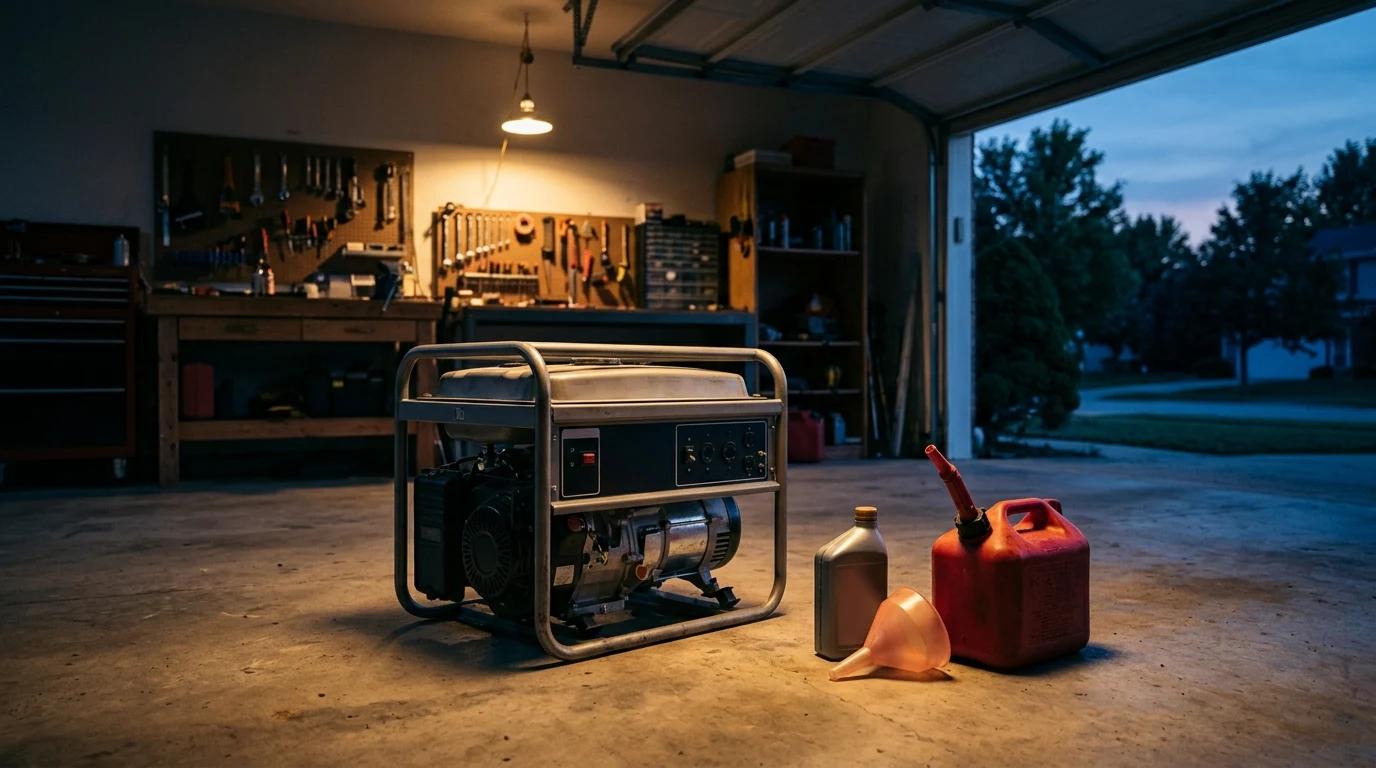
Generator Maintenance Checklist: Oil, Fuel and Test Runs
The maker-manual schedule for a portable generator: oil, fuel, a monthly run under load, and how to store it so it starts in the next outage.
5 min read
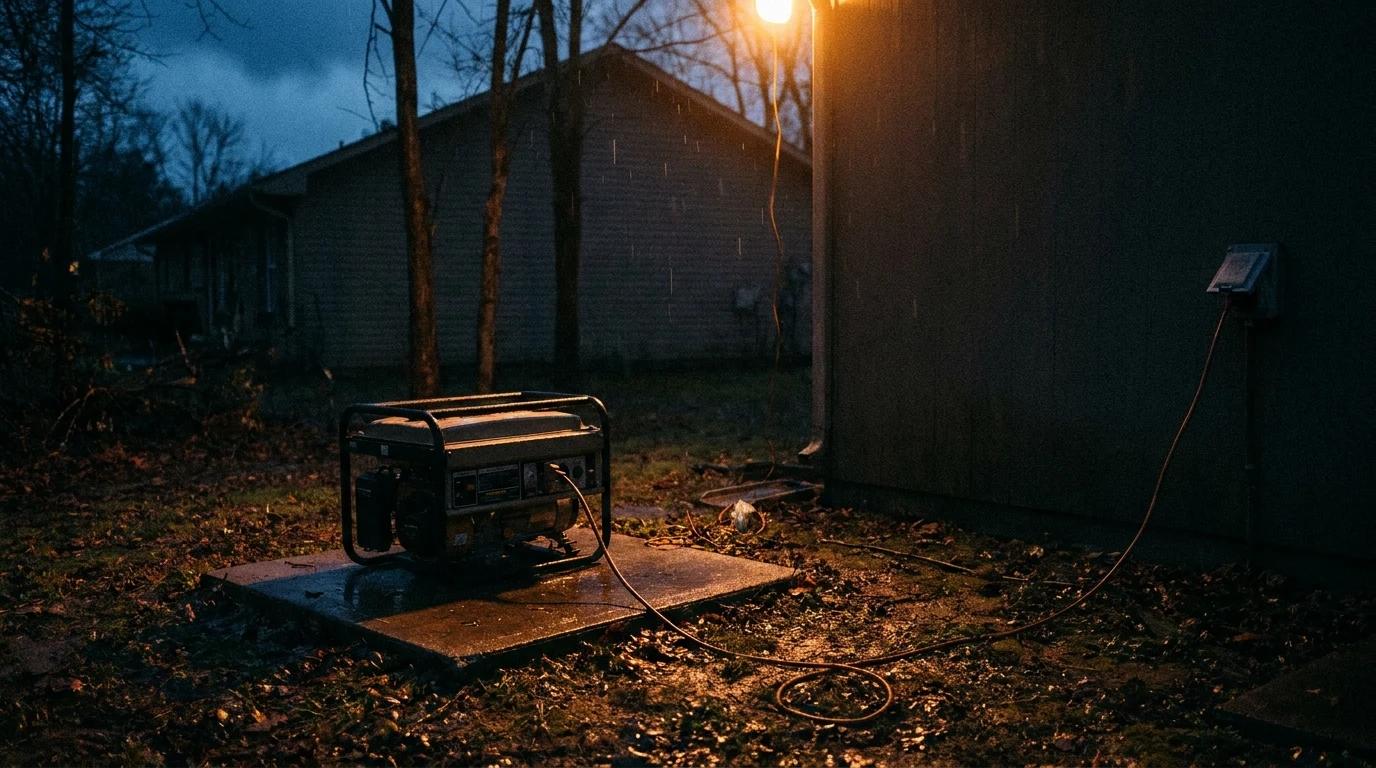
How to Connect a Generator to Your House Safely
Connect a generator with heavy-duty cords, or have an electrician fit a transfer switch or interlock with an inlet box. Never backfeed through an outlet.
5 min read
Power Station vs Generator: Which One Fits Your Outage?
A power station suits short outages and indoor use; a generator suits long outages and heavy loads you can run 20 feet from the house.
5 min read