Guide
How Many Watts Does a Refrigerator Use?
Outage Ready Editorial · Updated November 21, 2026 · 5 min read
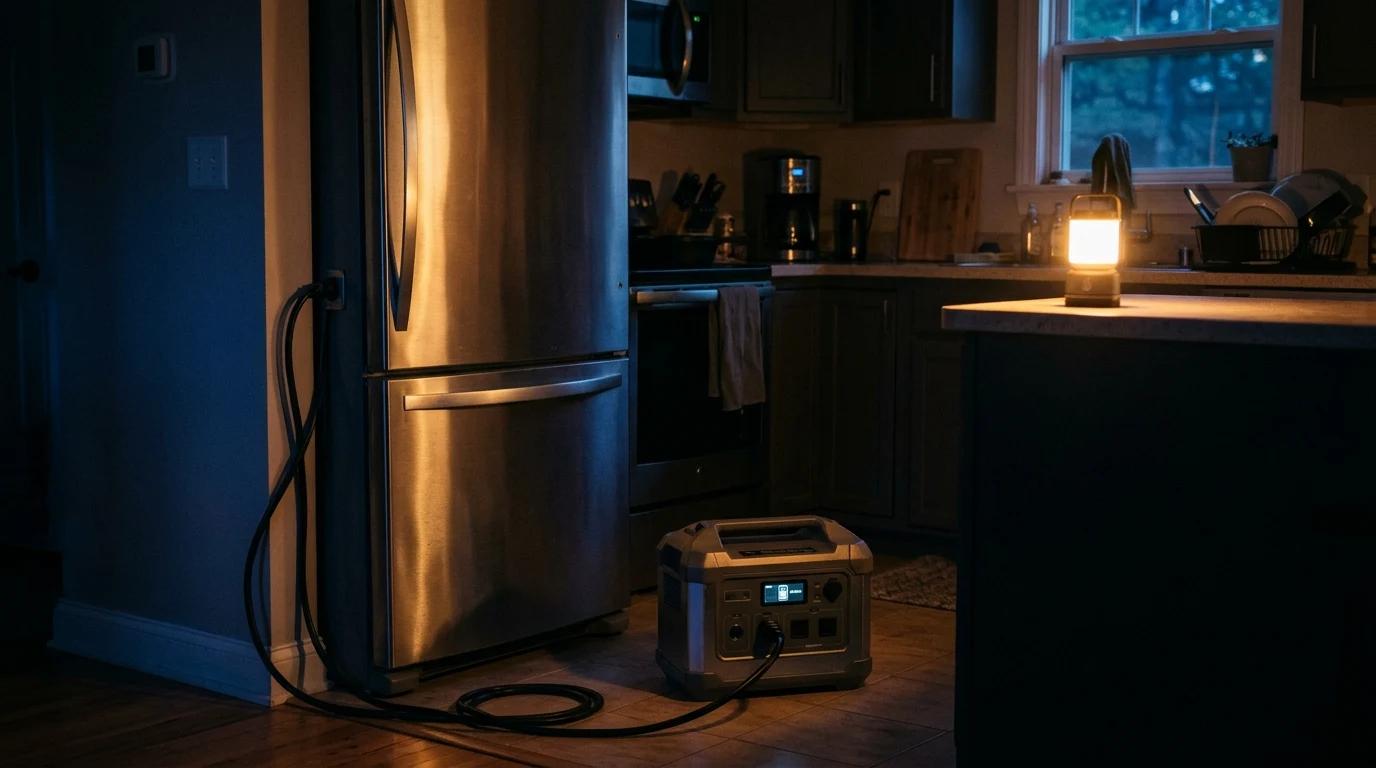
Quick answer
A refrigerator draws about 150 to 400 W while its compressor runs and up to 1,200 W to start, per Champion, but averages only about 40 to 100 W over a day because the compressor rests.
Key takeaways
- Champion puts a refrigerator at 150 to 400 running watts and 800 to 1,200 starting watts.
- Averaged over a day, most ENERGY STAR fridges use about 40 to 90 W on Silicon Valley Power's figures.
- Your fridge's rating plate lists amps: amps × volts = watts, per GE.
- A 1,024 Wh power station runs an 86 W fridge for about 10 hours once inverter loss is counted.
The short answer
A refrigerator draws about 150 to 400 W while its compressor runs and up to 1,200 W for a moment when it starts, per Champion's wattage chart. Averaged over a day it uses far less, because the compressor rests. On Silicon Valley Power's figures, most ENERGY STAR fridges average about 40 to 90 W, and a 2000-era fridge about 100 W.
Those three numbers answer three different questions. Starting watts decide whether a power station or generator can start the fridge at all. Running watts size a generator. The average decides how long a battery lasts.
| Fridge (Silicon Valley Power) | kWh a month | Average watts | kWh a day |
|---|---|---|---|
| ENERGY STAR top freezer, 14 cu ft, no ice maker | 28 | About 38 W | About 0.9 |
| ENERGY STAR top freezer, 19 cu ft | 39 | About 53 W | About 1.3 |
| ENERGY STAR bottom freezer, 21 cu ft | 48 | About 66 W | About 1.6 |
| ENERGY STAR bottom freezer, 25 cu ft | 59 | About 81 W | About 1.9 |
| ENERGY STAR side-by-side, 25 cu ft | 63 | About 86 W | About 2.1 |
| Older fridge, 15 cu ft (2000 unit) | 72 | About 99 W | About 2.4 |
| Chest freezer, 15 cu ft (2000 unit) | 44 | About 60 W | About 1.4 |
Average watts are the monthly figure divided by 730 hours.
Running, starting and average watts
Running watts are what the compressor draws while it works. Champion puts a refrigerator at 150 to 400 W.
Starting watts are the brief spike as the compressor kicks on. Champion puts it at 800 to 1,200 W. GE's generator guidance describes the surge as roughly twice the running power, lasting only a second or two, while its electrical-requirements page says start-up is usually three times the running figure. Plan for the higher one.
Average watts account for the hours the compressor rests. This is the number that matters for a battery, and it is much lower than the running figure.
Worth remembering: a fridge that draws 300 W when running may average under 100 W across a day. Size a battery by the average and the output by the start.
How to read your own fridge's numbers
You can do better than a chart in two minutes.
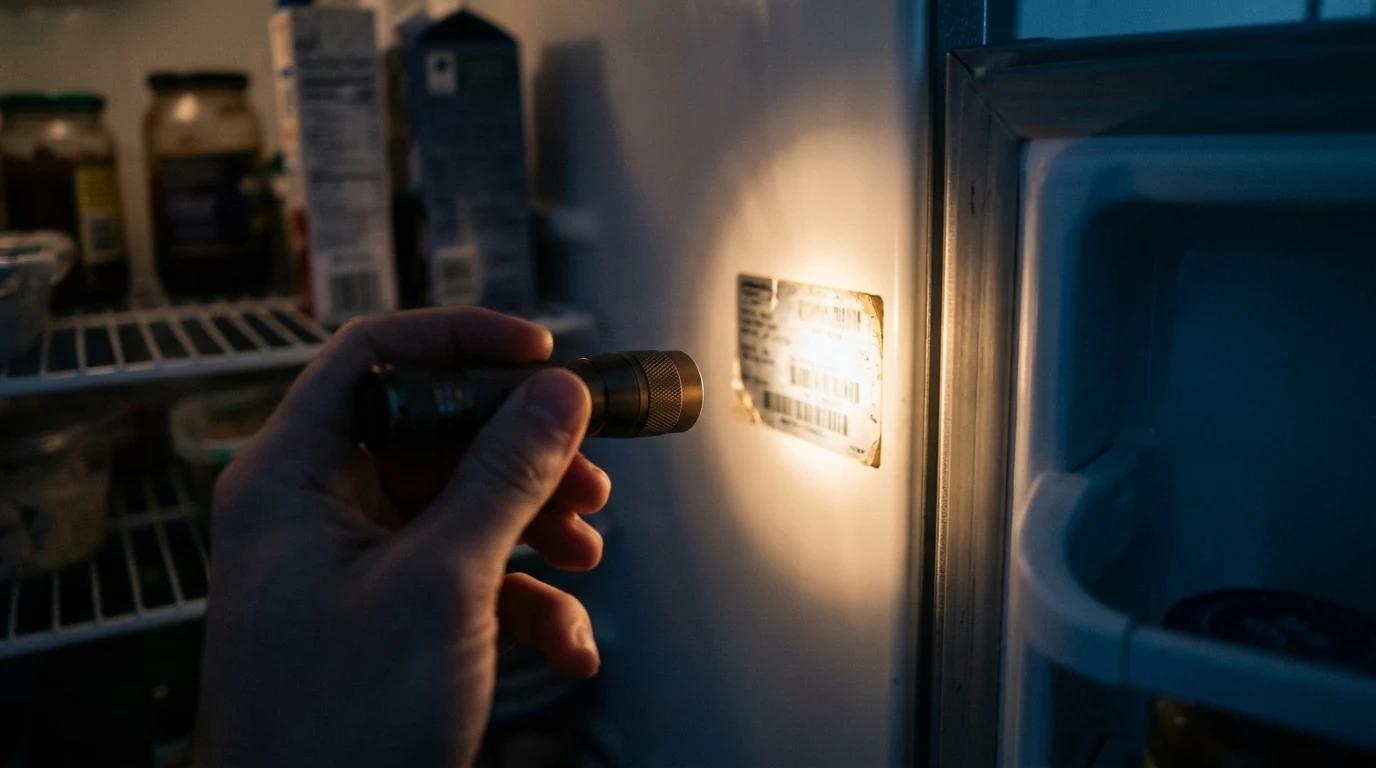
- The rating plate. GE says the rated power is on the rating plate, the same plate that carries the model and serial number. It often lists amps rather than watts, so multiply: amps × volts = watts. GE says 2 to 3 amps is likely the running figure for a full-size fridge, which at 120 V is 240 to 360 W.
- The yellow EnergyGuide label. ENERGY STAR explains that this label, managed by the FTC, estimates the model's yearly energy use. Divide its kWh per year by 8,760 hours for the average. A fridge rated 600 kWh a year averages about 68 W.
- The defrost heater. GE notes that a frost-free fridge's rated watts usually include the defrost heater, so the plate figure can read higher than the compressor alone.
How long a power station runs a fridge
Divide the station's watt-hours by the fridge's average watts, then multiply by 0.85 for inverter loss, the working-time factor Jackery publishes.
| Station | 53 W fridge | 86 W fridge | 99 W fridge |
|---|---|---|---|
| 1,024 Wh | About 16 hours | About 10 hours | About 9 hours |
| 2,048 Wh | About 33 hours | About 20 hours | About 18 hours |
| 3,072 Wh | About 49 hours | About 30 hours | About 26 hours |
| 3,584 Wh | About 57 hours | About 35 hours | About 31 hours |
The Runtime Calculator runs this with your own figure and adds anything else you plug in. Opening the door often, a hot kitchen or a full defrost cycle will cut these times.
Then check the start. The station's continuous output should clear the fridge's starting watts with room to spare. A 288 Wh station with 600 W of output is the wrong tool here; it would run a fridge for under three hours anyway.
Freezers and mini fridges
The same three numbers apply to other cold storage. Champion puts a freezer at 100 to 500 W running and 500 to 1,000 W starting, and a mini fridge or cooler at 50 to 100 W running and 400 to 600 W starting. Silicon Valley Power's 15 cu ft chest freezer from 2000 uses 44 kWh a month, about 60 W on average, so a fridge and that freezer together average about 146 W. A chest freezer that stays shut is the easiest load in the house to carry through an outage.
You may not need to run it all day
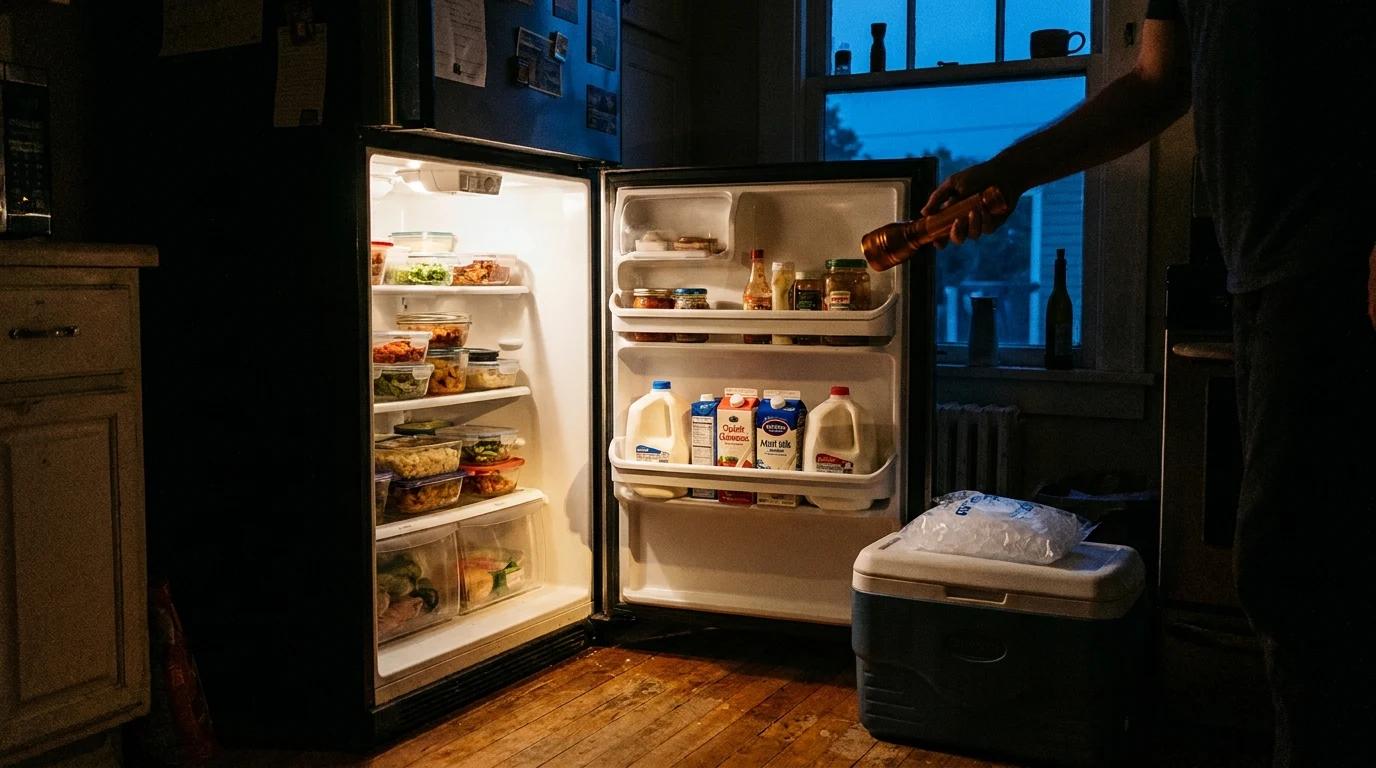
Ready.gov says a closed fridge keeps food cold for about four hours and a full freezer holds its temperature for about 48 hours. Running the fridge for a few hours, then switching it off with the door shut, stretches any battery. A thermometer settles whether the food is still safe; our food safety guide has the rules.
Picks sized for a fridge
1. Anker SOLIX C1000 Gen 2 — $489.99 — Best for one fridge overnight
1,024 Wh is about 10 hours on an 86 W fridge, and Anker's stated 2,000 W output clears a 1,200 W start easily.
2. EcoFlow DELTA 3 Max — $854.00 — Best for a fridge and a freezer
2,048 Wh gives a fridge and a 60 W chest freezer, 146 W together, about 12 hours.
3. Jackery HomePower 3600 Plus — $1,899.00 — Best for more than a day
3,584 Wh covers an 86 W fridge for about 35 hours, and Jackery states it expands to 21 kWh per unit.
For a fridge through a multi-day outage, a generator is the cheaper energy. Any of the portable generator picks covers a fridge's start, outdoors and at least 20 feet from windows, doors and attached garages, per Ready.gov.
Rule of thumb: read the plate, divide the EnergyGuide figure by 8,760, and size for the night you actually expect.
The full method for a longer list is in what size power station do I need, and our appliance wattage chart has the other loads.
What to buy for your fridge
- Keep the fridge cold overnight
- Anker SOLIX C1000 Gen 2
- About 10 hours on an 86 W fridge.
- Fridge and a chest freezer
- EcoFlow DELTA 3 Max
- About 12 hours for both at 146 W.
- More than a day without recharging
- Jackery HomePower 3600 Plus
- About 35 hours on an 86 W fridge.
- Outages of several days
- A portable generator, outdoors
- Fuel is cheaper energy than a bigger battery.
Questions people ask
How many watts does a refrigerator use to start?
Champion puts it at 800 to 1,200 W for a moment as the compressor starts. GE describes the surge as roughly two to three times the running figure, lasting a second or two.
How many kWh does a refrigerator use a day?
On Silicon Valley Power's figures, about 0.9 kWh for a 14 cu ft ENERGY STAR top-freezer model up to about 2.1 kWh for a 25 cu ft side-by-side, and about 2.4 kWh for a 2000-era 15 cu ft fridge.
Can a 1,000 Wh power station run a refrigerator?
Yes, for about 10 hours on an 86 W average fridge, once 15% inverter loss is counted. Its output must also clear the fridge's starting watts.
How do I find my fridge's wattage?
Read the rating plate and multiply amps by volts, as GE explains, or divide the kWh per year on the yellow EnergyGuide label by 8,760 for the average watts.
Sources for this guide
- Champion: generator wattage chart, refrigerator and freezer rows
- Silicon Valley Power: appliance energy use chart
- GE Appliances: running an appliance on a generator
- GE Appliances: refrigerator electrical requirements and breaker size
- ENERGY STAR: the difference between the EnergyGuide and ENERGY STAR labels
- Jackery: what is a watt-hour, the 0.85 working-time formula
- Ready.gov: power outages
Outage Ready Editorial
We work out the arithmetic and read the maker and agency pages so you do not have to. About us.
Read next
Appliance Wattage Chart: Running and Starting Watts
Running and starting watts from Champion, energy use from Silicon Valley Power, and how to use both to size a generator or a power station.
5 min read
What Size Power Station Do I Need? The Simple Arithmetic
Multiply watts by hours, divide by 0.85, and you have your size. A fridge for a day takes about 2,400 Wh.
5 min read
How Long Is Food Safe in a Power Outage?
A closed fridge holds food safely for up to 4 hours and a full freezer about 48. Here is what to do at each mark.
5 min read