Guide
Battery Backup vs Generator for a Whole Home
Outage Ready Editorial · Updated November 21, 2026 · 5 min read
Quick answer
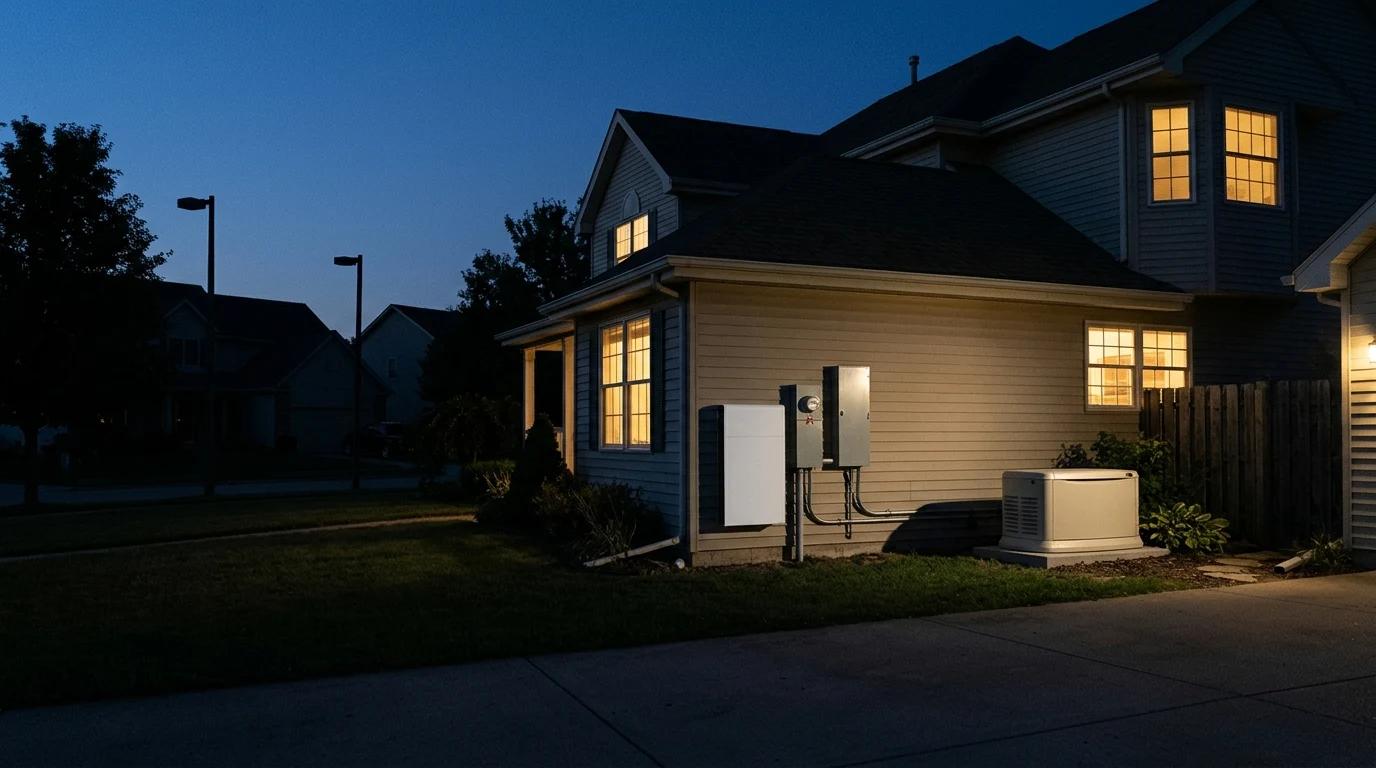
Choose a standby generator if you need the whole house, central air included, through outages that last days and you have natural gas; choose a home battery for silent, instant backup through outages of hours, especially with solar.
#1 · Middle path: plug-in home battery
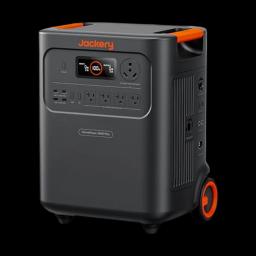
Jackery HomePower 3600 Plus
4.6 (223)3,584 Wh, expands to 21 kWh per unit, Jackery states.
$1,899.00Buy on Amazon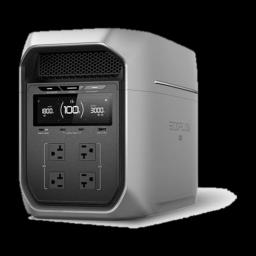
#2 · Middle path: smaller start, room to grow
EcoFlow DELTA 3 Max Plus
4.6 (112)2,048 Wh, expands to 10 kWh, EcoFlow states.
$1,149.00Buy on Amazon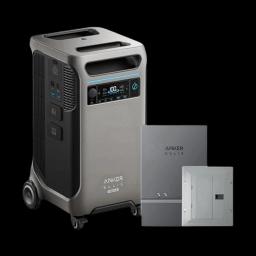
#3 · Middle path: backed-up circuits
Anker SOLIX F3800 Plus with Home Power Panel
4.4 (145)Home Power Panel included; electrician installs it.
#4 · Middle path: portable generator
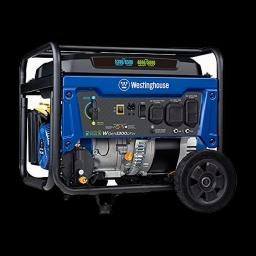
Westinghouse WGen5300DFcv
4.5 (1,048)5,300 running watts on gas, outdoors only.
$579.00Buy on Amazon
| Pick | Best for | Ready | Buy |
|---|---|---|---|
 1. Jackery HomePower 3600 Plus 4.6 (223) | Middle path: plug-in home battery 3,584 Wh, expands to 21 kWh per unit, Jackery states. | 65 | $1,899.00Buy on Amazon |
 2. EcoFlow DELTA 3 Max Plus 4.6 (112) | Middle path: smaller start, room to grow 2,048 Wh, expands to 10 kWh, EcoFlow states. | 51 | $1,149.00Buy on Amazon |
 3. Anker SOLIX F3800 Plus with Home Power Panel 4.4 (145) | Middle path: backed-up circuits Home Power Panel included; electrician installs it. | 75 | |
 4. Westinghouse WGen5300DFcv 4.5 (1,048) | Middle path: portable generator 5,300 running watts on gas, outdoors only. | 71 | $579.00Buy on Amazon |
Key takeaways
- Generac puts an installed home standby generator at $8,000 to $16,000 on average, generator included.
- Berkeley Lab's data implies roughly $16,000 for the storage side of a median solar-plus-battery install, mostly from California.
- One 13.5 kWh battery carries a fridge for days but central air for about 4.5 hours, on Silicon Valley Power's figures.
- NFPA 37, as Generac summarizes it, keeps a standby generator 5 feet from windows, doors and vents.
The short answer
Choose a standby generator if you need the whole house, including central air or electric heat, through outages that last days, and you have a natural gas line. Choose a home battery if your outages last hours, you want silent, fuel-free backup that switches over instantly, or you have or plan solar.
This is about permanently installed, whole-home systems. If you are weighing a portable generator against a portable power station, power station vs generator covers that choice. We do not list Powerwalls or standby generators, which are quoted and installed per home; the picks in the table above are the cheaper middle path, covered near the end.
| Home battery (Tesla Powerwall 3 as the example) | Home standby generator | |
|---|---|---|
| Installed cost | Quoted per home; see below | Generac: $8,000 to $16,000 on average, generator included |
| Energy | 13.5 kWh per unit, refilled by solar or the grid | As long as the fuel lasts; no refills on a gas line |
| Power | 11.5 kW continuous, per Tesla | Sized to the home by the dealer |
| Switchover | Under 1 second, per Tesla | 15 to 30 seconds, per Tesla's comparison |
| Noise | Under 40 dBA at 1 m, per Tesla | 77 dBA at 1 m, per Tesla's comparison |
| Where it goes | Indoors or outdoors, wall or floor | Outdoors on a pad, with code clearances |
| Upkeep | Minimal, per Tesla | Annual check-ups and regular servicing, per Generac |
| Warranty | 10 years, per Tesla | 5 years in Tesla's comparison; check the model |
Several generator figures come from Tesla, which sells the battery, so read them as one maker's comparison.
What each really costs
Standby generator. Generac says an installed home standby generator runs $8,000 to $16,000 on average, including the generator itself, and that site work, fuel type, permits and location move the price. It also notes that while the install itself takes hours, preparing for it takes weeks, including the permit.
Home battery. Tesla's Powerwall page lists specifications but no installed price, and asks for a quote. The best public benchmark we found is Berkeley Lab's 2026 data update. It found cash buyers paid a median $2.1 per watt more for solar paired with storage than for solar alone. At the median home system of 7.7 kW, that works out to roughly $16,000 for the storage side. Two caveats: about 80% of that pricing data is from California, and it covers batteries installed with solar.
Worth remembering: whole-home backup costs about the same either way. The real differences are runtime, noise and what happens on day three.
Runtime: a battery is a tank, a gas line is a well
Berkeley Lab found the median home battery in 2025 was 13.5 kWh, the size of one Powerwall. That covers essentials well and a whole house briefly. Silicon Valley Power's figures show why:
- A fridge: an ENERGY STAR 25 cu ft side-by-side uses 63 kWh a month, about 2.1 kWh a day. One battery carries that for days.
- Central air: a 3-ton, 12 SEER system uses 3.0 kWh per hour. 13.5 kWh is about 4.5 hours of it running, before anything else.
- An electric water heater: 380 to 500 kWh a month, or about 12.5 to 16.4 kWh a day. That alone can empty one battery.
A battery refills from solar or when the grid returns. A standby generator on a natural gas line keeps going for as long as gas flows, which is why it wins long outages with heavy loads.
Power is the other limit. Tesla states 11.5 kW continuous and 185 locked-rotor amps of motor start for the Powerwall 3, which is what lets one unit start a central air compressor. Champion puts a 3-ton system at 5,000 to 6,000 W to start and a 1 HP well pump at 2,000 to 4,000 W. A plug-in home battery with less output may run those loads but fail to start them, so check the start before the runtime.
Placement, permits and safety
A standby generator burns fuel, so it lives outside. Generac summarizes NFPA 37, the standard for stationary generators: 5 feet from openings in walls such as windows, doors and vents, 3 feet at the front and both ends, and 18 inches from the back to a wall only for units marked with the SwRI logo. Generac adds that local codes take precedence.
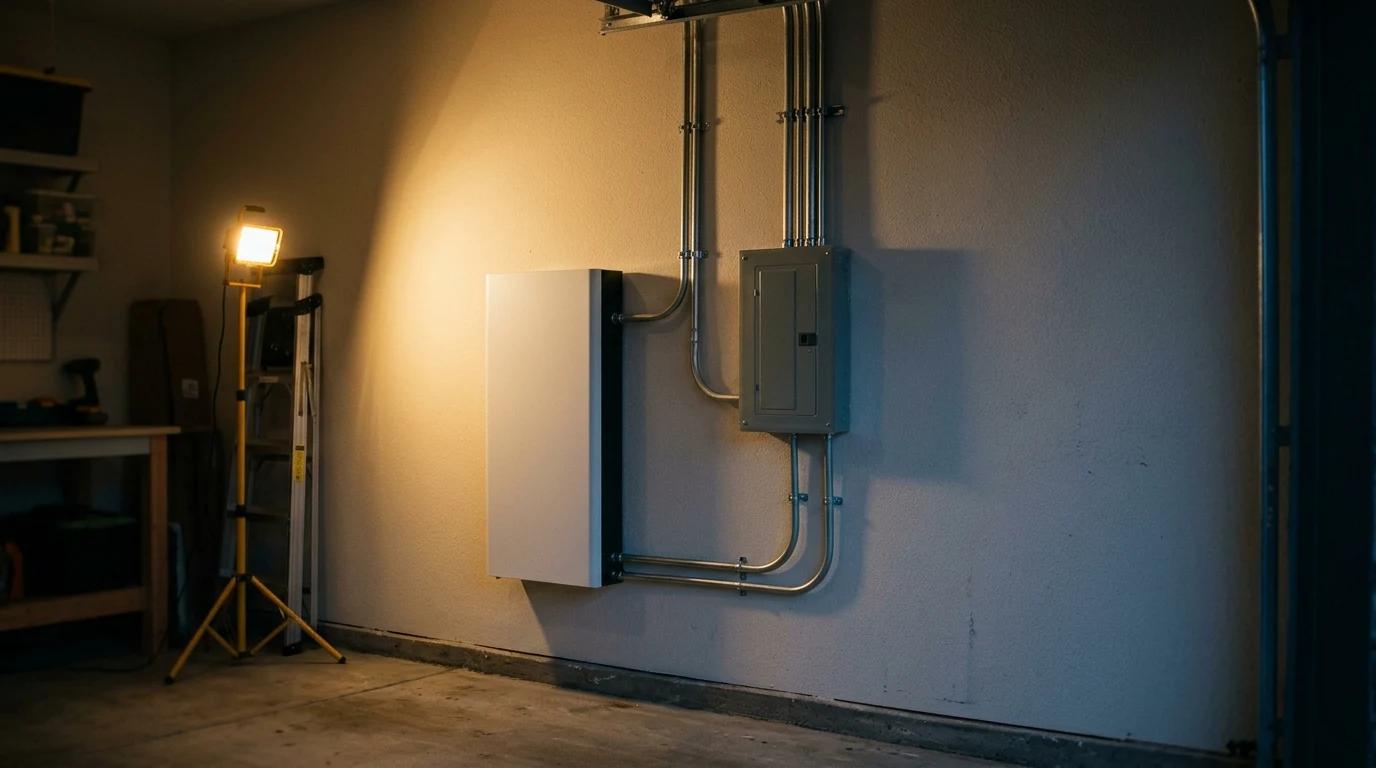
A battery has no exhaust, and Tesla says the Powerwall can go indoors or outdoors, wall- or floor-mounted. It still needs a permit and an installer. Berkeley Lab found permits for solar-plus-storage were issued within 21 days at the 80th percentile in 2025.
Any generator produces carbon monoxide. CDC advises a battery-powered or battery backup CO detector in the home when a generator runs, and near every sleeping area.
The middle path most homes can take
Most homes do not need every circuit backed up. Two cheaper routes cover the essentials:
- A portable generator with an inlet and transfer switch. A unit like the Westinghouse WGen5300DFcv runs a fridge, furnace fan and well pump through circuits an electrician moves to a switch. It runs outdoors only, more than 20 feet from windows, doors and vents, per CDC. See how to connect a generator to your house.
- A plug-in home battery. The Jackery HomePower 3600 Plus stores 3,584 Wh and Jackery states it expands to 21 kWh per unit. Anker sells the SOLIX F3800 Plus with a Home Power Panel that a licensed electrician installs.
Both can grow later. You can also combine them: Jackery states a gas generator recharges the HomePower 3600 Plus in about 2.5 hours.
Rule of thumb: price the circuits you cannot live without first. Whole-home backup is often paying to keep the dryer running.
How to decide
Ask three questions. How long do your outages last? Do you need central air, electric heat or a well pump? Do you have gas, or solar? Long outages and heavy loads point to a generator. Short outages, solar and a preference for silence point to a battery. A home with neither gas nor solar should note what each then waits on: a generator on stored propane or gasoline, a battery on the grid coming back. If neither fits cleanly, start with the middle path and the home backup battery picks.
Which fits your home
- Outages of days, central air, natural gas line
- Standby generator
- Runs as long as gas flows and carries heavy loads.
- Outages of hours, or you have solar
- Home battery
- Silent, instant, and solar refills it.
- Electric water heater and electric heat
- Standby generator
- A water heater alone can use 12.5 kWh or more a day.
- Essentials only, smaller budget
- Portable generator plus transfer switch, or a plug-in home battery
- Backs up the circuits that matter for far less.
Questions people ask
Is a home battery cheaper than a standby generator?
Not by much at whole-home scale. Generac puts a standby generator at $8,000 to $16,000 installed on average, and Berkeley Lab's data implies about $16,000 for the battery side of a median solar-plus-storage install.
How long will a home battery last in an outage?
It depends on the load. A 13.5 kWh battery carries a fridge for days, but a 3-ton central air system using 3.0 kWh per hour, per Silicon Valley Power, empties it in about 4.5 hours.
How close to the house can a standby generator go?
Generac summarizes NFPA 37 as 5 feet from windows, doors, vents and other wall openings, with 18 inches from the back to a wall only for SwRI-marked units. Local codes take precedence.
Can I combine a battery and a generator?
Yes. Jackery states a gas generator recharges its HomePower 3600 Plus in about 2.5 hours, so a small generator can refill a battery in daylight.
Sources for this guide
- Generac: backup generator installation, cost and timing
- Generac: clearance requirements when installing a generator
- Tesla: Powerwall specifications
- Tesla: Powerwall vs backup generator
- Berkeley Lab: U.S. distributed solar and storage, 2026 data update
- Silicon Valley Power: appliance energy use chart
- CDC: carbon monoxide poisoning basics
Outage Ready Editorial
We work out the arithmetic and read the maker and agency pages so you do not have to. About us.
Read next
Power Station vs Generator: Which One Fits Your Outage?
A power station suits short outages and indoor use; a generator suits long outages and heavy loads you can run 20 feet from the house.
5 min read
How to Connect a Generator to Your House Safely
Connect a generator with heavy-duty cords, or have an electrician fit a transfer switch or interlock with an inlet box. Never backfeed through an outlet.
5 min read
EcoFlow vs Jackery vs Anker SOLIX: Which Brand to Buy?
All four brands sell LiFePO4 stations, three with a stated 10 ms class UPS; the differences are warranty terms, cycle ratings, output and what each app unlocks.
5 min read