Guide
Generator Maintenance Checklist: Oil, Fuel and Test Runs
Outage Ready Editorial · Updated November 21, 2026 · 5 min read
Quick answer
Keep a portable generator ready by checking the oil before every use, changing it on the manual's schedule, running it under load for 15 to 20 minutes a month, and never leaving untreated gasoline in it: stabilize the fuel or drain the carburetor before storage.
Key takeaways
- Change the oil early: Westinghouse says after the first 25 hours or first month, then every 50 hours or six months.
- Stale gasoline is the usual reason a generator will not start; Westinghouse says gas can deteriorate in as little as 30 days.
- Champion says to run the generator under load for 15 to 20 minutes once a month.
- Propane does not go stale, which is why a dual-fuel generator is easier to keep ready.
The short answer
Check the oil before every use and change it on the manual's schedule. Run the generator under load for 15 to 20 minutes once a month. Never leave untreated gasoline in it: stabilize the fuel, or drain the carburetor before storage. CPSC puts it plainly: regularly check and maintain your portable generator so it works when needed.
This page uses two makers' published schedules: the owner's manual for the Westinghouse WGen5300DFcv, our top pick, and Champion's general maintenance guide. Where they differ, follow your own manual.
The maintenance schedule
The WGen5300DFcv manual says to follow hourly or calendar intervals, whichever comes first.
| Task | Westinghouse WGen5300DFcv manual | Champion general guide |
|---|---|---|
| Check engine oil | Before each use, or every 8 hours of running | Before each use |
| First oil change | After the first 25 hours or first month | After the first 5 hours |
| Oil change after that | Every 50 hours or six months; monthly under heavy load or heat | About every 100 hours; halve it in dust or heat |
| Air filter | Clean every 50 hours, replace at 300 hours or yearly | Clean or replace at the 100-hour service |
| Spark plug | Inspect at 100 hours, replace at 300 hours or yearly | Replace yearly |
| Spark arrestor | Inspect and clean at 100 hours or six months | Clean with a wire brush |
| Exercise run | Not stated | Monthly, 15 to 20 minutes under load |
The two first-change figures differ by a lot, which is why the manual for your model wins. Westinghouse also asks you to stay under half the rated running watts for the first five hours and not to use full synthetic oil during break-in.
Rule of thumb: a generator that sits idle needs calendar maintenance, not hourly. Six months on the shelf counts like 50 hours on the WGen5300DFcv.
Fuel: where most failures start
Westinghouse's manual says gasoline stored for as little as 30 days can deteriorate, causing gum, varnish and corrosive buildup that can keep the engine from starting. It recommends a fuel stabilizer full time.
- Mix stabilizer in the can, not the tank. Westinghouse says to mix it with gasoline in an approved container, then run the generator for five minutes so treated fuel reaches the whole system. Champion says ten minutes; either way the point is to get it into the carburetor.
- Use fresh fuel. Westinghouse allows up to 10% ethanol and says not to use E15 or E85. Champion prefers ethanol-free gasoline where you can find it.
- Know the six-month limit. Westinghouse says stabilized fuel can stay in the generator for up to six months if the carburetor float bowl is drained.
- Store fuel outside the house. CPSC says never to store generator fuel in the home, and to keep it in labeled, non-glass safety containers away from fuel-burning appliances.
Propane sidesteps most of this. Champion says propane does not degrade over time and avoids the carburetor problems of stored gasoline. That is a large part of the case for dual fuel, covered in our propane vs gas generator guide.
The monthly test run
Champion recommends running the generator under load for 15 to 20 minutes once a month, which circulates oil and keeps the fuel system clean. Under load matters: plug in something real, such as a work light or a space heater on low.
- Wheel it to its outage spot: outdoors, more than 20 feet from windows, doors and vents, as the CDC says.
- Check the oil and the fuel level.
- Start it on gasoline, then switch to propane for part of the run if it is dual fuel, so you know both work.
- Load it for 15 to 20 minutes.
- Turn it off and let it cool before refueling or covering it. OSHA says generators stay hot for long periods after they stop.
If it has an electric start, Champion suggests a battery tender between runs so the battery is not flat when you need it.
Storing it between seasons
Westinghouse's manual sets the storage steps by how long the generator will sit.
| Storage time | Westinghouse WGen5300DFcv procedure |
|---|---|
| Under 1 month | Covers on the panel; clean the exterior and muffler vents |
| 2 to 6 months | The above, plus drain the carburetor float bowl |
| 6 months or longer | Drain the float bowl and the tank, put a tablespoon of oil in the spark plug cylinder, pull the recoil slowly, change the oil |
Always let it cool, at least 30 minutes per Westinghouse, keep it upright, and store the generator and its fuel separately, away from pilot lights and other ignition sources. Champion adds a dry spot and a protective cover for storage. A storage cover is not a running cover; see running a generator in the rain for that.
The storm-season checklist
Before hurricane or winter-storm season:
- Fresh oil if it is due by hours or months.
- Fresh, stabilized gasoline in approved cans, or a full propane cylinder kept upright and away from heat and ignition sources, as Westinghouse directs.
- A full test run under load, including any cords and inlet you use. Our guide to connecting a generator to your house covers that setup.
- Cords inspected. OSHA says never to use frayed or damaged extension cords. Replace any that are, from our generator cords page.
- A battery CO alarm tested in the house. CPSC says to test CO alarms monthly.
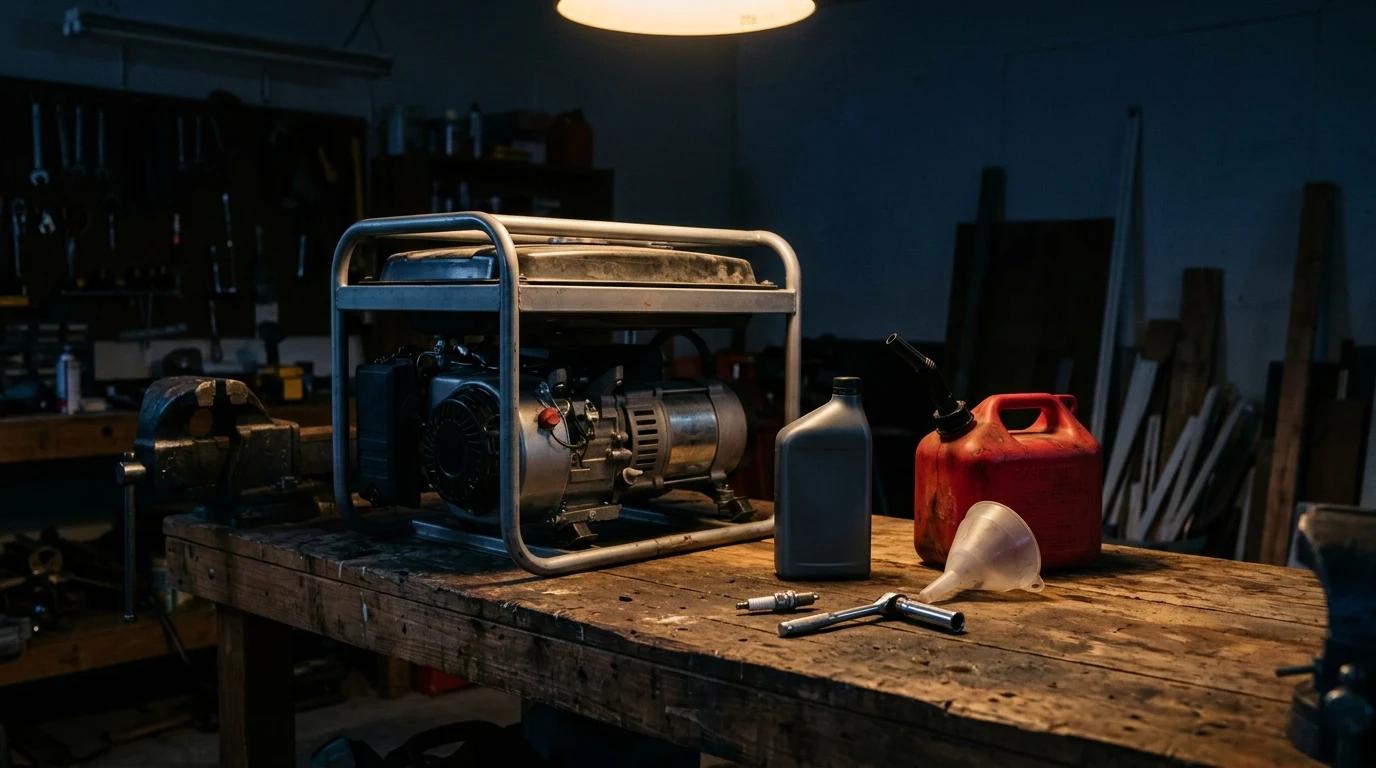
- Spare oil, a spark plug and an air filter on the shelf.
Worth remembering: maintenance keeps it starting. It does not make it safe indoors. CPSC says opening doors or windows will not provide enough ventilation.
When it will not start
Most no-start problems trace back to the list above: stale fuel in the carburetor, low oil (the WGen5300DFcv has an automatic low-oil shutdown), the fuel valve left off, or a flat battery on an electric start. Westinghouse also notes that output falls about 3.5% for every 1,000 feet of altitude without an altitude kit. If fresh fuel, oil and a new plug do not fix it, Champion suggests a small-engine mechanic check valve clearance and governor settings every year or two. If it is time to replace it, our portable generators all run on propane as well as gasoline.
Questions people ask
How often should you run a generator that is in storage?
Champion says once a month, under load, for 15 to 20 minutes. Run it outdoors at the usual safe distance and plug in a real load such as a work light or space heater.
How long can gasoline sit in a generator?
Westinghouse says gasoline can deteriorate in as little as 30 days, and that stabilized fuel can stay in the generator for up to six months if the carburetor float bowl is drained. Champion says not to leave untreated gas in the tank more than 30 days.
When should I change generator oil?
On the WGen5300DFcv, Westinghouse lists the first change after 25 hours or the first month, then every 50 hours or six months, and monthly under heavy load or heat. Champion's general guide puts the first change at 5 hours. Your own manual decides.
Does a propane generator need less maintenance?
Less fuel-system care. Champion says propane eliminates carburetor problems from stale gasoline. The engine still needs oil, an air filter and a spark plug on schedule.
Sources for this guide
- Westinghouse: WGen5300DFcv owner's manual
- Champion: portable generator maintenance schedule and checklist
- Westinghouse: portable generator FAQ
- Champion: gasoline, propane and natural gas compared
- CPSC: winter storm warning on generator CO and fire risks (January 2026)
- CPSC Safety Alert: portable generator hazards
- OSHA: using portable generators safely fact sheet
- CDC: carbon monoxide poisoning basics
Outage Ready Editorial
We work out the arithmetic and read the maker and agency pages so you do not have to. About us.
Read next
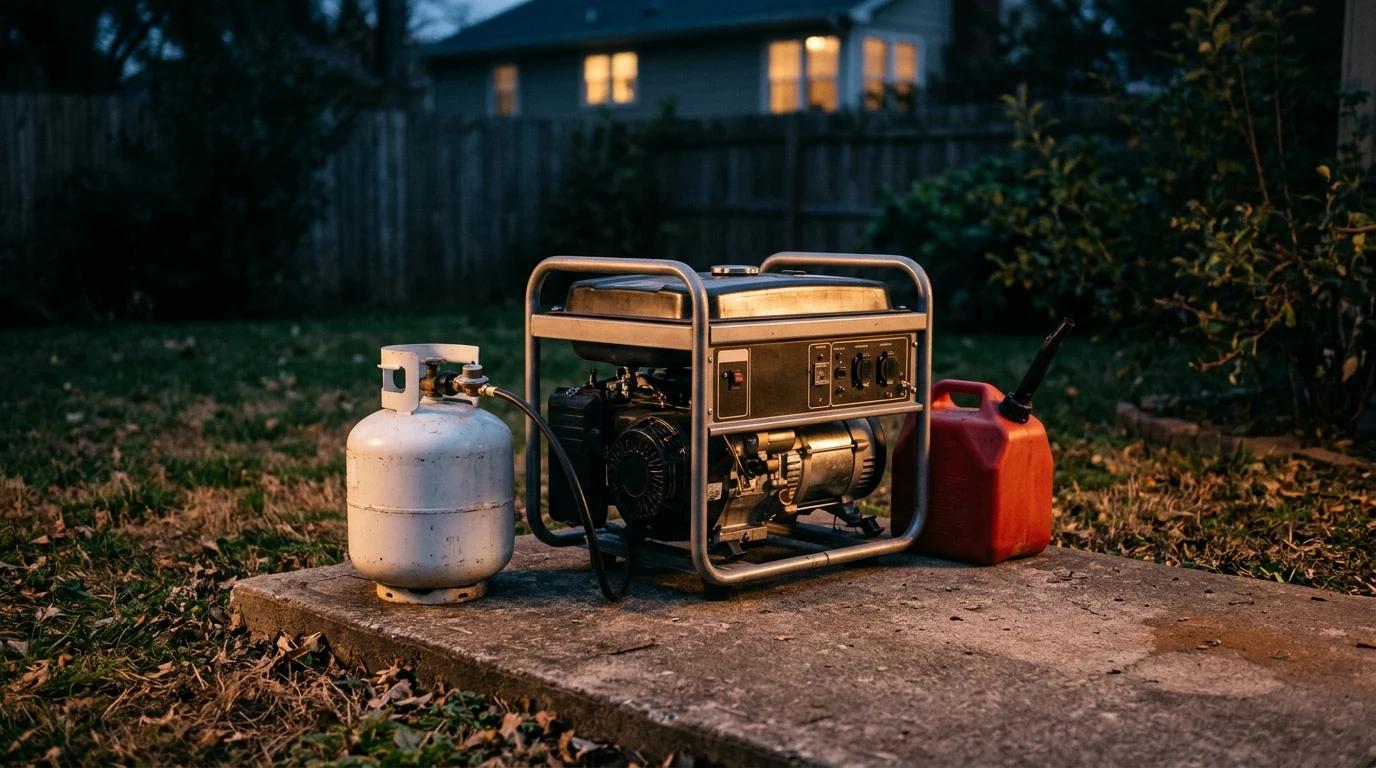
Propane vs Gas Generator: Is Dual Fuel Worth It?
Gasoline gives the most watts per gallon; propane keeps for years. For outage backup, that usually makes dual fuel the safer buy.
5 min read
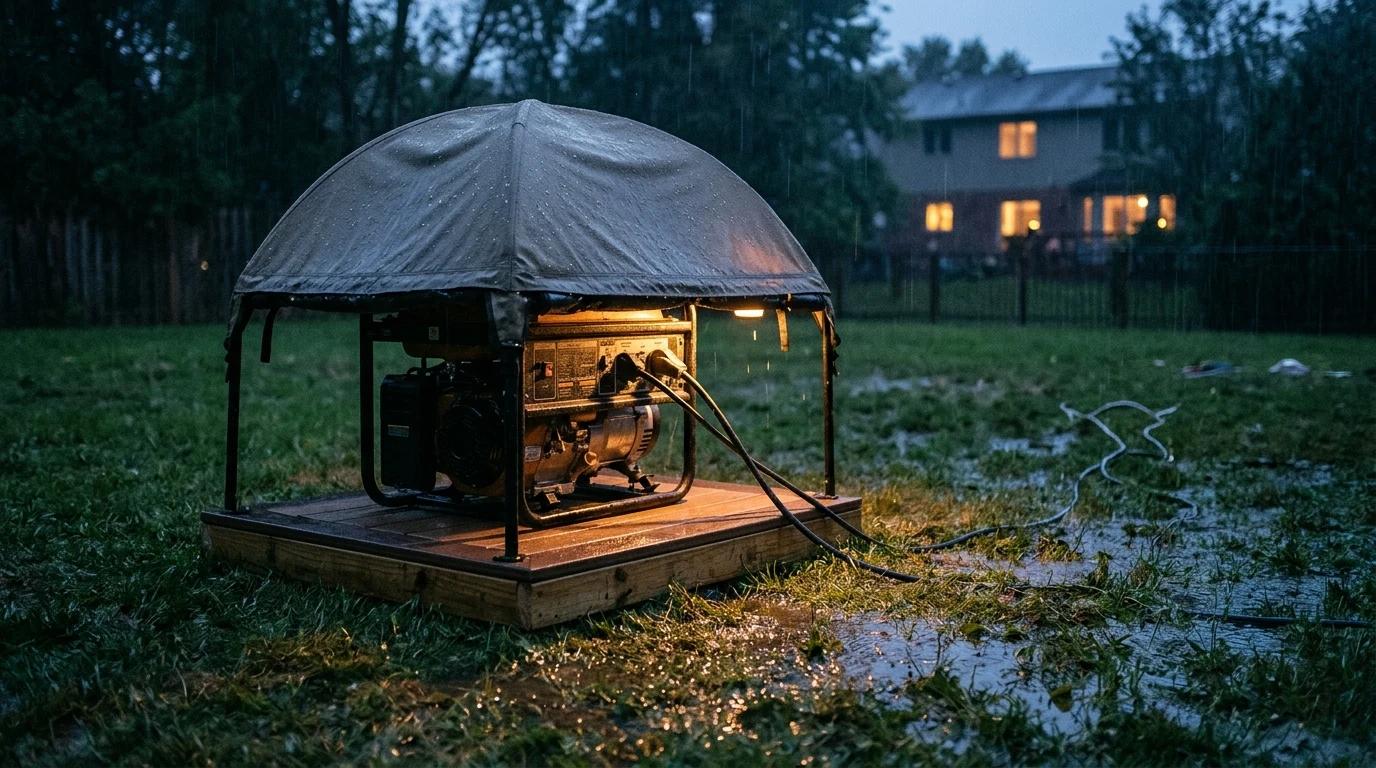
Can You Run a Generator in the Rain? What CPSC Says
Only under an open, purpose-made cover on dry ground, still more than 20 feet from the house. Never in a garage, porch or carport.
5 min read
How to Connect a Generator to Your House Safely
Connect a generator with heavy-duty cords, or have an electrician fit a transfer switch or interlock with an inlet box. Never backfeed through an outlet.
5 min read