Guide
Water-Powered vs Battery Backup Sump Pump
Outage Ready Editorial · Updated November 21, 2026 · 5 min read
Quick answer
A battery backup sump pump suits most homes because it pumps harder and works on a well, but its battery runs down. A water-powered backup never runs down, but it needs city water at about 30 psi or more, uses metered water while it runs, and usually needs a backflow device.
#1 · Most homes, including wells
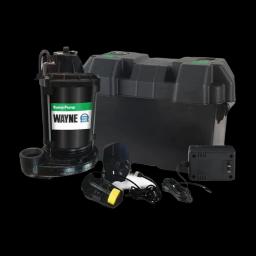
Wayne ESP25n
4.5 (1,543)1,500 GPH at 10 feet and up to 10,000 gallons per charge, per Wayne.
$281.18Buy on Amazon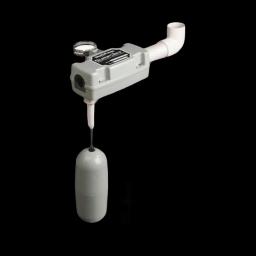
#2 · City water and long outages
Liberty SumpJet SJ10
4.6 (1,366)No battery; needs municipal water at 20 to 100 psi.
$238.65Buy on Amazon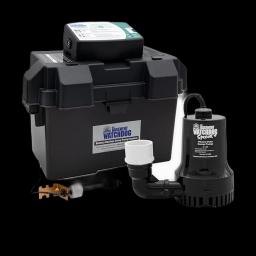
#3 · Narrow sump pits
Basement Watchdog Special
4.5 (327)1,730 GPH at 10 feet, maker-stated, with a plain-language panel.
$279.00Buy on Amazon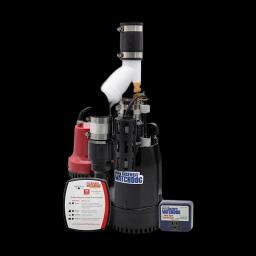
#4 · Replacing an old main pump too
Basement Watchdog Combo CITE-33
4.4 (250)Primary and battery backup in one preassembled unit.
$379.00Buy on Amazon
| Pick | Best for | Ready | Buy |
|---|---|---|---|
 1. Wayne ESP25n 4.5 (1,543) | Most homes, including wells 1,500 GPH at 10 feet and up to 10,000 gallons per charge, per Wayne. | 63 | $281.18Buy on Amazon |
 2. Liberty SumpJet SJ10 4.6 (1,366) | City water and long outages No battery; needs municipal water at 20 to 100 psi. | 52 | $238.65Buy on Amazon |
 3. Basement Watchdog Special 4.5 (327) | Narrow sump pits 1,730 GPH at 10 feet, maker-stated, with a plain-language panel. | 80 | $279.00Buy on Amazon |
 4. Basement Watchdog Combo CITE-33 4.4 (250) | Replacing an old main pump too Primary and battery backup in one preassembled unit. | 58 | $379.00Buy on Amazon |
Key takeaways
- Battery backups pump harder; Wayne states 1,500 GPH at 10 feet for the ESP25n.
- Water-powered backups never run down but need city water; Liberty recommends at least 30 psi.
- The SumpJet uses about 1 gallon of city water to remove 2 gallons of sump water, per Liberty.
- Liberty says the UPC and some state codes require an RP or RPZ backflow device.
- A water-powered unit cannot work on a private well.
The short answer
A battery backup sump pump suits most homes: it pumps harder, works on a well or city water, and costs less to install, but its battery runs down in a long storm. A water-powered backup suits a home on city water with good pressure that worries about outages lasting days: it never runs down, but it pumps less, uses metered water while it runs, and needs a plumber and a backflow device. Neither replaces your main pump. Both sit beside it and take over when it stops.
| Battery backup | Water-powered | |
|---|---|---|
| Power source | 12 V deep-cycle battery | City water pressure |
| Works on a private well | Yes | No |
| Runs during a multi-day outage | Until the battery drains | As long as the water main holds pressure |
| Flow, per the makers | Wayne ESP25n: 1,500 GPH at 10 ft | SumpJet SJ10: 750 GPH at 8 ft and 40 psi |
| Ongoing cost | A replacement battery | Metered water: about 1 gallon per 2 removed |
| Installation | Plumbs into your discharge | Permanent water line plus backflow protection |
How a battery backup works
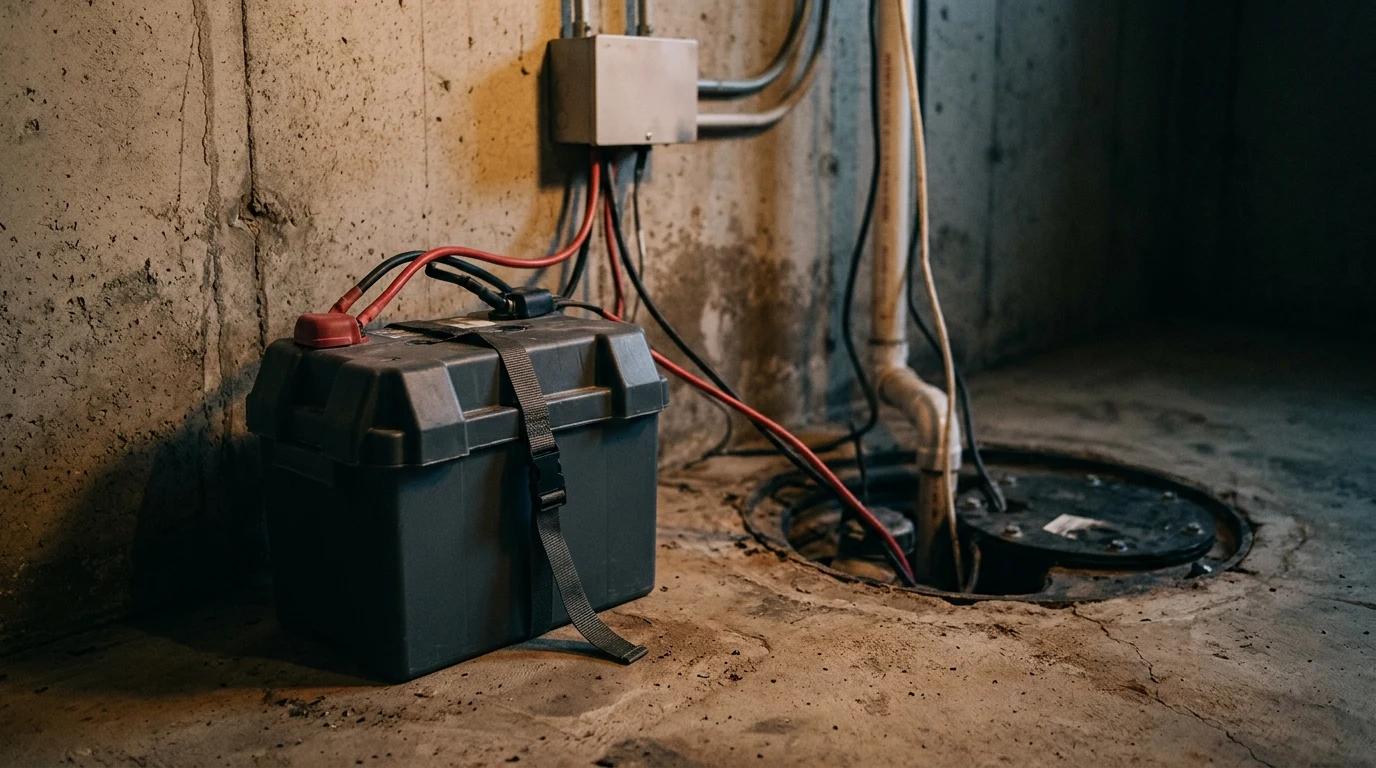
A second, 12 V pump sits in the pit a little above your main pump, with a float switch and a charger that keeps a deep-cycle battery topped up. When the power fails, or the main pump dies with the power on, the water rises to the backup's float and it starts. Wayne states its ESP25n moves 2,700 gallons an hour at 0 feet of lift and 1,500 at 10 feet, and up to 10,000 gallons on a single battery charge. The battery is usually sold separately, so price the pair together.
The weakness is the arithmetic of a long storm. Ten thousand gallons is a lot of water for an ordinary rain, but heavy, steady inflow during a multi-day outage can drain it, and the charger only refills the battery once the power returns.
How a water-powered backup works
A water-powered pump uses the pressure in your city water line to create suction, an ejector, that pulls water out of the pit. No battery, no motor. Liberty Pumps, which makes the SumpJet SJ10, states it uses about 1 gallon of city water to remove 2 gallons of sump water, depending on elevation.
Its output depends entirely on your water pressure. Liberty's installation manual gives these figures at 8 feet of lift:
| City water pressure | Sump water removed at 8 ft |
|---|---|
| 20 psi | 348 GPH |
| 30 psi | 540 GPH |
| 40 psi | 750 GPH |
| 50 psi | 870 GPH |
| 60 psi | 1,020 GPH |
Liberty recommends at least 30 psi, measured ahead of the backflow device, and notes that the backflow device itself may lower operating pressure. At 40 psi, removing 750 gallons an hour uses about 375 gallons of city water an hour of pumping, which is the cost of never running out.
The plumbing and code rules
This is where water-powered units get expensive and where homeowners get caught out. From Liberty's SumpJet manual:
- Municipal water only. It is designed for a municipal supply. A well pump stops when the power does, so a water-powered backup will not work on a well.
- Backflow protection. Sump water is not potable. Liberty says the installer must add backflow protection to meet the local plumbing code or water authority, and that under the Uniform Plumbing Code and some states' codes, including Michigan's, the SumpJet requires an RP or RPZ (reduced pressure zone) backflow device. Ask your water utility or building department what applies where you live.
- Permanent piping. Do not use a garden hose; Liberty says it is not built to hold municipal pressure indefinitely and could burst.
- Water hammer. The SumpJet's quick-acting valve requires an approved water-pressure absorbing device under the UPC.
- Discharge. It must not be connected to the main pump's discharge or directly to the municipal drain; Liberty calls for an air gap or a discharge run outside.
- Clear water only, and backup only. Liberty says it is not designed as a primary pump or for water with debris.
Before you buy: ask a plumber to measure your water pressure and price the backflow device. Those two answers decide the whole question.
Which one fits your house
- On a well: battery backup. A water-powered unit cannot work.
- City water, under 30 psi: battery backup. Liberty's own minimum is 30 psi for good performance.
- City water, 40 psi or more, long outages common: water-powered is a strong choice, or a battery unit with a power station as the second line.
- Heavy inflow even in ordinary storms: battery backup, for the higher flow, and size the battery to the storms you get.
- Main pump near the end of its life: a combo unit such as the Basement Watchdog CITE-33 replaces both at once.
A third option: power for your main pump
You can also run your existing pump from a power station or generator during the outage. Champion's wattage chart puts a 1/3 HP sump pump at 500 to 800 W running and 1,000 to 1,600 W at start, so the station must handle the start surge. The Anker Solix C1000 Gen 2 is rated at 2,000 W with a 3,000 W surge. Its 1,024 Wh gives about 870 Wh after our 0.85 inverter factor; if your pump runs at 800 W for 10 minutes in every hour, that is about 133 Wh an hour, or roughly six and a half hours of storm. The Runtime Calculator does this with your own figures.
This protects you from an outage but not from the main pump itself failing, which a separate backup pump does. That is the case for keeping a backup pump even if you own a generator.
Keep whichever you choose working
- Battery: check the charger's status light, and replace the battery on the maker's schedule; the alarm only helps if someone hears it.
- Water-powered: Liberty says to check the float and clean debris off the float and suction screen, and to have the backflow device tested where your water authority requires it.
- Both: pour a bucket of water into the pit with the main pump unplugged, once a season, and watch the backup start.
Questions people ask
How does a water-powered sump pump work?
It uses the pressure in your city water line to create suction that pulls water out of the pit, with no battery or motor. Liberty says its SumpJet uses about 1 gallon of city water to remove 2 gallons.
Do water-powered sump pumps work on well water?
No. They need municipal water pressure, and a well pump stops when the power does.
How much water pressure does a water-powered sump pump need?
Liberty recommends at least 30 psi for the SumpJet, measured ahead of the backflow device, and a maximum of 100 psi. Its manual shows 540 GPH at 30 psi and 750 GPH at 40 psi, both at 8 feet of lift.
Does a water-powered sump pump need a backflow preventer?
Usually. Liberty says the Uniform Plumbing Code and some state codes, including Michigan's, require an RP or RPZ backflow device. Check with your water authority.
How long will a battery backup sump pump run?
It depends on inflow. Wayne states the ESP25n can remove up to 10,000 gallons on one battery charge.
Sources for this guide
Outage Ready Editorial
We work out the arithmetic and read the maker and agency pages so you do not have to. About us.
Read next
Best Power Station for a Power Outage: Sized for Real Nights
About 1,000 Wh runs a fridge for about 10 hours, and the Anker SOLIX C1000 Gen 2 is the one most homes should buy.
5 min read
Power Station vs Generator: Which One Fits Your Outage?
A power station suits short outages and indoor use; a generator suits long outages and heavy loads you can run 20 feet from the house.
5 min read