Guide
LiFePO4 vs Lithium-Ion Power Stations: Which Lasts Longer?
Outage Ready Editorial · Updated November 21, 2026 · 5 min read
Winner
Buy LiFePO4 for outage backup. The Anker SOLIX C1000 Gen 2 states at least 80% capacity after 4,000 cycles, the strongest rating at 1 kWh.
4.7 (1,771)Runner-up
Jackery's LiFePO4 1000 v2 is rated for 4,000 cycles to over 70%, against 500 for its older NCM Explorer 1000.
4.7 (3,726)
#1 · Longest stated life at 1 kWh
Anker SOLIX C1000 Gen 2
4.7 (1,771)LiFePO4, 4,000 cycles to 80%.
$489.99Buy on Amazon
#2 · Light LiFePO4
Jackery Explorer 1000 v2
4.7 (3,726)LFP, 4,000 cycles to 70%+, about 23.3 lb.
$559.00Buy on Amazon
#3 · Warm rooms
EcoFlow DELTA 3 Classic
4.7 (1,388)LFP, EcoFlow states charging from 32 to 113°F.
$438.90Buy on Amazon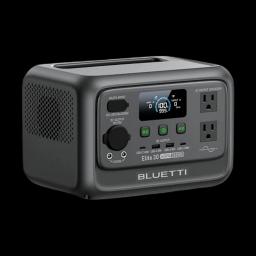
#4 · Small LiFePO4
BLUETTI Elite 30 V2
4.5 (1,273)LFP, over 3,000 cycles, 288 Wh.
$329.99Buy on Amazon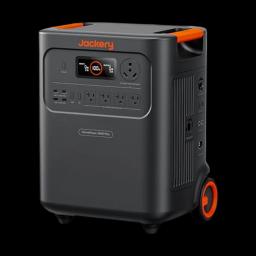
#5 · Home backup
Jackery HomePower 3600 Plus
4.6 (223)LFP, 6,000 cycles per its listing.
$1,899.00Buy on Amazon
| Pick | Best for | Ready | Buy |
|---|---|---|---|
 1. Anker SOLIX C1000 Gen 2 4.7 (1,771) | Longest stated life at 1 kWh LiFePO4, 4,000 cycles to 80%. | 73 | $489.99Buy on Amazon |
 2. Jackery Explorer 1000 v2 4.7 (3,726) | Light LiFePO4 LFP, 4,000 cycles to 70%+, about 23.3 lb. | 56 | $559.00Buy on Amazon |
 3. EcoFlow DELTA 3 Classic 4.7 (1,388) | Warm rooms LFP, EcoFlow states charging from 32 to 113°F. | 78 | $438.90Buy on Amazon |
 4. BLUETTI Elite 30 V2 4.5 (1,273) | Small LiFePO4 LFP, over 3,000 cycles, 288 Wh. | 53 | $329.99Buy on Amazon |
 5. Jackery HomePower 3600 Plus 4.6 (223) | Home backup LFP, 6,000 cycles per its listing. | 65 | $1,899.00Buy on Amazon |
Key takeaways
- Jackery rates its NCM Explorer 1000 for 500 cycles and its LiFePO4 Explorer 1000 v2 for 4,000 cycles to over 70%.
- The weight penalty has gone: Jackery lists the NCM Explorer 1000 at about 10.6 kg and the LiFePO4 1000 v2 listing states about 10.6 kg.
- Neither chemistry should be charged below 32°F; EcoFlow and Anker both state 32°F as the charging floor.
- Every station and home battery we rank uses LiFePO4, so compare capacity, output and warranty instead.
The short answer
Buy LiFePO4 (also written LFP) for outage backup. Jackery's older NCM-based Explorer 1000 was rated for 500 cycles; its LiFePO4 Explorer 1000 v2 is rated for 4,000 cycles to over 70% capacity, at almost the same weight. Every power station we rank uses LiFePO4, so the choice is mostly made for you.
One caution survives the switch: neither chemistry should be charged below freezing.
| LiFePO4 (LFP) | NMC or NCM lithium-ion | |
|---|---|---|
| Stated cycle life, Jackery's 1 kWh pair | 4,000 cycles to 70%+ (Explorer 1000 v2) | 500 cycles (original Explorer 1000) |
| Weight, same pair | About 23.3 lb, per its listing | About 10.6 kg, roughly 23.4 lb |
| Energy per pound of cell | Lower, per Battery University | Higher, per Battery University |
| Thermal stability | Good, with tolerance to abuse, per Battery University | — |
| Charging below 32°F | No | No |
| Where you find it now | Current power stations from all major brands | Older stations; many power banks just say lithium-ion |
Cycle life: the real difference
Battery University, the battery-education site run by Cadex, lists long cycle life, good thermal stability and tolerance to abuse as LiFePO4's key benefits. Maker ratings show the size of the gap:
- Jackery Explorer 1000 (NCM): 500 cycles, per Jackery's own spec page for the original model.
- Jackery Explorer 1000 v2 (LFP): over 70% capacity after 4,000 cycles.
- Anker SOLIX C1000 Gen 2 (LFP): at least 80% capacity after 4,000 cycles.
- BLUETTI Elite 30 V2 (LFP): over 3,000 cycles.
- Jackery HomePower 3600 Plus (LFP): 6,000 cycles, per its listing.
Read the end point as well as the count. 4,000 cycles to 80% is a stronger promise than 4,000 cycles to 70%.
Worth remembering: a backup station that sees 50 full cycles a year takes decades to reach 4,000. For outage use, calendar age and the warranty run out first.
Battery University's own lab table is far more conservative than any maker. It estimates about 600 full cycles to 70% for LiFePO4 cells and about 300 for NMC, rising sharply when you discharge only partway. The counts differ from the spec sheets, but the message is the same: LiFePO4 lasts roughly twice as long or more, and shallow cycles last longest.
That is why the cycle gap matters most if you cycle daily, such as running the house on solar or shifting to off-peak power. For a station that waits in a closet for storms, LiFePO4's advantage is real but you will rarely use all of it.
Weight: the old trade-off has mostly closed
Battery University notes that LiFePO4's lower nominal voltage of 3.2 V per cell gives it less energy per pound than cobalt-blended lithium-ion. At the cell level that still holds.
At the product level it barely shows. Jackery lists the NCM Explorer 1000 at around 10.6 kg for 1,002 Wh, and the LFP Explorer 1000 v2 at about 23.3 lb (10.6 kg) for 1,024 Wh, per its listing. Today's 1 kWh LiFePO4 stations sit in the same 24 to 27 lb band: Anker states 24.9 lb for the C1000 Gen 2, and EcoFlow states 12.1 kg, about 26.7 lb, for the DELTA 3 Classic.
Cold: LiFePO4 does not fix it
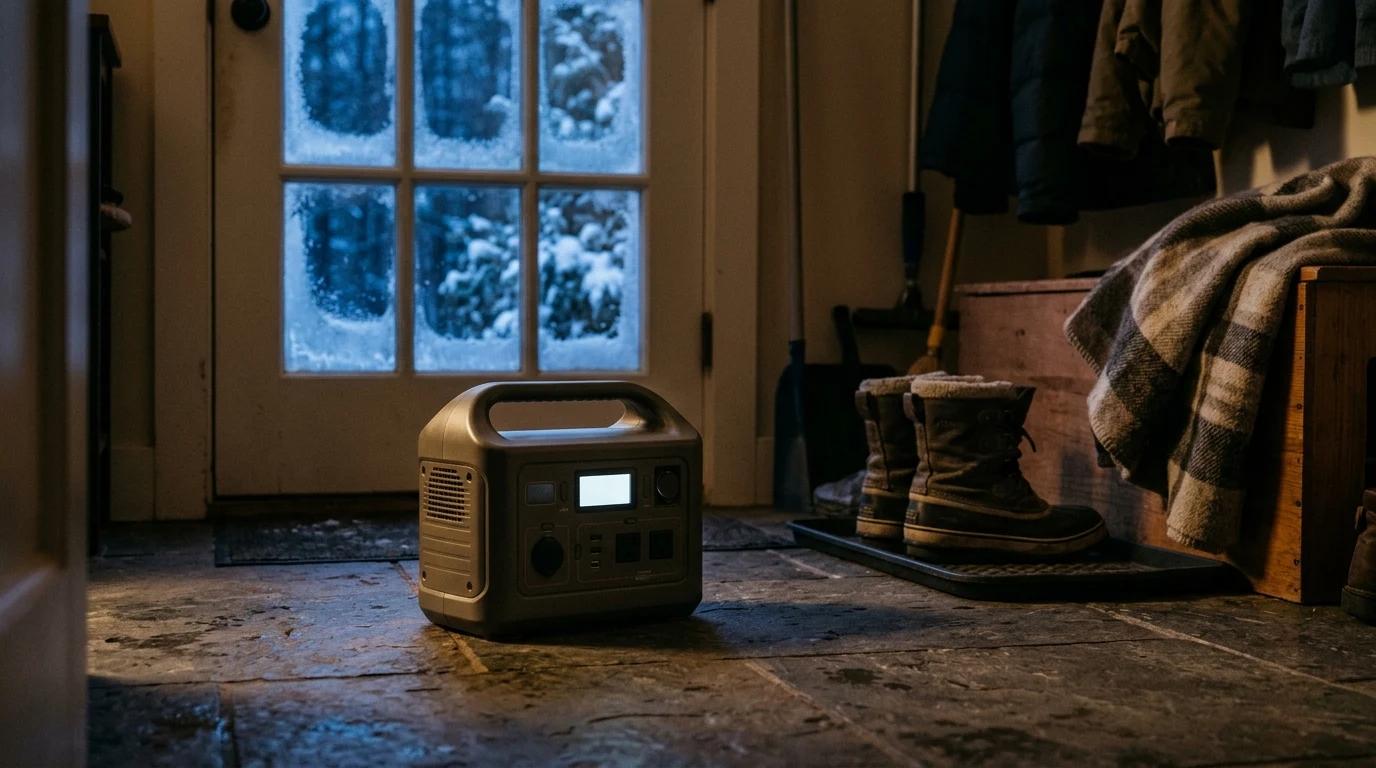
This is the part most comparisons skip. Battery University's temperature table says consumer lithium-ion cannot be charged below 32°F (0°C), and warns that charging below freezing plates metallic lithium on the anode, permanently hurting performance and safety. The makers' own limits match:
| Maker-stated | Charging | Discharging |
|---|---|---|
| EcoFlow DELTA 3 Classic | 32 to 113°F | 14 to 113°F |
| Anker SOLIX C1000 Gen 2 | 32 to 104°F | -4 to 104°F |
Both are LiFePO4, and both stop charging at freezing. In practice that means a station kept in an unheated garage or car may run your lights in a winter outage but refuse a recharge from a panel or generator until it warms up. Keep it inside the heated part of the house, which is where you want it during a storm anyway.
Heat shortens life too. Battery University says lithium-ion performs well when hot but at the cost of a shorter life, and recommends charging between 50 and 86°F for best results.
Safety: better, not fireproof
Battery University credits LiFePO4 with good thermal stability and enhanced safety. That is a reason to prefer it, not a reason to treat any large battery casually. A 1 kWh station holds a lot of energy. Keep it on a hard, dry floor, away from heaters, follow the maker's manual, and do not leave it charging under bedding or in a hot car.
There is one quirk worth knowing. Battery University says LiFePO4 self-discharges faster than other lithium-ion at the cell level. Station makers publish their own figures: Jackery's FAQ puts the Explorer 500 v2 at around 1% to 3% a month when it sits unused. A top-up on a schedule still makes sense.
Two habits help any lithium station last. Battery University says a battery dwelling above 86°F counts as elevated temperature and ages faster, and that partial charges and partial discharges reduce stress. So store it somewhere cool, not in an attic or a hot garage, and do not run it to empty for no reason. Some apps let you set a charge limit for storage; use it if yours does, and charge to full when a storm is forecast.
What about power banks?
Most phone power banks list their cells only as lithium-ion and do not name the chemistry. For a bank that sees a few dozen cycles a year, it rarely matters. What matters more is the watt-hour rating, which also decides whether you can fly with it.
Which of our picks use which
All seven portable power stations and all five home backup batteries we rank use LiFePO4 or LFP cells. When you compare them, chemistry no longer separates them. Look at stored energy, output and the warranty instead.
- Anker SOLIX C1000 Gen 2 $489.99: the strongest stated cycle rating at 1 kWh, 4,000 to 80%.
- Jackery Explorer 1000 v2 $559.00: 4,000 cycles to 70% at about 23.3 lb.
- Jackery HomePower 3600 Plus $1,899.00: 6,000 stated cycles for whole-circuit backup.
Rule of thumb: if a listing will not name its chemistry or a cycle rating, assume the older kind and keep looking.
Comparing brands rather than chemistry? See EcoFlow vs Jackery vs Anker.
Does chemistry matter for you
- A station that waits for storms
- LiFePO4, any of our picks
- Cycle life will outlast your need; compare warranty and size.
- Daily solar or off-peak cycling
- LiFePO4 with a stated cycle rating
- This is where 4,000 cycles against 500 really shows.
- Kept in a cold garage
- Move it indoors
- LiFePO4 still will not charge below 32°F.
- Offered an older NMC station cheaply
- Skip it for backup
- 500 stated cycles and no weight saving at 1 kWh.
Questions people ask
Is LiFePO4 better than lithium-ion?
LiFePO4 is a type of lithium-ion. Against the NMC or NCM type, it has far longer stated cycle life and good thermal stability per Battery University, at the cost of less energy per pound at the cell level.
How long does a LiFePO4 power station last?
Makers state 3,000 to 6,000 cycles for our picks and lifespans of about 10 years. For backup use, the calendar and the warranty usually run out before the cycles do.
Can a LiFePO4 power station be charged in the cold?
Not below freezing. EcoFlow and Anker both state 32°F as the lowest charging temperature for their LiFePO4 stations, and Battery University warns that charging below freezing damages lithium-ion cells.
Is LiFePO4 safer?
Battery University credits it with good thermal stability and enhanced safety. It is still a large battery, so follow the maker's manual and keep it away from heat.
Sources for this guide
- Battery University: BU-205, types of lithium-ion
- Battery University: BU-808, how to prolong lithium-based batteries
- Battery University: BU-410, charging at high and low temperatures
- Jackery: Explorer 1000 basic information, NCM battery and 500 cycles
- Jackery: Explorer 1000 v2 product page and specifications
- EcoFlow: DELTA 3 Classic specifications, temperature ranges
- Anker SOLIX: C1000 Gen 2 specifications, temperature ranges
- BLUETTI: Elite 30 V2 product page
- Jackery: Explorer 500 v2 basic information
Outage Ready Editorial
We work out the arithmetic and read the maker and agency pages so you do not have to. About us.
Read next
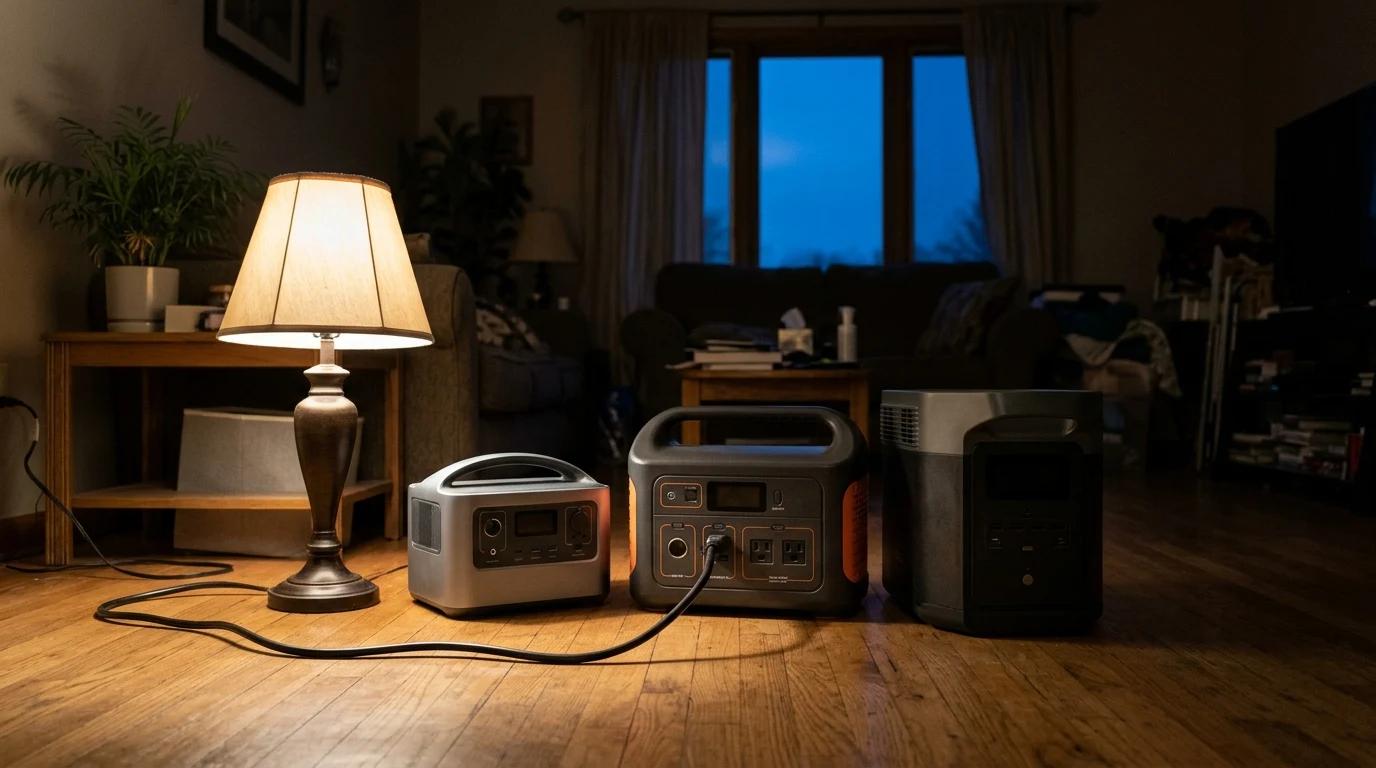
EcoFlow vs Jackery vs Anker SOLIX: Which Brand to Buy?
All four brands sell LiFePO4 stations, three with a stated 10 ms class UPS; the differences are warranty terms, cycle ratings, output and what each app unlocks.
5 min read
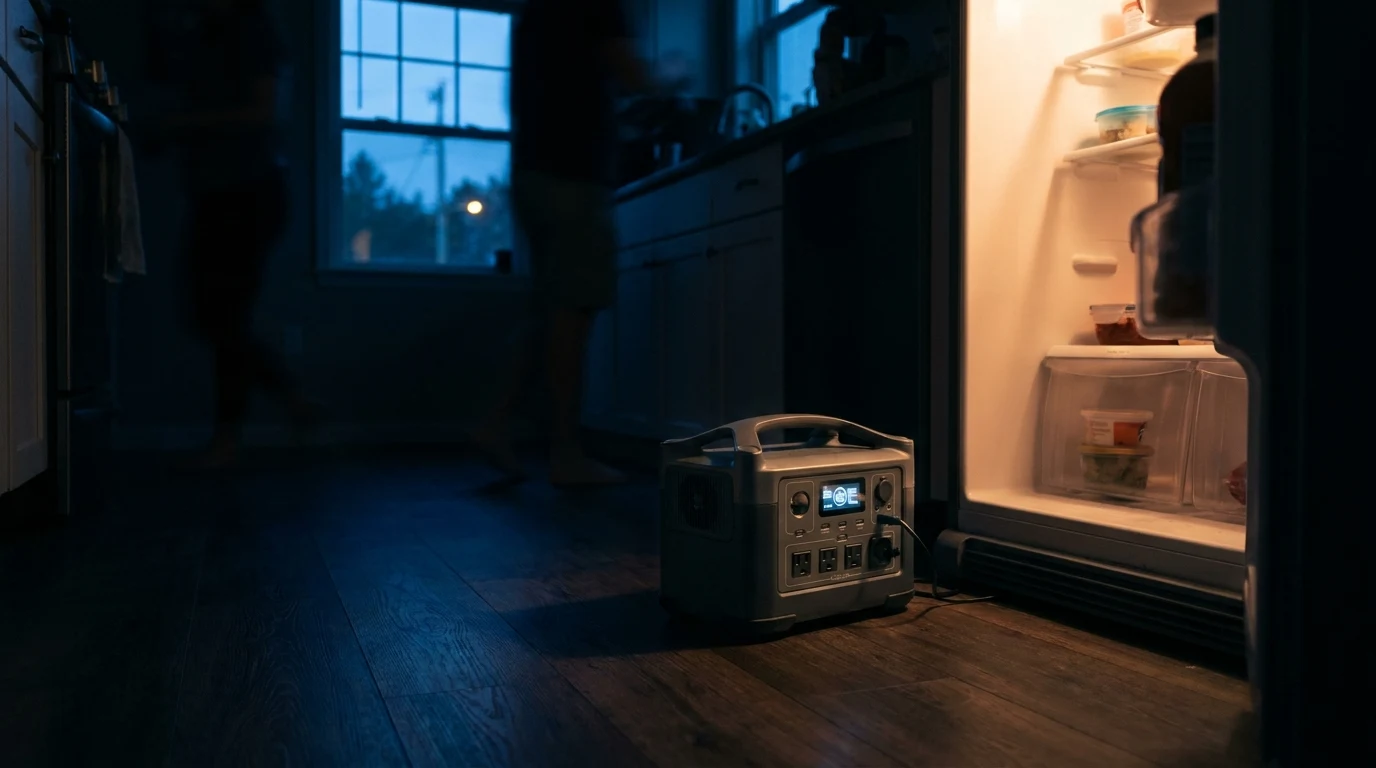
Best Power Station for a Power Outage: Sized for Real Nights
About 1,000 Wh runs a fridge for about 10 hours, and the Anker SOLIX C1000 Gen 2 is the one most homes should buy.
5 min read
What Size Power Station Do I Need? The Simple Arithmetic
Multiply watts by hours, divide by 0.85, and you have your size. A fridge for a day takes about 2,400 Wh.
5 min read