Guide
Best Power Station for a CPAP: The Numbers From the Makers
Outage Ready Editorial · Updated November 2, 2026 · 5 min read
Winner
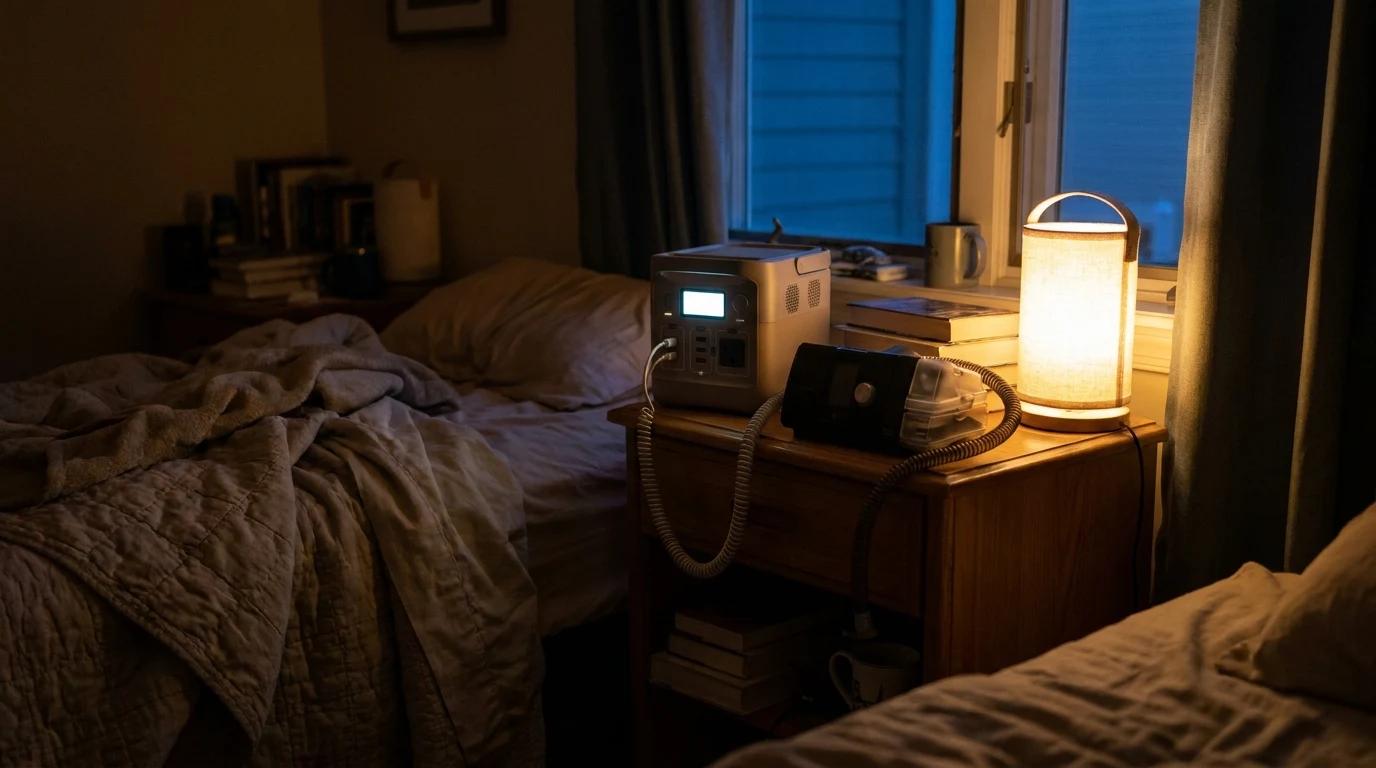
The best power station for a CPAP is the Jackery Explorer 1000 v2: 1,024 Wh covers about 7.3 hours even with a heated humidifier at a generic 120 W, and Jackery states a DC car port.
4.7 (3,726)Runner-up
With a heated humidifier at a generic 120 W, the 1,024 Wh DELTA 3 Classic gets about 7.3 hours for less money, and EcoFlow states an under-10 ms switchover.
4.7 (1,388)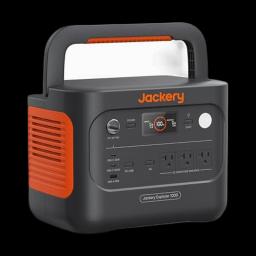
#1 · Most of a night with a heated humidifier
Jackery Explorer 1000 v2
4.7 (3,726)About 14.5 hours at 60 W, about 7.3 hours at 120 W.
$559.00Buy on Amazon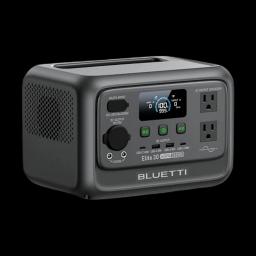
#2 · Short outages
BLUETTI Elite 30 V2
4.5 (1,273)About 4 hours at 60 W, about 2 hours at 120 W.
$329.99Buy on Amazon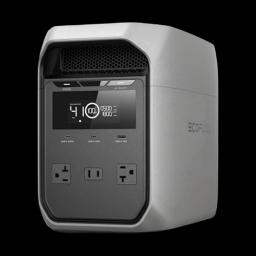
#3 · Staying plugged in as a UPS
EcoFlow DELTA 3 Classic
4.7 (1,388)EcoFlow states under 10 ms switchover. About 14.5 hours at 60 W.
$438.90Buy on Amazon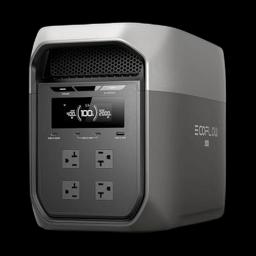
#4 · Several nights on one charge
EcoFlow DELTA 3 Max
4.7 (654)About 29 hours at 60 W, about 14.5 hours at 120 W.
$854.00Buy on Amazon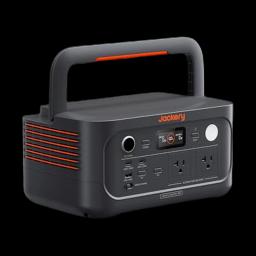
#5 · About 7 hours with no heater
Jackery Explorer 500 v2
4.4 (123)About 7 hours at 60 W. Jackery states 28 dB and a 10 ms UPS.
| Pick | Best for | Ready | Buy |
|---|---|---|---|
 1. Jackery Explorer 1000 v2 4.7 (3,726) | Most of a night with a heated humidifier About 14.5 hours at 60 W, about 7.3 hours at 120 W. | 56 | $559.00Buy on Amazon |
 2. BLUETTI Elite 30 V2 4.5 (1,273) | Short outages About 4 hours at 60 W, about 2 hours at 120 W. | 53 | $329.99Buy on Amazon |
 3. EcoFlow DELTA 3 Classic 4.7 (1,388) | Staying plugged in as a UPS EcoFlow states under 10 ms switchover. About 14.5 hours at 60 W. | 78 | $438.90Buy on Amazon |
 4. EcoFlow DELTA 3 Max 4.7 (654) | Several nights on one charge About 29 hours at 60 W, about 14.5 hours at 120 W. | 65 | $854.00Buy on Amazon |
 5. Jackery Explorer 500 v2 4.4 (123) | About 7 hours with no heater About 7 hours at 60 W. Jackery states 28 dB and a 10 ms UPS. | 58 |
Key takeaways
- At the generic 60 W figure, 512 Wh runs a CPAP with no heater about 7 hours; at 120 W with a heated humidifier, 1,024 Wh runs about 7.3 hours.
- ResMed lists about 84 Wh for 8 hours on an AirSense 10 at 10 cm H2O with no humidifier through its DC converter.
- ResMed strongly recommends a DC-to-DC converter over an inverter, and a power station's AC outlet is an inverter.
- Philips says to use only its own DC power cord and battery adapter cable on the DreamStation 2.
The short answer
The best power station for a CPAP is the Jackery Explorer 1000 v2, because its 1,024 Wh covers about 7.3 hours even with a heated humidifier at a generic 120 W, and Jackery states a DC car port for a converter. If you run no heater, the Explorer 500 v2 is enough at about 7 hours. Your own machine will likely draw less than these generic figures, as the maker tables below show.
FDA advises checking your user instructions or asking your distributor or manufacturer whether your device can run on batteries or a generator, and says anyone who depends on a device to stay alive should seek emergency services right away.
Two sets of numbers
The generic figures are the ones in our Runtime Calculator, from Champion's range for a CPAP: 60 W at the top with no heater, 120 W at the top with a heated humidifier. These are deliberately cautious. Multiply the stored watt-hours by 0.85 for inverter loss, then divide by 60 or 120.
| Station | Stored energy | At 60 W, no heater | At 120 W, heated |
|---|---|---|---|
| BLUETTI Elite 30 V2 | 288 Wh | About 4 hours | About 2 hours |
| Jackery Explorer 500 v2 | 512 Wh | About 7 hours | About 3.6 hours |
| EcoFlow DELTA 3 Classic | 1,024 Wh | About 14.5 hours | About 7.3 hours |
| Jackery Explorer 1000 v2 | 1,024 Wh | About 14.5 hours | About 7.3 hours |
| EcoFlow DELTA 3 Max | 2,048 Wh | About 29 hours | About 14.5 hours |
The maker figures are lower. ResMed's battery guide gives current draw at 12 V DC through its own converter, for an 8-hour night:
| AirSense 10 at 10 cm H2O | Draw at 12 V | Battery ResMed lists for 8 hours | In watt-hours |
|---|---|---|---|
| No humidifier | 0.53 A | 7 Ah | About 84 Wh |
| With ClimateLineAir at 30°C | 1.52 A | 19 Ah | About 228 Wh |
| Humidifier at setting 4 | 1.66 A | 20 Ah | About 240 Wh |
The watt-hour column is our multiplication of ResMed's amp-hours by 12 V. ResMed's tables cover specific machines and pressures, so read yours and not this one.
Worth remembering: the humidifier is most of the load. On those ResMed figures, it nearly triples the battery you need.
The AC outlet is an inverter
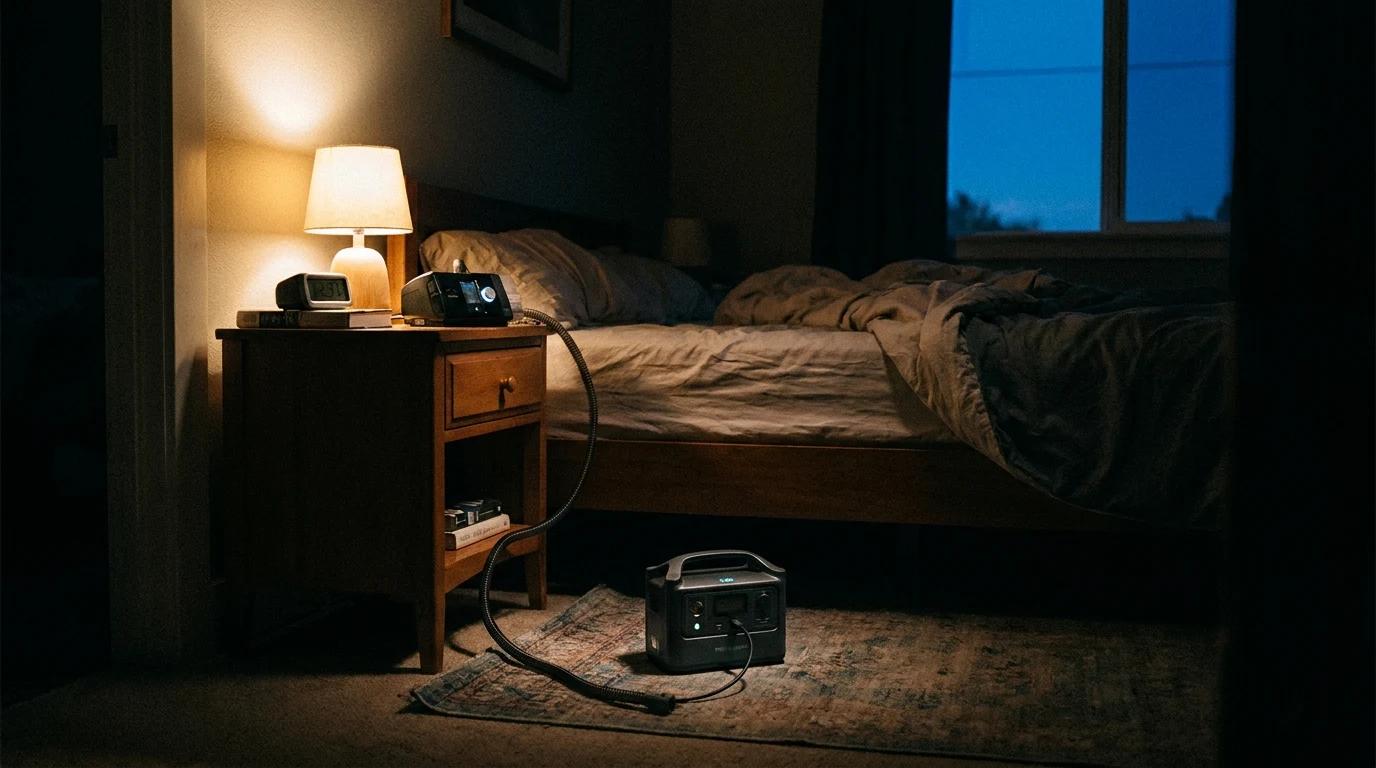
This is the part most buyers miss. A power station's AC outlet is an inverter, and ResMed strongly recommends DC-to-DC converters over inverters when powering its devices from a battery. It says converters are more efficient, regulate battery voltage, and shut down before fully discharging a battery.
If you must use an inverter, ResMed recommends pure sine wave with a continuous rating of 300 W and a surge rating of 500 W. Every station here clears that wattage on its stated output; check that its inverter is pure sine wave. The inverter steps in its guide apply to the S9, VPAP III, AutoSet CS2, VPAP Adapt and Stellar series, and it warns that other ResMed heated humidifiers must not be used with inverters, with damage or serious injury possible.
So the AirSense 10 goes through ResMed's DC converter, part number 37297 in the guide. Ask your equipment provider for the right one and a cable adapter to your station's DC port before an outage, and do not assume the AC outlet is fine.
Philips' DreamStation 2 manual says to use only a Philips Respironics DC power cord and battery adapter cable, which allow operation from a 12 VDC battery, and warns that other systems may damage the device. Philips also sells a dedicated PAP battery kit with an integrated UPS, which it states gives more than 14 hours at 10 cm H2O without heat, for DreamStation and System One machines. That suits a user who wants the maker's own route and has no other use for a power station.
A worked example
Say you use an AirSense 10 at 10 cm H2O with no humidifier during an outage. ResMed's table says about 84 Wh a night through its DC converter. On paper, the 288 Wh BLUETTI Elite 30 V2 would cover about three nights that way, against about 4 hours through its AC outlet at the generic 60 W figure.
That gap is why the connection matters as much as the size. Treat the DC figure as a best case, because ResMed's table assumes its own converter and a suitable battery, and a power station's DC port was not part of that table. Run one full night on your setup before you rely on it.
Get this ready before an outage
- Find your own maker's battery figures, and your pressure setting from your provider.
- Buy the maker's DC cable or converter now, since it may not be easy to find in a storm.
- Learn how your machine runs without the heated humidifier, if your provider says that is fine.
- Keep the station charged. Jackery states about 5% drain over six months for the Explorer 500 v2.
- Check that cords and batteries are dry, as FDA advises, before you plug anything in.
The picks
1. Jackery Explorer 1000 v2 — $559.00 — Best for most of a night with a heated humidifier
About 7.3 hours at the cautious 120 W figure, close to a full night, and a stated DC car port for a converter. At a stated 23.3 lb, it is also the lightest 1 kWh unit we list, and it can run the fridge the next morning.
2. Jackery Explorer 500 v2 — Best for about 7 hours with no heater
About 7 hours at 60 W. Jackery states 28 dB of operating noise and a 10 ms UPS mode, both useful beside a bed. Check for a DC port that fits your converter before relying on it.
3. BLUETTI Elite 30 V2 — $329.99 — Best for short outages
About 4 hours at 60 W on the AC outlet. It looks better if your maker's DC figure applies, but on the generic number, it will not get you through a long night.
4. EcoFlow DELTA 3 Classic — $438.90 — Best for leaving plugged in
EcoFlow states an under-10 ms switchover and names medical devices among the loads it protects. It helps most if your outages arrive while you are asleep.
5. EcoFlow DELTA 3 Max — $854.00 — Best for several nights
About 14.5 hours even at the heated 120 W figure, with a stated 0-80% recharge in 1.13 hours when the grid returns.
After power comes back, FDA says to verify your device's settings, because some devices revert to a default mode. Sizing for other loads too? See what size power station you need.
Match the station to your setup
- Heated humidifier on, one night
- Jackery Explorer 1000 v2
- About 7.3 hours at 120 W.
- No heater, one night
- Jackery Explorer 500 v2
- About 7 hours at 60 W.
- Machine stays plugged into the station
- EcoFlow DELTA 3 Classic
- Stated under-10 ms switchover.
- Outages longer than a night
- EcoFlow DELTA 3 Max
- About 14.5 hours even at 120 W.
Questions people ask
How many watt-hours does a CPAP use in a night?
It depends on the machine. ResMed lists about 84 Wh for 8 hours on an AirSense 10 at 10 cm H2O with no humidifier through a DC converter, and about 240 Wh with the humidifier at setting 4. Generic planning figures run higher.
Can I plug my CPAP into a power station's AC outlet?
Check your maker first. ResMed strongly recommends DC-to-DC converters over inverters and warns that certain heated humidifiers must not be used with inverters. A power station's AC outlet is an inverter.
Should I turn off the humidifier during an outage?
It greatly cuts the draw: ResMed's table goes from 20 Ah to 7 Ah at 10 cm H2O on the AirSense 10. Ask your care provider whether that suits you.
What does Philips say about batteries?
Philips says to use only a Philips Respironics DC power cord and battery adapter cable with the DreamStation 2, and it sells a battery kit it states gives more than 14 hours at 10 cm H2O without heat.
Sources for this guide
- ResMed: battery guide for its therapy devices
- Philips: PAP battery kit specifications
- Philips DreamStation 2 user manual, DC power section (retailer-hosted copy)
- FDA: tips about medical devices and natural disasters
- Champion: generator wattage chart, CPAP figures
- Jackery: what is a watt-hour, the 0.85 working-time formula
Outage Ready Editorial
We work out the arithmetic and read the maker and agency pages so you do not have to. About us.
Read next
Best Power Station for a Power Outage: Sized for Real Nights
About 1,000 Wh runs a fridge for about 10 hours, and the Anker SOLIX C1000 Gen 2 is the one most homes should buy.
5 min read
What Size Power Station Do I Need? The Simple Arithmetic
Multiply watts by hours, divide by 0.85, and you have your size. A fridge for a day takes about 2,400 Wh.
5 min read